MUMBAI: The Bombay High Court on Tuesday allowed the Maharashtra State Electricity Transmission Company Limited (MSETCL) to fell 847 mangroves and 196 other trees and divert 3.3561 hectares of forest land for construction of a high voltage overhead transmission line from Dahanu to Ambesarai for the Mumbai-Ahmedabad High Speed Rail Corridor, also known as the bullet train project.
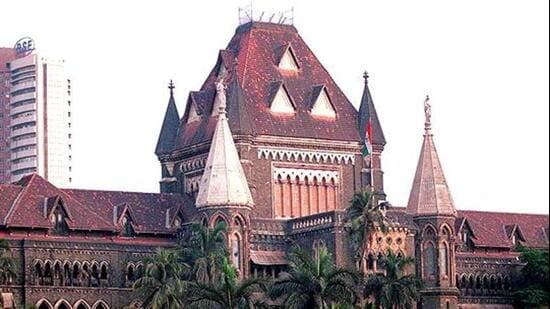
The division bench of acting chief justice Ravindra Ghuge and justice Gautam Ankhad allowed the MSETCL’s plea considering that the transmission line and the Ambeserai traction sub-station were integral to the high speed rail corridor, a project of national importance, and the proposal for diversion of mangroves and felling of trees had been scrutinised and approved by authorities, after determination by expert bodies.
The bench, however, added that the permission was granted “only on the basis of the express ecological commitments made and the categorical assurances furnished by MSETCL and by the state government and the mangrove cell that the compensatory afforestation shall be carried out, protected and duly maintained.”
MSETCL had approached the high court in pursuance with its September 2018 order on a public interest litigation filed by the Bombay Environmental Action Group (BEAG), prohibiting all non-forest activities in and around mangroves without the court’s prior permission.
The company informed the court that all statutory and development permissions required for laying down the 132 kV (kilo volt) transmission line had been obtained and it had agreed to undertake compensatory afforestation by planting 26,664 mangrove saplings over 6 hectares and 7,457 other trees over 6.7122 hectares of degraded forest land in Sangola tehsil of Solapur district, identified by the forest department.
{{/usCountry}}The company informed the court that all statutory and development permissions required for laying down the 132 kV (kilo volt) transmission line had been obtained and it had agreed to undertake compensatory afforestation by planting 26,664 mangrove saplings over 6 hectares and 7,457 other trees over 6.7122 hectares of degraded forest land in Sangola tehsil of Solapur district, identified by the forest department.
{{/usCountry}}The company said it had already deposited ₹3.53 crore towards costs for forest land diversion, compensatory afforestation, and channeling, fencing and protection of the new plantation for 10 years.
While allowing the MSETCL’s plea, the court took serious note of the objection raised by the BEAG’s counsel to compensatory afforestation in Solapur district, around 500 km away from the affected area.
“Compensatory afforestation can be meaningful only if restoration is attempted in the same ecological region or, where that is demonstrably impossible, in the nearest adjoining area,” the judges said. “Plantation undertaken hundreds of kilometres away may satisfy a statistical requirement, but fails to restore the environmental benefits of the affected locality.”
The court further said that unless “effective monitoring mechanisms, transparent disclosure and properly identified land banks are put in place, compensatory afforestation would remain a theoretical exercise rather than an ecological restoration”.
The court directed the chief secretary to scrupulously comply with past directions and create land banks within four weeks. It also clarified that this time, it had allowed compensatory afforestation at a far off place by way of exception, but henceforth such proposals for afforestation at far off places would not be accepted by the court.
Stay updated with all the Breaking News and Latest News from Mumbai. Click here for comprehensive coverage of top Cities including Bengaluru, Delhi, Hyderabad, and more across India along with Stay informed on the latest happenings in World News.
Stay updated with all the Breaking News and Latest News from Mumbai. Click here for comprehensive coverage of top Cities including Bengaluru, Delhi, Hyderabad, and more across India along with Stay informed on the latest happenings in World News.