September 19 will see a new television host entering your homes. Cricketer Rohit Sharma is all set to debut on Sony Entertainment Television and its streaming service Sony LIV with a game show ‘Family Full House’. Sony has also hit the jackpot with ‘Kaun Banega Crorepati Season 18’ on Sony LIV with its views jumping 60% and watch time 40% in the first three weeks compared to the same period last season. The company said Connected TVs (CTVs), which are internet-enabled smart TVs, account for nearly 60% of the season’s consumption on Sony LIV, underlining KBC’s strength as a show for family-viewing.
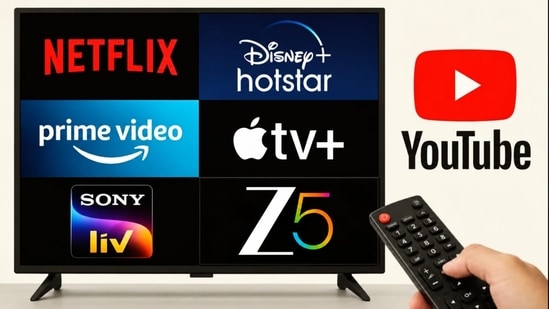
On September 10, Netflix, too launched a TV-style comedy series Chumbak to target family audiences. The show has been made by Hats Off Production known for popular TV series ‘Khichdi’ and ‘Sarabhai versus Sarabhai’. Late July, Prime Video announced bringing more K-dramas to India, releasing more than 100 Korean shows over two years, with subtitles in English and dubbing them in Hindi, Tamil, and Telugu.
These moves across big streaming services may seem disparate, but they signal a common goal of expanding the audience base, focusing on family viewing and reaching out to smaller towns. These objectives align with the findings of the latest OTT Audience Report 2026 by Ormax Media.
India’s digital video universe stands at 664.9 million users and grew 11% over last year, while the Connected TV (CTV) audience universe jumped 60% in a single year to touch 206.9 million, Ormax said. The OTT audience universe is defined as the number of people who watched an online video (free or paid) at least once in the last one month. The Ormax survey was carried in June and July.
The good news is that the bulk of online video audience growth has come from those watching streaming apps. “The user segment which watches only YouTube and Social Media videos (and no other streaming apps), is seeing barely 1% growth. Users from this segment graduate to watching other apps. What you call streaming users are growing at approximately 15%,” said Shailesh Kapoor, founder, Ormax Media.
{{/usCountry}}The good news is that the bulk of online video audience growth has come from those watching streaming apps. “The user segment which watches only YouTube and Social Media videos (and no other streaming apps), is seeing barely 1% growth. Users from this segment graduate to watching other apps. What you call streaming users are growing at approximately 15%,” said Shailesh Kapoor, founder, Ormax Media.
{{/usCountry}}Of the 665 million viewers of online videos, those watching only YouTube and social media are roughly 187 million, Kapoor said. “So, there’s nearly 487 million users who are watching at least one streaming app beyond YouTube and socials,” he added.
Streaming is popular beyond the metros and 44 cities in India now have an OTT audience of one million plus, the report said. This means that the streaming market is no longer dependent only on the top 10-15 cities. “So, platforms will have to cater to a much wider audience now than what they were serving five years ago when the overall audience base was smaller and the share of metros and mini metros was higher,” said Kapoor.
Tejkarran Singh Bajaj, business head, Zee 5 India, said the next phase of streaming in India will look very different. “The first phase was largely about giving an individual viewer unlimited choice on a personal screen. The next phase will be about becoming relevant across more people, more screens and more viewing occasions within the same household,” he said.
Connected TV will be central to this next chapter, Bajaj said. “The bigger change is behavioural with streaming increasingly entering the living room. While mobiles will continue to be important for personal viewing, television creates a very different opportunity around premium content, longer viewing sessions and shared experiences,” Bajaj noted.
Ormax report said that India’s paid subscribers for streaming have gone up by 16% over last year to touch 172.6 million. “Though this includes subscriptions through telecom bundles and OTT aggregators, directionally, the increase is a good sign. It means people are converting from free to paid subscribers,” Kapoor noted.
There is significant headroom for paid streaming in India, but growth cannot come only from acquiring another subscriber at a discounted price, Bajaj added. There’s opportunity in increasing the value a platform delivers to a household where members come for different things like original series, TV content, international films, children’s content or sports. “The average revenue per user will grow when the perceived value grows, not simply because platforms charge more,” Bajaj said.
The bigger takeaway from the report this year has been the increased acceptance of international content with audiences watching Korean dramas and anime. K-drama audience size grew by 48% over last year, vindicating Prime Video’s deal to bring more titles. The audiences for anime too jumped 32%.
Bajaj said Korean and Chinese dramas, anime, creator-led entertainment and shorter formats are opening up new consumption occasions and bringing in distinct audience communities. “But the future isn’t about chasing every new format. A format has to earn its place through audience relevance, engagement and a sustainable business model. Great long-form shows, movies, television and sport will continue to co-exist with newer forms of storytelling,” he said.
Streaming platforms’ future challenge will not be saturation, it will be differentiation, Bajaj said.
Stay updated with all the Breaking News and Latest News from Mumbai. Click here for comprehensive coverage of top Cities including Bengaluru, Delhi, Hyderabad, and more across India along with Stay informed on the latest happenings in World News.
Stay updated with all the Breaking News and Latest News from Mumbai. Click here for comprehensive coverage of top Cities including Bengaluru, Delhi, Hyderabad, and more across India along with Stay informed on the latest happenings in World News.