
 E-Paper



Philanthropy in India on the rise, but more needs to be done: Report
With total funding in the social sector having grown at 13% CAGR between financial years (FY) 2020 and 2025 to roughly ₹27 lakh crore ($310 billion) and projected to reach ₹50 lakh crore ($570 billion) by FY 2030, 95% of this was spent on healthcare and education in line with policy priorities

 Prefer HTon Google


MUMBAI: Funding in the social sector is expanding in India but remains insufficient, families continue to be the backbone for philanthropy, professional staffing and formal governance in philanthropy is increasing, and women and the younger generation are leading philanthropic efforts. These were some of the findings of the India Philanthropy Report (IPR) released on Thursday by philanthropic organisation Dasra in partnership with Bain and Company.
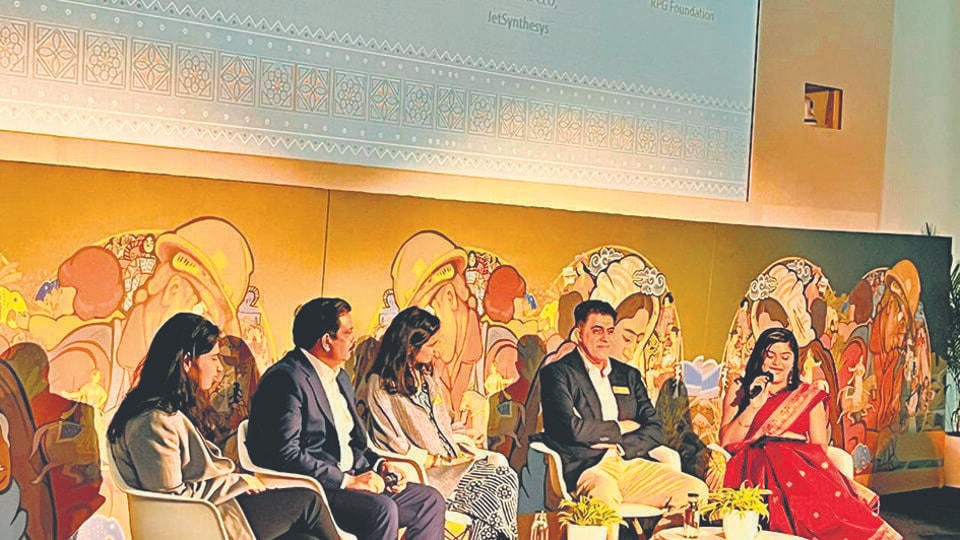
In its 16th year, the report states that families contribute 42% of total private giving through personal philanthropy and Corporate Social Responsibility (CSR) from family owned/run businesses. However, a lot more needs to be done if private sector giving has to increase by more than 25% annually to prevent India’s funding deficit from widening, including building the infrastructure needed to steward rising private wealth toward social impact.
With total funding in the social sector having grown at 13% CAGR between financial years (FY) 2020 and 2025 to roughly ₹27 lakh crore ($310 billion) and projected to reach ₹50 lakh crore ($570 billion) by FY 2030, 95% of this was spent on healthcare and education in line with policy priorities. Based on NITI Aayog norms, the funding gap stood near ₹16 lakh crore ($180 billion) in FY25 and may widen to ₹18 lakh crore ($210 billion) by FY 2030. Even with this momentum, demand outpaces supply, states the report.
“In a country like India, whether it’s health, education, or even the social impact space, there will always be more people and more communities to reach than there is enough resource allocation towards that particular issue, like doctor-patient or teacher-student ratios in the country,” Ami Misra, associate director, Dasra, told HT. “A similar sort of a rationale can be actually applied in the context of philanthropy, where we are seeing a rise in philanthropy but the kind of inequality that we are grappling with is higher.”
Bhavini Malhotra, partner, Bain & Company, added, “The real question is not whether capital is available but if it is structured to solve at scale…Philanthropic capital and support infrastructure need to grow hand-in-hand to ensure that funding translates into sustainable, scalable, and long-term impact.”
The IPR 2026 analysed multi-year data across CSR, family giving, and diaspora contributions. The report states that private philanthropy among ultra‑high‑net‑worth, high‑net‑worth and affluent families, which is driven by rising wealth, increasing formalisation, and episodic mega‑donations, projected to reach ₹1.43 lakh crore ($16 billion) in FY25 with a 9% to 11% projected CAGR between FY25 and FY30, also cannot close this gap without faster expansion.
However, the face of private philanthropy is also witnessing a change as families deploy diversified operating models, balance in-house implementation while scaling grant-making portfolios. The report also found approximately 63% of families report women playing a leading role in shaping philanthropic efforts, while 49% have inter-gen anchoring giving decisions. First-generation wealth creators are also emerging as influential actors.
“Women philanthropists are playing a very critical role in shaping the sector because it’s only recently that women are acquiring the wealth that their families have, have a say in decision making, and are going beyond their traditional roles to be able to have that agency contribute to such decisions. As wealth is changing hands, the stewardship and agency that women have is also changing course,” said Misra.
She added that women, even if from wealthy families, have a greater lived experience of interacting with unequal structures owing to the existing societal structures. “We’re seeing them support causes beyond gender equity, becoming stewards and leaders across diverse sectors like STEM, like arts and culture, animal welfare etc,” said Misra. “We’re seeing them leading with passion, building initiatives, contributing to narrative change, leading with their voice, time and resources, and not just capital. So I think that is a very, very important shift for the sector.”

Stay updated with all the Breaking News and Latest News from Mumbai. Click here for comprehensive coverage of top Cities including Bengaluru, Delhi, Hyderabad, and more across India along with Stay informed on the latest happenings in World News.


