
 E-Paper



Assam govt circulates 1983 Nellie massacre report in Assembly
Nellie massacre, which took place on February 18, 1983, claimed more than 2,000 lives, most of whom were Bengali-speaking Muslims


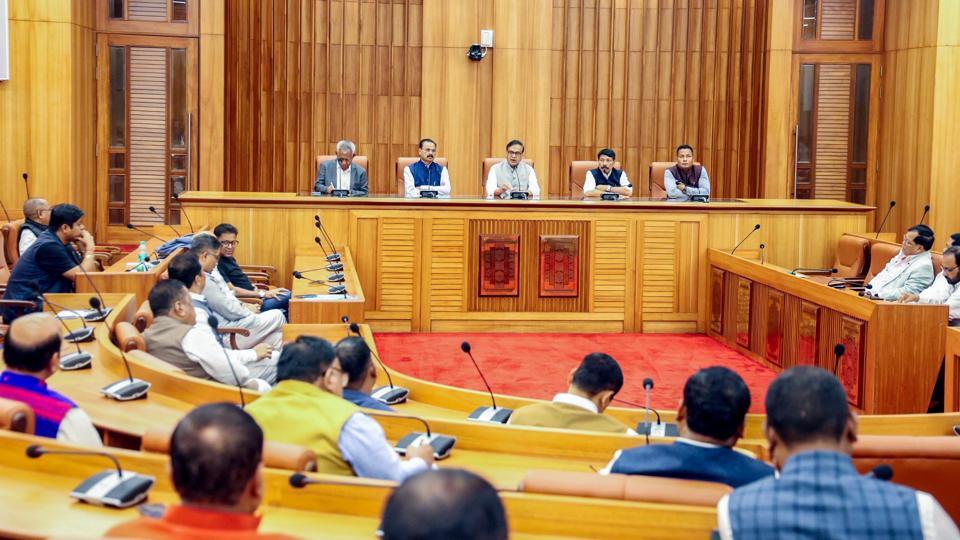
Silchar: The Assam government on Tuesday distributed the Tiwari Commission Report on the 1983 Nellie Massacre and the un-official report called Mehta Judicial Commission to all members in the state Assembly on the first day of the winter session.
The massacre, which took place on February 18, 1983, claimed more than 2,000 lives. Most of the victims were Bengali-speaking Muslims from Nellie and neighbouring villages in Morigaon district.
The violence erupted after the decision to proceed with Assembly elections, despite a call for a boycott by the All Assam Students’ Union (AASU) and the All Assam Gana Sangram Parishad (AAGSP), who were protesting alleged illegal immigration.
The attacks continued over seven hours, leaving nearly three lakh people homeless, marking one of the darkest chapters in the state’s history.
The Commission, officially called the Commission of Enquiry on Assam Disturbances 1983, was set up on July 14, 1983, under the chairmanship of retired IAS officer Tribhuvan Prasad Tewari. It was tasked with investigating the causes of the disturbances, administrative failures, and recommending measures to prevent recurrence.
The final report was submitted to the then Congress government in May 1984 and was tabled in the Assembly in 1987 during the first Asom Gana Parishad (AGP) government. Till now, only one was available with the Assembly Speaker.
At the Winter Session, the chief minister oversaw the distribution of both print and digital copies, now available to all legislators. However, the House did not discuss the contents during the session.
Speaking at a press conference after a Cabinet meeting on Sunday, Chief minister Himanta Biswa Sarma said making the two reports public was a necessary step and that it was unfair of past chief ministers to ignore the matter.
“Hiding history is a crime. This event is part of Assam’s history that everyone deserves to know. I guess past chief ministers did not have the courage to take this step, but we are doing it with positive intent,” he said.
Opposition leaders, however, questioned the BJP’s timing. Trinamool Congress MP Sushmita Dev said the party was unnecessarily reopening old wounds.
“We all know what happened in Assam at that time and the base of the Assam Agitation, which gave birth to the Assam Accord. The Bengali-speaking population has moved on and also accepted the Accord,” she said. “I don’t understand why Himanta Biswa Sarma is revisiting old wounds, but the timing indicates political motives.”
The Commission’s report meticulously documents the scale and pattern of the violence using police records and eyewitness accounts. According to the report, 2,072 people died, including 235 in police firing, which included 14 government officials. Nearly 2.25 lakh people were rendered homeless, and 2.48 lakh took shelter in relief camps.
Property losses were massive: 22,436 private houses were burned, 445 government buildings destroyed, 1,031 bridges and culverts damaged, and 22 railway properties set ablaze.
The report highlights that the violence was not spontaneous but the result of cumulative administrative neglect, demographic tensions, land disputes, and political polarisation surrounding the 1983 Assembly elections.
Key findings include administrative failures such as intelligence gaps, poor deployment of security forces, communication breakdowns, and ineffective district leadership. The decision to hold elections amid the Assam Agitation without addressing illegal immigration concerns further fuelled communal tensions.
District-specific violence was worst in Nagaon, Darrang, Goalpara, and Lakhimpur, with targeted attacks on villages seen as supportive of the elections. The infamous Nellie massacre in Nagaon alone involved attacks on 14 villages, resulting in thousands of deaths, mostly women and children.
Economic and development factors, including a stagnant economy, land pressure, and resource disputes, worsened social unrest.
The Commission concludes that the Nellie massacre and other 1983 violence were the outcome of long-standing ethnic and administrative issues, compounded by the decision to hold elections amid deep societal divisions.


