
 E-Paper



Chhattisgarh deploys 7 young IPS officers to Maoist-affected districts
The appointments come just days after a tragic IED explosion on June 10 near Dondra village in Sukma killed ASP Akash Rao Girepunje.

 Prefer HTon Google


The Chhattisgarh government has deployed seven young 2021-batch IPS officers to Maoist-hit districts — Sukma, Dantewada, Bijapur, and Narayanpur — to provide them with a first hand experience of a conflict zone and infuse fresh blood in anti-naxal operations, officials said.
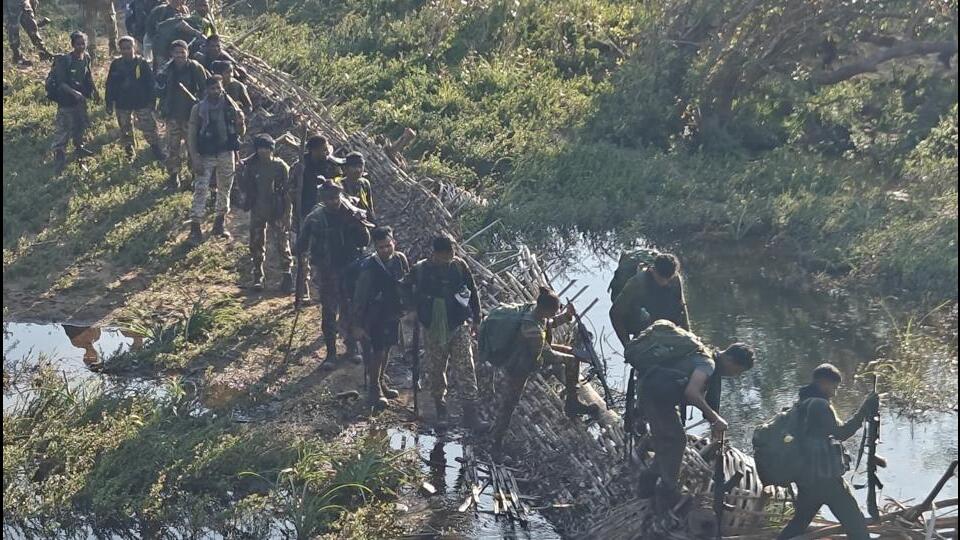
Another IPS officer from the same batch has been deputed as ASP in the special task force (STF) for anti-Naxal operations in Durg district.
The transfer orders came on Tuesday night, just two days after the death of additional SP Akash Rao Girepunje in an IED blast triggered by Maoists in Sukma district.
The transfers of these officers mark a significant reinforcement in Maoist affected districts, with all officers being posted as Additional Superintendents of Police (Anti-Naxal Operations), a move aimed at enhancing both tactical execution and localised planning.
A senior officer who is part of anti-Naxal operations said, “This is a good decision, though it should have come earlier. These officers have already completed over 20 months as City Superintendent of Police (CSPs) and deploying them now in core Maoist areas brings sharper focus to command, execution and supervision.”
“Nearly 20 IPS officers are now posted in just four districts, a first for the state. These young, dynamic officers will bring a decisive edge to operations in tough terrain and the smaller jurisdictions allow for specialised, intensive anti-Maoist efforts. Secondly, the redeployment aligns with the Union home ministry’s goal of ending Maoist influence in the core zones by March 2026,” said the officer.
The IPS officers who have been transferred to the Bastar region are Rohit Kumar Shah (Sukma), Udit Pushkar (Dantewada), Ravindra Meena and Aman Jha (Bijapur), Ajay Kumar and Akshay Sabadra (Narayanpur) and Akash Shrishrimal (Bhanupratappur, Kanker). The eighth IPS officer, Akash Kumar Shukla, has been posted as ASP in Durg.
Bijapur superintendent of police Jitendra Yadav described the move as both timely and tactical.
“This will definitely help. The young batches are highly motivated and hardworking. When they come to Maoist-affected districts, they are given responsibilities of anti-Naxal operations such as intelligence gathering and field operations.”
Other officers also believe that Tech and TAC (Technology and Tactics) in anti-Naxal operations have evolved manifold and the young recruits will bring in new strategies.
“We already know that even jawans are actively using new Tech and TAC techniques like data standardisation, data analysis, communication encryption and decryption methodologies, probability theory and game theory techniques,” said a second senior police officer.
Narayanpur superintendent of police Prabhat Kumar said more and more young IPS officers are now part of four to five day long operations in the forests.
“Young officers have brought and will further bring a paradigm shift in anti-Naxal operations as it is more of a game of heart and mind than of weapon,” Kumar said.
Inspector General of Police of Bastar range, Sundarraj P, said, “This is not just a reinforcement of manpower but a step toward shaping a more responsive and resilient policing ecosystem. These officers will complement the experienced leadership on ground and help build deeper trust with local communities.”
Experts believe that the move will give support and planning for SPs of Bastar districts.
Former Special Director General of Police RK Vij added, “This strengthens the SP-level planning and execution ability. Field operations need real-time intelligence and decision-making, and this shift supports both.”
The appointments come just days after a tragic IED explosion on June 10 near Dondra village in Sukma killed ASP Akash Rao Girepunje and left two other officers injured.
-kW0H-U20214218012MgB-250x250%40HT-Web.jpg)


