E-Paper



Odisha mishap: No train to stop at Bahanaga Bazar station till CBI probe is over
CBI has sealed the relay interlocking panel at the Bahanaga Bazar railway station in Odisha, prohibiting access of the staff to the signalling system

 Prefer HTon Google


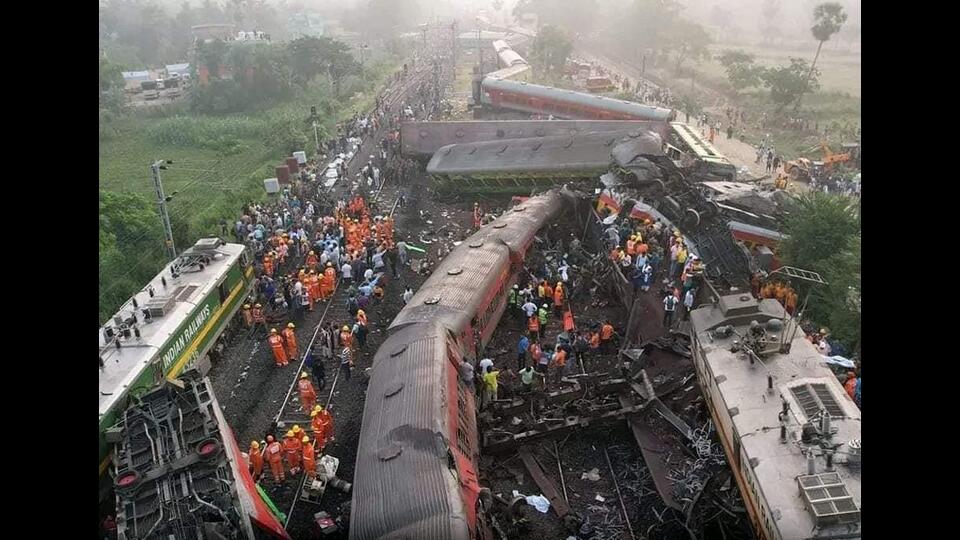
The Bahanaga Bazar railway station in Odisha’s Balasore district, where a deadly triple-train accident involving Coromondel Express, Yeshwantpur-Howrah Express and an iron ore-laden goods train resulted in death of at least 288 and injury to 1,200 passengers, has been shut down for stoppage of any train till the Central Bureau of Investigation (CBI) probe into the tragedy is over, officials said.
South Eastern Railway chief public relations officer, Aditya Kumar Chaudhary, said that as the CBI has sealed the station after seizing the log book, no trains would stop at the station till the probe is over.
“As relay interlocking panel has been sealed prohibiting access of the staff at the station to the most important part of the signalling system, no passenger or goods train would stop at Bahanaga Bazar till further notice,” said Choudhary.
The relay interlocking panel in small stations such as Bahanaga Bazar is provided with illuminated indications for signals, points, Track circuits, Crank Handles, LC gate, sidings, etc as per their geographical position.
Though 170 trains pass through the Bahanaga Bazar Railway station on a daily basis, only seven passenger trains, including Bhadrak-Balasore MEMU, Howrah Bhadrak Baghajatin Fast Passenger, Kharagpur Khurda road fast passenger, stop here everyday for a minute. On any particular day, labourers from 25 nearby villages come to the station to catch passenger trains. Less than 10 railway personnel work there.
Railway officials said that though the up-line and down-line as well as both the loop-lines at the accident spot have been repaired, the movement of 24 trains have been cancelled as minor repairs are still being done everyday to ensure that the tracks are in order.
Choudhary said that of the 1,208 affected passengers, ex gratia and compensation have been provided in 709 cases and the remaining are under process. So far 829 passengers, including 288 deceased, have been found eligible for ex gratia and compensation ( ₹12 lakh to the families of the deceased, ₹2.5 lakh to the severely injured and ₹50,000 to those with minor injuries). The list included passengers from both reserved and general coaches. The railways had also announced ex gratia for ticketless travellers who died or were injured in the train crash.
Nearly 2,300 passengers were travelling in the Yeshwantpur Howrah Superfast Express and the Chennai-bound Coromandel Express when the tragedy happened on June 2. Railway officials said 160 passengers were critically injured and 372 sustained minor injuries. As many as 379 passengers left after first aid at the spot or nearby hospitals.
Till Saturday, 81 bodies stored in containers at the All India Institute of Medical Sciences (AIIMS), Bhubaneswar, are still to be identified and relatives of missing passengers are waiting for DNA sample reports.