
 E-Paper



Disease hits shrimp in Malwa, dashing farmers’ hopes of 3rd good season in a row
Farmers’ hopes have been dashed as the market will not give them the expected price for the harvest; Guru Angad Dev Veterinary and Animals Sciences University has said that seeds from middlemen need to be shunned.


Bathinda With shrimp farming proving remunerative over the past two years, Jagmohan Singh of Fazilka’s Arniwala village hoped for a third good season in a row this year. However, the outbreak of White Fecal Disease (WFD) in his 3-acre pond of shrimp dashed his hopes.
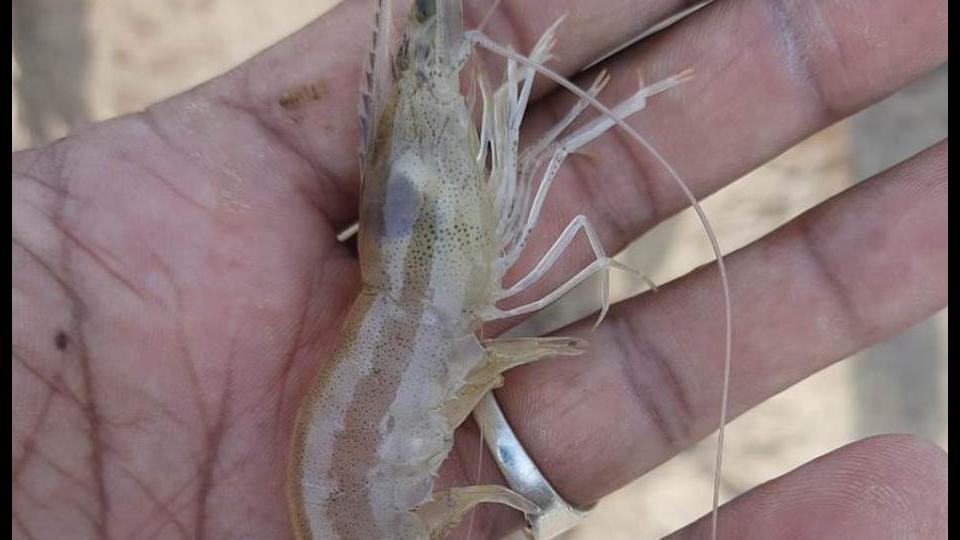
From estimates of ₹40 lakh turnover, Jagmohan finally ended up short of even recovering his investment of ₹16 lakh. With shrimps showing symptoms of retarded growth rate due to WFD, a condition caused by a parasite, he had to harvest his pond in August, much before the scheduled harvesting period of September-October.
“I saw an opportunity in shrimp farming in 2019 and prepared my saline and water-logging prone land, for aquaculture. Encouraged by my past experiences, this time I expanded shrimp culture to 3 acre. The shrimp, however, contracted WFD, suffered indigestion and started losing weight drastically, not suited for the market at all,” he said.
Farmers in Muktsar, Bathinda, Fazilka and Mansa districts are reporting similar experiences this year. In affected shrimp farms, WFS is evident with whitish fecal strings floating on to the pond surface.
Experts at Ludhiana-based Guru Angad Dev Veterinary and Animal Sciences University (GADVASU) attribute the widespread infestation to poor seed quality and gaps is safety protocol. They say the infection may spread from one farm to another through birds, unsanitised equipment or persons accessing ponds.
Farmers say they had purchased shrimp seeds through middlemen and have sought the Punjab government’s intervention in providing reliable seeds to overcome losses.
Dr Meera D Ansal, dean, department of the Aquaculture College of Fisheries at GADVASU, said, “WFD is a common problem, but it is for the first time that farmers here have this problem on such a large scale. Shrimp is highly remunerative, but it is also high-risk crop. Farmers must follow protocol that Coastal Aquaculture Authority, a national agency, had prepared.”
Progressive farmers like Lakhwinder Singh from Muktsar’s Ratta Khera village said farmers reared profit in 2020, but this year his crop in 8-acre farm has been almost fully destroyed. Punjab’ southern districts have almost 1.5 lakh hectare affected with high salinity levels and experts say this unproductive land can be converted into economically viable farms through aquaculture.
US and China are main importers of Indian shrimp and firms from coastal states of south India buy the crop at the farm-gate in Punjab. An experienced aquaculturist Harminder Singh from Mansa said, “Bio-safety is key to a good shrimp harvest. Farmers must ensure that entire pond area is protected against birds or stray animals and only sanitised persons enter their farm. These should work in a cooperative mode to source shrimp seeds directly from certified hatcheries in Andhra Pradesh and other places and get it tested at the GADVASU laboratory.”
GADVASU’s fisheries resource management expert Prabhjeet Singh said shrimp was prone to infections and farmers should avoid overcrowding in ponds, and harvest it in a 120-day cycle. In 2017, Punjab laid emphasis on shrimp farming with the result coming in 2019, with a production of 800 tonne; last year, production dipped to 600 tonne due to lower availability of seeds, with Covid-19 restrictions in place.


