Tuesday marked the end of an era for red CNG-run DTC buses, which for the first time offered daily commuters air-conditioning amid scorching heat, low floors for easy access, and automated doors for passenger safety, as the last such bus completed its 15-year shelf life and was sent for scrapping.
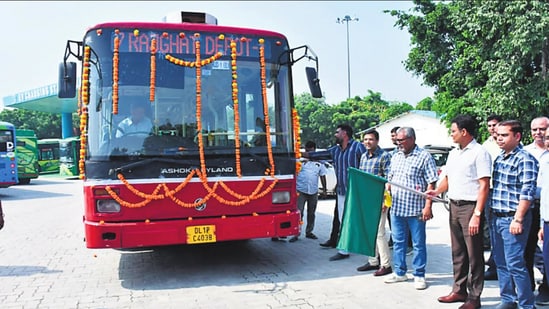
Bus number DL 1PD 4038 operated from Rajghat Depot-I under route 4,038, completed its prescribed service life and was withdrawn from the road. The bus served for 15 years, from September 2011, and ran 9,27,951.9 km. Its retirement also marked the end of DTC’s own bus fleet. All buses, including the remaining 1,861 CNG green-coloured buses, are now managed through private concessionaires.
Also Read: 96% of DTC buses back on road, Delhi HC told; petition closed
The farewell was a silent affair, with DTC staffers getting emotional and posing beside the decorated vehicle before it was taken away. For many drivers, conductors and mechanics, who spent years around the fleet, the red low-floor buses represent a considerably larger chapter in Delhi’s transport history.
“These buses were not just vehicles for us. We learnt how to drive long buses and spent a large part of our working lives with them. When you see the last one being taken away, it feels like the end of a period. The new electric buses are too silent. They don’t roar out the magnanimity of the vehicle you are driving on the roads. We are still getting used to them,” said Lalit Chaudhary, a DTC driver who has worked on the CNG fleet.. In the late 1990s, as the capital grappled with air pollution, the Supreme Court took a series of measures based on recommendations of the Bhure Lal Committee, formally known as the Environment Pollution (Prevention and Control) Authority.
{{/usCountry}}“These buses were not just vehicles for us. We learnt how to drive long buses and spent a large part of our working lives with them. When you see the last one being taken away, it feels like the end of a period. The new electric buses are too silent. They don’t roar out the magnanimity of the vehicle you are driving on the roads. We are still getting used to them,” said Lalit Chaudhary, a DTC driver who has worked on the CNG fleet.. In the late 1990s, as the capital grappled with air pollution, the Supreme Court took a series of measures based on recommendations of the Bhure Lal Committee, formally known as the Environment Pollution (Prevention and Control) Authority.
{{/usCountry}}Also Read: DTC workers’ strike:12 held for ‘vandalism’
In July 1998, the top court directed that Delhi’s entire city-bus fleet be progressively converted to a single-fuel CNG mode by March 31, 2001.
That transition changed the appearance and the technology of Delhi’s bus fleet. The older diesel buses gradually gave way to CNG vehicles. A decade later, another major transformation followed: low-floor buses.
For commuters, the buses also became part of the city’s visual memory. The red AC buses and green non-AC buses appeared on routes connecting residential colonies with railway stations, markets, government offices and educational institutions.
Also Read: Delhi Transport Corporation redeploys 2,693 drivers as strike continues to affect bus services
The fleet’s decline, however, has been gradual. Most of the CNG low-floor buses introduced around the Commonwealth Games reached the end of their operational lives in 10-12 years.
For commuters, the buses also became part of the city’s visual memory. The red AC buses and green non-AC buses appeared on routes connecting residential colonies with railway stations, markets, among others.
Stay updated with all top Cities including, Bengaluru, Delhi, Mumbai and more across India. Stay informed on the latest happenings in World News along with Delhi Election 2025 and Delhi Election Result 2025 Live, New Delhi Election Result Live, Kalkaji Election Result Live at Hindustan Times.
Stay updated with all top Cities including, Bengaluru, Delhi, Mumbai and more across India. Stay informed on the latest happenings in World News along with Delhi Election 2025 and Delhi Election Result 2025 Live, New Delhi Election Result Live, Kalkaji Election Result Live at Hindustan Times.