: As the Ganga water level receded to 66.42 metres in Varanasi, platforms and stairs at the ghats became visible again, with large amounts of silt left behind by the receding floodwater.
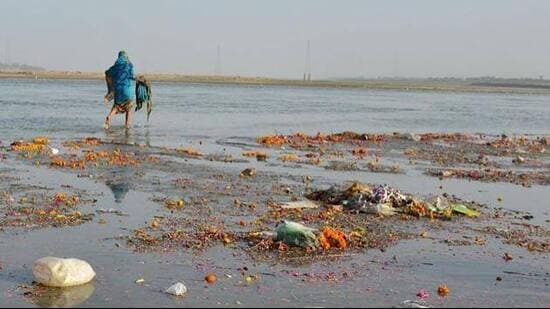
Ganga volunteers and some locals have started removing the silt and waste, including flowers, deposited along the ghats. Ganga volunteer Rajesh Shukla said he and a team of volunteers cleaned the waste covering Dashashwamedh Ghat, including its stairs and platform. Shukla said several people dump flowers and other waste into the river as an act of faith, and the floodwater later carries it to the ghats.
Varanasi has 84 ghats. Asi Ghat, its adjoining ghats and several other ghats are covered with silt and flood waste left behind by the receding water.
At some ghats, locals and people working at the ghats have started draining the silt back into the Ganga. Shukla said that although the floodwater has receded, the waste left behind must be removed promptly. Otherwise, it could return to the Ganga and pose a serious threat to aquatic life and the river’s ecosystem.
Under the ‘Namami Gange’ initiative, Shukla and other volunteers collected debris scattered along the banks of Dashashwamedh Ghat and handed it over to the Varanasi Nagar Nigam team.
{{/usCountry}}Under the ‘Namami Gange’ initiative, Shukla and other volunteers collected debris scattered along the banks of Dashashwamedh Ghat and handed it over to the Varanasi Nagar Nigam team.
{{/usCountry}}Shukla said, “The debris scattered along the banks today, following the floods, shows that Maa Ganga has returned our own waste to us. Let us make our faith a vehicle for the cleanliness of the Ganga, not for its pollution.” He stressed that a clean Ganga is the cornerstone of a healthy life. Locals have appealed to the Varanasi Nagar Nigam to start a silt-removal drive at the earliest.