: The Ganga continued to rise in Varanasi on Sunday, forcing boats to be anchored, shifting the Ganga Aarti to a higher location and leaving several vibrant ghats marooned.
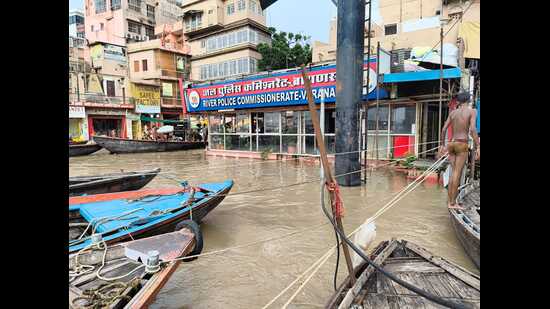
The rising Ganga has also caused a reverse flow in the Varuna river. Water has entered several low-lying localities along the river, adding to residents’ inconvenience. Many locals have started moving to higher locations.
According to the Central Water Commission, the Ganga was flowing at 69.40 metres in Varanasi on Sunday. The rising trend continued; the warning level is 70.262 metres.
Given the rising Ganga and Varuna levels and the looming flood situation, the district administration has made multi-layered preparations for public safety and quick relief and rescue operations.
A total of 61 flood relief camps have been identified across the district. The camps will provide shelter, food, drinking water, lighting, sanitation and other essential facilities.
The medical department has arranged first aid, essential medicines and health services. The animal husbandry department will treat and care for livestock, while the municipal corporation will provide sanitation, drinking water, cleanliness and other civic amenities, officials said.
{{/usCountry}}The medical department has arranged first aid, essential medicines and health services. The animal husbandry department will treat and care for livestock, while the municipal corporation will provide sanitation, drinking water, cleanliness and other civic amenities, officials said.
{{/usCountry}}Daily necessities will be supplied as required so that families staying in relief camps do not face inconvenience, district magistrate Satyendra Kumar said.
A total of 21 flood posts have been established for continuous local-level monitoring and a rapid response. These posts will monitor water levels, transportation, public safety and other conditions in flood-prone areas.
A total of 198 boats have been arranged for relief and rescue operations in areas that could be affected by floods. Depending on requirements, they will be used to move people to safe locations, distribute relief supplies and conduct rescue operations. Safety standards will be strictly followed, with trained boatmen and relevant teams deployed as required.
Teams from the National Disaster Response Force (NDRF), Water Police and Provincial Armed Constabulary (PAC) have been kept ready for rapid and specialised relief and rescue operations. They will be deployed immediately in flood-prone areas if required.
The administration has also prioritised the safety of livestock. Adequate quantities of fodder, including straw, have been arranged for animals in areas likely to be affected.
Preparations have also been made to relocate animals to safe locations and ensure fodder and drinking water are available if required.