It seems we won more medals than we did at the last Olympics. Personally, I was thrilled with how our sports people competed in different disciplines - win or lose - because it takes a tremendous amount of courage and resilience to perform at the top level, especially when you don’t come from a nation where sports is a culture, and where performance is not an everyday attitude. Each performance was creditable, and each medal was a triumph against very difficult odds.
Sports could lift many out of poverty and propel many others into the next level of economic existence, but the odds are heavily stacked against that in the absence of a significant and consistent investment at various levels of society, facilitated by a government spending on infrastructure. For a government to prioritise sports spending requires sustained demand from the media and citizens.
I have lived in Delhi, Mumbai and Pune. Growing up, I spent three years (Grades 8-10) at the Union Academy School in Delhi in the 1980s and the biggest differentiator for a kid living in Delhi is the sports infrastructure and sports culture. And that infrastructure and culture starts with the school’s coach and the physical training team.
In those three years, I won a gold medal and certificate as part of the school’s football team that won the Zonal U-16 football trophy. I also won silver and bronze medals at the Delhi interschool athletics and went up to the quarters and semis in consequent sub-junior national tournaments in table-tennis. My greatest pride came in cheering from the stands whenever our school’s hockey team took the field. Our school was (and still is) famous for its outstanding hockey team, having produced several players who went on to play for the India men’s team, as also players who became sports administrators and coaches. We had a city rivalry with Modern School Barakhamba road and DPS RK Puram.
{{/usCountry}}In those three years, I won a gold medal and certificate as part of the school’s football team that won the Zonal U-16 football trophy. I also won silver and bronze medals at the Delhi interschool athletics and went up to the quarters and semis in consequent sub-junior national tournaments in table-tennis. My greatest pride came in cheering from the stands whenever our school’s hockey team took the field. Our school was (and still is) famous for its outstanding hockey team, having produced several players who went on to play for the India men’s team, as also players who became sports administrators and coaches. We had a city rivalry with Modern School Barakhamba road and DPS RK Puram.
{{/usCountry}}Our sports days used to be held at Shivaji Stadium in Connaught Place, which we considered our home ground, given our hockey credentials.
Talkatora Stadium and pool was a venue frequented for the many interschool tournaments - my most memorable table-tennis matches were at Talkatora. My elder cousin was part of the Delhi U-19 cricket team, which meant we occasionally got to watch Test matches at Ferozshah Kotla. Visits to play and watch football games at Ambedkar Stadium were par for the course. Our school team qualified for the Subroto Cup one of those years, and though I was on the bench through all our draws and defeats, it was a great experience being run ragged by Madhyamgram High School (West Bengal) and a Russian school team.
The city newspapers were of importance to school students because reporters regularly covered these tournaments and reported on local champions, competitive rivalries and school records. Not just as a tiny mention, but proper reports. They ran extensive articles asking questions on coaching and infrastructure. Their opinion mattered and influenced sports performance.
After high school, I moved back to Mumbai where serious sports is more at club-level than school, but reasonably big on the college circuit. Again, local newspapers covered educational and club sports, though selectively, but the association with clubs kept the interest and performance going. Mumbai was geared to a professional career and enthusiasm for sports eventually used to wear down to a hobby, since infrastructure was not that great and when it was, it wasn’t as easily accessible as in Delhi.
Coaches were even harder to come by unless you were playing cricket.
When I landed in Pune in 1996, I was struck by the local sports culture at the school level, including the availability of coaches and considerable coverage by all local newspapers.
And after the 2008 Youth Commonwealth Games, Balewadi stadium added the much-needed upgrade to facilities. Pune had a vibrant sports culture across many sports, mainly tennis, swimming, football, badminton and athletics. But, specially swimming.
In the past decade, many schools have come up with really good sports infrastructure and with a globalisation of the curriculum, more schools talk sports and talk the importance of holistic education and organise their own sporting events.
I am a parent, still very enthusiastic about playing and propagating sports. Our eldest swims and competes at the inter-school and district level tournaments, trying to improve his timings and has the advantage of a peer group at his swimming club. The younger ones are finding their sports.
I can quite honestly say that it’s an uphill task if left to the schools. Schools don’t seem particularly interested in developing sporting talent, as much as they are in selling the idea that they have sports integrated into their curriculum. A lot of this comes from the fact that they are addressing their market, parents. And the bulk of the parents in any given school like their children playing, but come Grade 5, their focus shifts to academics.
And that’s what schools are focused on. Every school has a handful of parents who are focused on sports and who want their children to have the option of a sporting career, if talent indicates so. These are a minority.
I remember groups of parents from different international schools who, not only took a keen interest, but also joined the parent committees to drive the school management to really walk the talk beyond infrastructure. All of them eventually gave up because they realised that schools don’t listen to minority voices.
Nations that do well consistently have multiple athletes in different sports capable of making the qualifying mark and most of them have a career in sports, with achievements going back to school days. The pressure of performance is shared by a peer group and it leads to healthy competition, unlike in developing nations where the pressure is usually on a handful of sports persons, who are built up by the media and then dropped till the next Olympics.
I always used to wonder what happens to the great players and swimmers and athletes I used to see at the school level. I guess they all got caught up in the need to make a living and decided that sports wouldn’t make them a living.
Nowadays, I wonder, what is the point of schools having the physical infrastructure, but lacking the vision and desire to use it to develop talent that comes through to them.
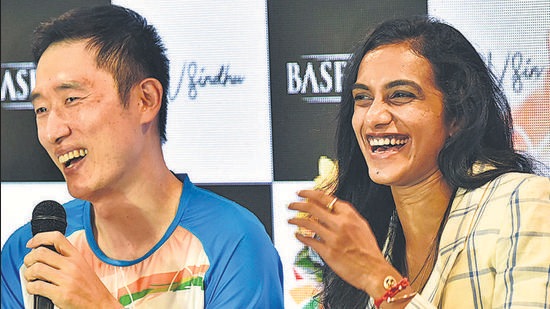
There is a great hope. The archers, and shooters, and athletes, will have their day… one day. Of all the medals we won, Sindhu’s badminton bronze and the hockey bronze have sustainability significance because they represent a coming together of infrastructure, government support, individual performance and coaching excellence over decades.
If more states adopted specific sports to develop like Odisha has stood by hockey, and if more schools across the country make sports a matter of achievement, a legacy would fall into place. And then, maybe, more parents would believe in the talent their children have, and a better sports culture will evolve.