E-Paper



Govt’s plan to weed out invasive species, restore native vegetation gets Centre’s nod
Delhi's government plan to remove invasive tree species and restore native vegetation in forests has been approved, aiming to plant over 10 million native saplings by 2037.

 Prefer HTon Google


New Delhi: A plan proposed by the Delhi government to gradually weed out invasive tree species and restore native vegetation across the city’s forest areas has received approval from the Ministry of Environment, Forest and Climate Change, officials aware of the development said on Sunday.
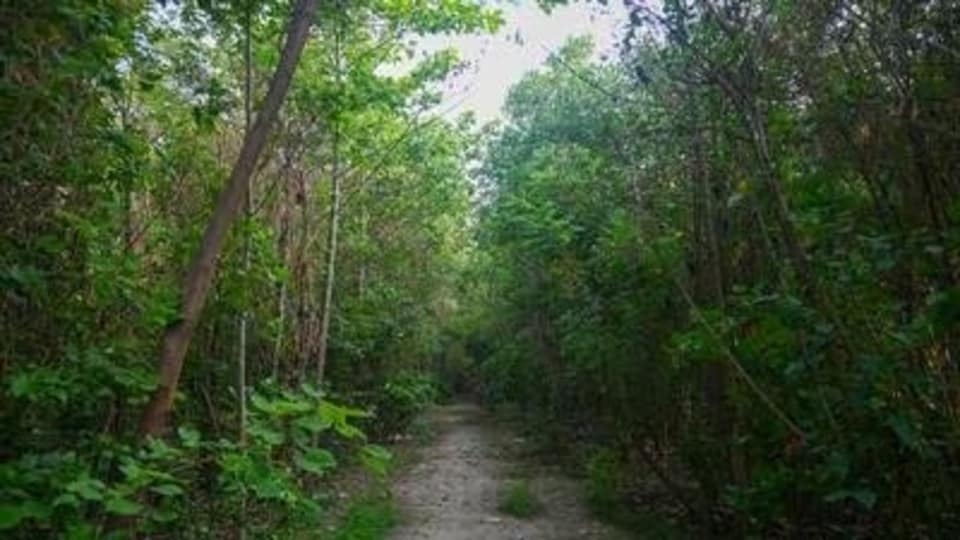
The proposal was recently placed before the Delhi Tree Authority (DTA) as part of a broader eco-restoration strategy for the city’s ridge and forest patches.
The plan, prepared by the city’s forest and wildlife department, focuses on restoring areas currently dominated by invasive species such as vilayati kikar (Prosopis Juliflora), subabul (Leucaena Leucocephala) and eucalyptus, which experts say suppress native biodiversity and alter soil and water conditions.
The plan has been prepared for a decade, 2026-27 to 2036-37, with an outline of the next four years placed before the DTA recently, according to the minutes of the meeting dated February 17.
The plan for the upcoming four years is to carry out ecological restoration and an enrichment plantation programme covering 6,303.55 hectares of forest land across Delhi.
Over this period, authorities aim to plant 10,048,120 native saplings, including trees, shrubs, and climbers, to gradually replace invasive vegetation and strengthen natural forest ecosystems. A senior forest official confirmed that the working plan had already received the Centre’s approval but will also be formally presented before the Ridge Management Board (RMB) in an upcoming meeting.
“The Ministry has cleared it, but we may also formally present before the RMB in the next meeting. It has already been placed before the DTA,” the official said.
As per the targets presented during the meeting, around 2,856,360 saplings will be planted in 2026-27 across 1,490 hectares of forest land. In 2027-28, plantation activities will expand to 1,670 hectares, with 2,585,550 saplings proposed for planting. The following year, 2028-29, will see plantation on 1,450.55 hectares with 2,443,840 saplings. In 2029-30, officials aim to plant 2,162,370 saplings across 1,693 hectares.
The latest India State of Forest Report (ISFR) 2023 shows that, for the first time, Subabul has become the most dominant species in Delhi’s urban areas. Until 2021, the most commonly found tree in urban spaces was neem (Azadirachta Indica). The invasive Subabul has also overtaken the other trees that have been predominant in urban Delhi over the last several years, which include Shahtoot, Ashok and Pipal. Meanwhile, Vilayati Kikar remains the most dominant species in the forest and rural areas of Delhi, it had said.
A retired forest official said that while attempts to restore the Central Ridge are already underway, planting a variety of native species is important. “The department had made an SOP of over 40 tree species suitable for plantation, but out of that, only around five species are being planted predominantly. This includes Babool, which is inappropriate for the Ridge. Similarly, Bel is being planted, which is typically not found on the Ridge,” said the official, adding any eco-restoration has to first tackle removing invasives – from the roots. “Only then planting natives makes sense. One also needs experts on the ground to guide labourers on which species to plant where.”
According to the meeting record, nearly 2,917 hectares identified for eco-restoration are currently infested with invasive species, while another 3,387 hectares fall under open forest areas or past plantation sites that will undergo enrichment planting with native varieties.