E-Paper



Green tracks ahead: Rajaji Park rail line to get elephant overpasses, train speed to double
Data shared by the MoEFCC in the Lok Sabha on July 28 in response to a query, shows that 81 elephants were killed in train collisions across India between 2019–20 and 2023–24.

 Prefer HTon Google


In a major move for wildlife conservation and railway modernisation, Indian Railways, in collaboration with the Wildlife Institute of India (WII), will build natural-looking animal overpasses in the Rajaji National Park area along the Haridwar-Dehradun rail section. These structures aim to provide safe passage for elephants, helping prevent collisions, a persistent issue, in this ecologically sensitive corridor.
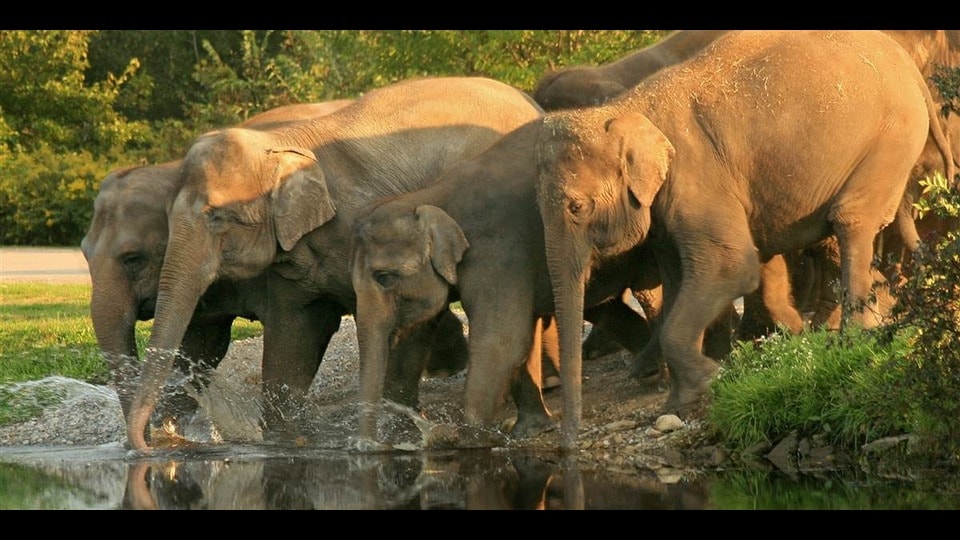
Data shared by the Union ministry of environment, forest and climate change (MoEFCC) in the Lok Sabha on July 28 in response to a query, shows that 81 elephants were killed in train collisions across India between 2019–20 and 2023–24.
According to railway officials, the initiative comes ahead of a planned upgrade of the train speed on this route to 100 km/h. At present, trains run at a maximum speed of 50 km/h during the day and as slow as 35 km/h at night through the park area, owing to the frequent movement of elephants and other wildlife.
With the implementation of new safety measures, the railways aims to double the permissible speed, ensuring both passenger efficiency and animal safety.
To complement the overpasses, the railways will build boundary walls along some stretches of the track and install low-voltage electric wires in others. These wires will deliver mild shocks to elephants that get too close, encouraging them to retreat. Additionally, sensors producing the sound of honeybees will be deployed near the tracks. According to WII experts, elephants are instinctively fearful of bee stings, making this a highly effective deterrent.
On the technological front, the railways is developing a system to install sensors on the tracks connected to devices in train engines. If an elephant is detected on or near the tracks, the system will alert the train driver and provide the animal’s exact location, enabling timely intervention to stop the train.
Another innovative measure will address the problem of gravel near railway tracks, which can trap elephants’ feet, especially when they try to flee an oncoming train. In such areas, gravel will be replaced with rubberised surfaces to ease animal movement and reduce accident risk.
Infra push
After receiving clearance in January 2021 to run trains at 100 km/h on the Haridwar-Dehradun and Raiwala-Rishikesh sections, Indian Railways faced delays due to inadequate safety infrastructure. Now, with conservation-focused and technology-driven initiatives underway, the long-stalled speed upgrade is back on track.
As part of the development, Harrawala Station—located on the same route—is being rapidly upgraded. The newly appointed Divisional Railway Manager, Raj Kumar Singh, chose Harrawala for his first inspection. Officials confirmed that work has been sanctioned and tenders are in process, with operations targeted to begin by April 2026.
Unlike Dehradun Station, which is limited to 18-coach trains due to space constraints, Harrawala will accommodate up to 24-coach trains, easing congestion and improving capacity.
Senior divisional commercial manager Aditya Gupta highlighted that trains currently slow down significantly at night through the 20-km Rajaji National Park stretch to avoid elephant collisions. The new project—featuring naturalistic overpasses, modern sensors and strategic construction based on WII studies—aims to protect wildlife while enabling faster train operations across the 65-km Haridwar-Dehradun section. The initiative is expected to set a national benchmark in balancing infrastructure growth with ecological preservation.