
 E-Paper



Kaushambi’s Alwara natural lake dying slowly, finds study
Sewage openings from nearby villages causing damage; findings to be presented at Asia Pacific Watershed Congress-2023 in the Philippines


Alwara natural lake located in neighbouring Kaushambi district is overlooked and in demand of immediate attention for its conservation, a recent study has found.
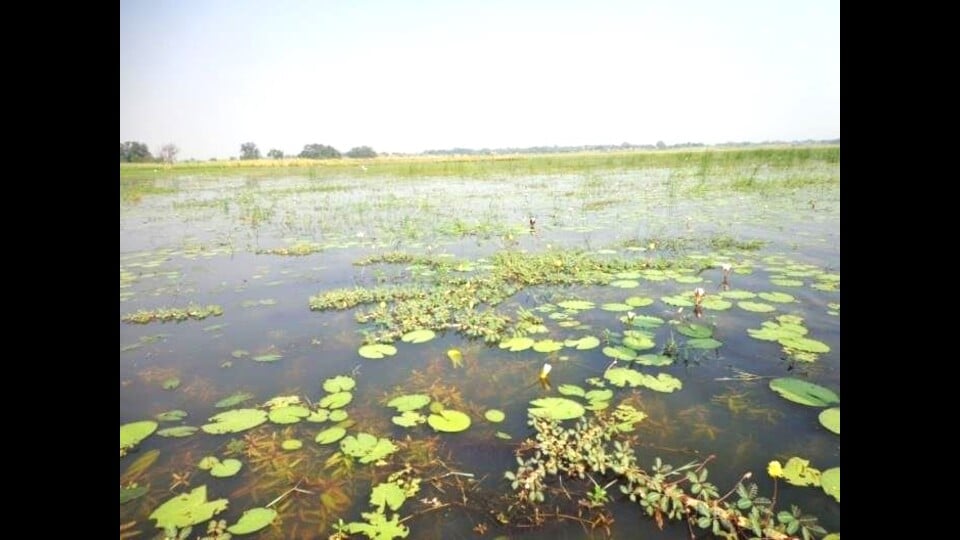
Undertaken by a team of researchers from the Indian Council of Forestry Research and Education’s Eco-Rehabilitation Centre based in Prayagraj, the study found that the natural watershed covering an area of about 400 hectares, is being polluted by nearby villages and are responsible for various invasive species like Water hyacinth (jal kumbhi) flourishing in it, threatening its diverse flora and fauna.
A PhD scholar Darshita Rawat supervised by senior scientist Kumud Dubey at ICFRE’s Eco-Rehabilitation Centre has been selected for a fully funded participation in the APAC Watershed Congress-2023 on ‘Nurturing Watersheds’ in Manila, Philippines, organised by the Philippine Department of Environment and Natural Resources and Asia Pacific Association of Forestry Research Institutions on October 23-27, 2023.
She will be presenting the findings of this research undertaken jointly with project fellow Ashish Kumar Yadav.
The perennial wetland of Alwara lake—located 75 km far from Prayagraj and 25 km from Manjhanpur by road—supports a wide variety of fauna and flora. Some vulnerable species such as cranes and lotus also exist in the area. However, these are on the verge of extinction due to widespread reduction in the extent and quality of their wetland habitat, exploitation and the effects of pollutants, unplanned farming, irrigation and non-adoption of wildlife rules and regulations as well, said Kumud Dubey.
“The main source of water is the back flow from the Yamuna and rainwater. It is important in ground water recharge of the area. It is also important as a major population of cranes thrives here. Other migratory birds also visit during winter. The sewage openings from nearby villages are the main source of pollution of this watershed and responsible for various invasive species like jal kumbhi. The strategic planting of phytoremediation tree species via natural-based solutions is the sole approach for water resource conservation, resilience enhancement, and watershed protection,” she said.
“This was a prelude study. We are planning to submit a big project on it, covering its flora study, phytoremediation plan of its sewage openings, and awareness generation for its conservation. We will also focus on the potential of Eco tourism that the wetland presents,” she added.
Rawat said that channeling of water from Yamuna and awareness generation amongst people should be undertaken for conserving this watershed. “In our paper, we will also be highlighting the advantages of natural-based solutions, which may additionally contribute to economic stability for the local population in Kaushambi district,” she added.


