Thiruvananthapuram:
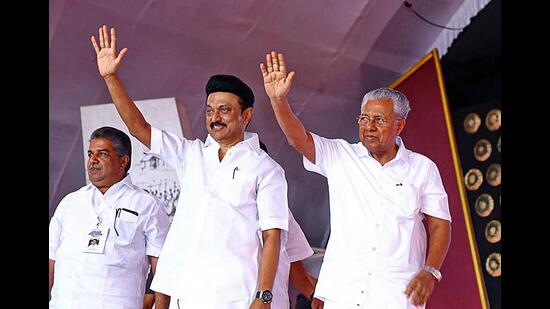
Kerala chief minister Pinarayi Vijayan on Saturday said the country needed a united fight against forces that try to weaken it on the lines of religion and divisiveness.
Inaugurating the centenary celebrations of Vaikom Satyagraha in Vaikom (Kottayam), a non-violent agitation against untouchability and caste bias, he and his Tamil Nadu counterpart M K Stalin urged people to take spirit from the peaceful movement to fight forces that try to weaken the country.
“The Vaikom Satyagraha opened a glorious chapter in social movement of the country. It is the biggest agitation against caste discrimination and it later inspired many such movements. It was a path-breaking movement,” said Stalin.
He said it was a turning point in the struggle for equal rights and earned self -respect for the socially oppressed people. He said he was keen to attend the inaugural ceremony despite the ongoing assembly session. Before the inaugural session, both the CMs paid floral tributes to E V Ramaswamy Naicker aka Thanthai Periyar who played a key role in the agitation.
Vijayan said Vaikom Satyagraha was more relevant today as the country was facing threats to weaken basic values on which it was built. “We need a united fight against such forces. Some forces are trying to bring back Chathurvarnya and make it a religious state,” he said. “We have to learn many lessons from the Satyagraha that opened a glorious chapter in the social movement of the country,” he said.
In 1924 a small temple town in Kottayam district became a nerve-centre of socio-religious movement that questioned the upper caste supremacy over Hindu shrines and Father of the Nation Mahathma Gandhi played a key role in it. Gandhiji once said the peaceful movement gave him much energy in his fight against caste system and foreign domination later.
{{/usCountry}}In 1924 a small temple town in Kottayam district became a nerve-centre of socio-religious movement that questioned the upper caste supremacy over Hindu shrines and Father of the Nation Mahathma Gandhi played a key role in it. Gandhiji once said the peaceful movement gave him much energy in his fight against caste system and foreign domination later.
{{/usCountry}}The centre of the century-old movement was ancient Mahadeva temple in Vaikom and all roads leading to the ancient shrine were barred for people belonging to backward castes especially, majority community Ezhavas those days. Despite many requests then King of Travancore was not ready to do dump the inhuman system. The Congress Party later extended its support to the movement after its leader T K Madhavan narrated the injustice being meted out to lower caste people in Kakinada Congress session in 1923.
On March 30, 1924 two persons from the backward community-- Kunjappi from Pulaya caste and an Ezhava named Bahulyan --along with an upper caste Govinda Panikkar proceeded to the road leading to the temple. They were beaten up jand ailed immediately but it sowed seeds of a mass movement and resistance. Interestingly top leaders of the movement were from higher castes.
Gandhiji later met Maharani of Travancore Sethu Lakshmibai and succeeded in getting some concessions for lower caste communities. Roads around the temple with the exception of two lanes leading to the eastern entrance were opened to all castes. But it was just the beginning and it finally led to Temple Entry Proclamation in 1936 that opened doors of all shrines irrespective of their caste status.