Odisha will hold its own census of tigers and elephants in October this year and in May 2024 after the latest ‘All India Tiger Estimation’ report revealed that the tiger numbers have dropped from 28 to 20 in 2022 in the state.
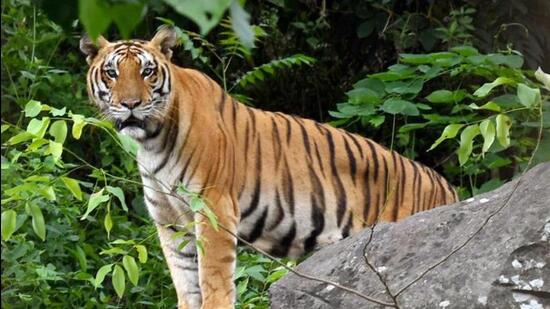
Chief wildlife warden SK Popli said while the tiger census exercise will begin in October this year and will continue for one and a half months, the elephant census will be conducted in May next year.
“The department will adopt two methods for the tiger census; one is the line-transact and the other one is the camera trap. The elephant census will be conducted in May next year,” said Popli. The state now has around 800 cameras and efforts are on to procure more.
Also Read: India’s tiger count tops 3,600, Madhya Pradesh leads at 785
The numbers have come as a shocker for Odisha with the tiger population steadily down from 45 in 2006 to 20 in 2022, according to the latest survey report.
The Satkosia Tiger Reserve, where the country’s first inter-state tiger translocation exercise was attempted in June 2018 with the transfer of a tiger and tigress from Madhya Pradesh that ended in a massive failure, reported no presence of tigers in the latest all-India tiger estimation.
{{/usCountry}}The Satkosia Tiger Reserve, where the country’s first inter-state tiger translocation exercise was attempted in June 2018 with the transfer of a tiger and tigress from Madhya Pradesh that ended in a massive failure, reported no presence of tigers in the latest all-India tiger estimation.
{{/usCountry}}The decline in tiger numbers is a shocker if taken into account the 2004 census conducted by the Odisha government, which found 192 tigers in the state.
The 2022 tiger estimation however had a silver lining for Odisha as Similipal, where largescale poaching has been the order of the day with poachers killing two forest personnel in the last two months, reported an increase in tiger numbers from 8 to 16.
“The genetically unique and small population of tigers in Similipal is also of high conservation priority in the landscape,” the report said, adding that mitigation measures should be carried out on priority to lower mining impact as the region was dotted with mines in tiger landscape. “Prey augmentation, habitat restoration and protection can help in the recovery of tiger population in these states which have potential,” it said.
Also Read: After 24% surge, India is now home to 75% of tigers in the world
Wildlife conservationist Biswajit Mohanty said the fall in tiger numbers was no surprise as poachers continue to operate freely, including in highly protected areas like Simlipal and Satkosia.
“Odisha is the only state that reported constant figures revealing the failure of tiger protection. Tigers are good breeders provided there is a sufficient prey base and protection from poaching. We should have added at least 12-15 tigers between 2014 and 2022. The forest department has miserably failed to control poaching in the wild even in tiger reserves like Similipal. The Satkosia reserve has lost its last remaining tiger. When the ‘ill-conceived Satkosia tiger relocation project’ with a budget of Rs.25 crore was launched in 2018 in a human-dominated area, we had warned that is going to be a disaster. But our warnings were ignored as the department had fallen in love with big-ticket multi-crore projects,” said Mohanty.