E-Paper



Orissa high court denies father custody of son, says child is not a tennis ball
The Orissa high court said that deciding the custody dispute of the children between their parents and their in-laws is the most difficult job


Bhubaneswar: The Orissa high court has dismissed a father’s appeal for custody of his 11-year-old son, saying that a child “is not an inanimate object like a ball in a tennis court to be tossed from one side to another till a point is scored.”
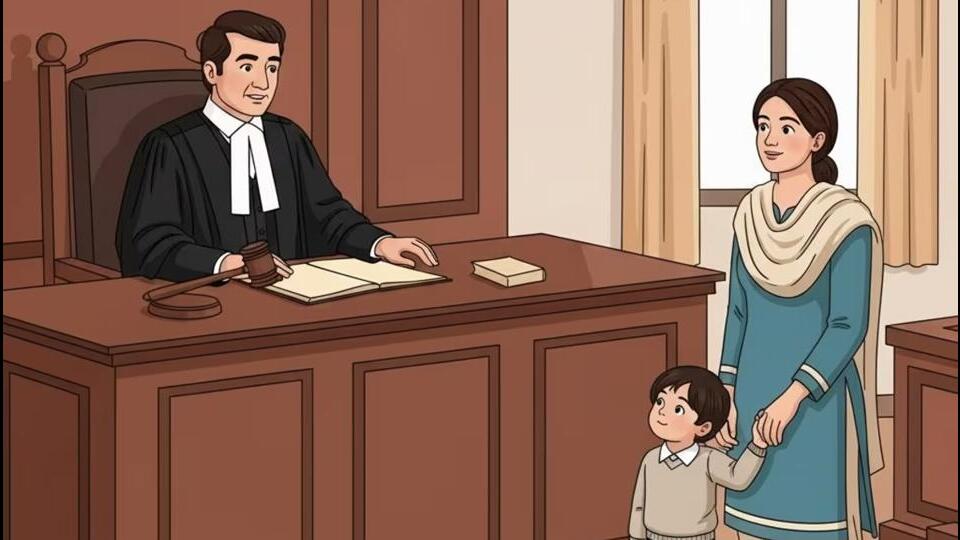
“Deciding the custody dispute of the children between their parents and their in-laws is the most difficult job inasmuch as a child is not an inanimate object like a ball in tennis court to be tossed from one side to other side till a point is scored and, therefore, while deciding a custody matter, a court is to be very careful and cautious to decide the same without any biases and prejudices in finding out the best welfare of the child,” Justice G. Satapathy said, while reaffirming that in all guardianship cases, the child’s welfare and emotional stability must prevail over competing parental or familial rights.
While disposing of an appeal by Ajay Kumar Nanda, who sought to reclaim the custody of his son from the child’s maternal grandparents and uncle, with whom he had been living since birth. Nanda’s wife had died a week after childbirth in 2014, triggering years of litigation and acrimony between the two families.
Justice Satapathy, invoking the principle of parens patriae—the court’s role as protector of minors—stressed that child custody cannot be decided merely through legal formalities or precedents. “It is a human problem and is required to be solved with a human touch,” the judge noted, quoting earlier Supreme Court rulings that emphasise welfare, emotional security, and moral upbringing over technical guardianship rights.
“The toughest decision for a court is to decide the custody of a child,” Justice Satapathy wrote. “One wrong decision would ruin the life of the child... A right decision would take him to the zenith, but a wrong one would throw him to the nadir.”
The petitioner married in December 2013 and a son was born in September 2014, but tragedy struck when his wife died days later. Her family accused the petitioner and his relatives of cruelty and dowry-related offences, leading to his arrest. During his custody, the baby was taken to the maternal home in Bargarh, where he has lived since.
Although the petitioner later reached a compromise in 2016 and briefly regained custody for three months in 2017, the maternal family took the child back, prompting a renewed legal fight. The family court in Jharsuguda had dismissed the petition in August 2024, a decision he challenged before the high court.
Upholding the lower court’s order, the high court found that the child had been living continuously with his maternal grandparents for nearly 11 years and was “deeply attached” to them. The judge noted that the boy, when personally interacted with in the family court, had expressed a clear preference not to live with his father.
“The child appears to be more mature than his age and expressed that he is not willing to live with his father,” the court recorded, adding that forcing a change in environment “without compelling reasons” could be detrimental.
The judge observed that while both parties were financially sound, the grandparents had provided consistent care, education, and emotional stability. “Unless the environment of the child is not conducive to his wellbeing, he should not be compelled to change his surroundings,” the court said.
While denying the father’s appeal, the high court, however, said the petitioner can take his son on short vacation trips during school holidays—initially up to seven days, later extendable to a fortnight—with advance notice to the grandparents.
“Neither this court nor the learned family court has ever intended to separate the father from his son,” Justice Satapathy said. “The child deserves the love, affection, and care of the father. Hopefully the gap between father and son would be abridged by the efflux of time before the child attains majority.”