
 E-Paper



PAU, NABARD initiate direct seeded rice project in 12 districts of state
The Punjab Agricultural University (PAU) and the National Bank for Agriculture and Rural Development (NABARD) have initiated a collaborative project to promote ‘Tar-wattar’ direct-seeded rice (Tar-wattar DSR) in 12 districts of the state


The Punjab Agricultural University (PAU) and the National Bank for Agriculture and Rural Development (NABARD) have initiated a collaborative project to promote ‘Tar-wattar’ direct-seeded rice (Tar-wattar DSR) in 12 districts of the state.
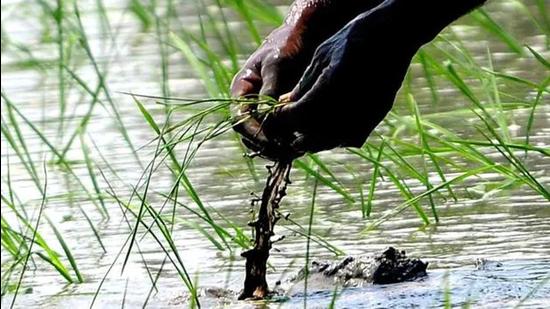
The two-year NABARD sponsored project focuses on encouraging farmers to opt for DSR techniques through training and demonstrating tar-wattar (semi- irrigated field with good soil moisture).
MS Bhullar, head of the department of agronomy, said under the project, six training webinars on tar-wattar DSR were conducted, and more than 300 farmers participated in them.
Farmers’ field demonstrations on ‘tar wattar DSR’ were laid on more than 200 acres in six districts including Amritsar, Gurdaspur, Tarn Taran, Pathankot, Ferozpur, and Faridkot during the current season, he informed.
A shift from puddle transplanting to DSR saves 15-20% of irrigation water, offers 10-15% of higher groundwater recharge, saves labour, and provides 250 kg/ha higher wheat grain yield, he said.
Dr Bhullar further explained: “Tar-wattar DSR is a novel technique developed and recommended by PAU in 2020 to reduce water footprints in rice cultivation. In this technique, pre-sowing irrigation is applied, and primed seed is sown in a tar-wattar field preferably, using Lucky Seed Drill.


