Nine of Meghalaya’s 12 districts recorded deficient rainfall in August, compounding concerns over the state’s shrinking monsoon and rising temperatures. According to the India Meteorological Department (IMD), September may bring some improvement, though the relief is expected to be limited.
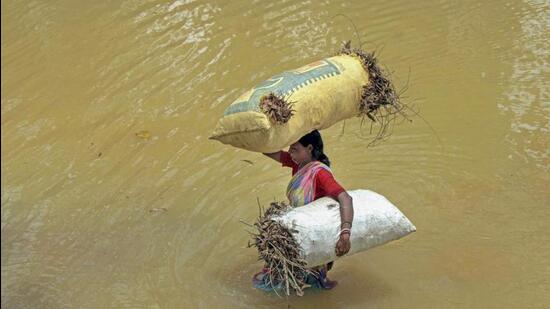
South West Khasi Hills was the only district to receive surplus rain, logging 270.40cm against the normal 146.74cm — an 84% jump that placed it in the ‘large excess’ category.
Six districts were categorised as ‘deficient’ — North Garo Hills (-56 per cent), West Garo Hills (-56 per cent), West Khasi Hills (-55 per cent), East Jaiñtia Hills (-54 per cent), Ri-Bhoi (-42 per cent) and East Khasi Hills (-29 per cent). Two others, South West Garo Hills (-75 per cent) and West Jaintia Hills (-74 per cent), slipped into the ‘large deficiency’ bracket.
Also Read: Yamuna flood: Over 10,000 evacuated in Delhi
Even Meghalaya’s traditionally wettest areas fell well short. East Khasi Hills, which normally receives 373.32cm in August, recorded just 265.75cm. West and East Jaintia Hills, usually above the 370cm mark, managed only 95.93cm and 170.35cm, respectively. Only East Garo Hills (-12 per cent) and South Garo Hills (-1 per cent) stayed within the ‘normal’ range.
The IMD has forecast heavier showers from the second week of September but cautioned that temperatures will continue to remain above seasonal norms.
{{/usCountry}}The IMD has forecast heavier showers from the second week of September but cautioned that temperatures will continue to remain above seasonal norms.
{{/usCountry}}Last year was the hottest on record for the state, averaging 1.125°C above the 30-year baseline. Both 2021 and 2022 were also among the warmest years.