
 E-Paper



Reservation benefit of one state cannot be extended to another: Rajasthan HC
The petition argued that as per the Central government notification, the declared eligibility percentages should apply uniformly to all counselling boards

 Prefer HTon Google


The Rajasthan High Court on Monday said that the benefit of reservation available in one state cannot be extended to another state.
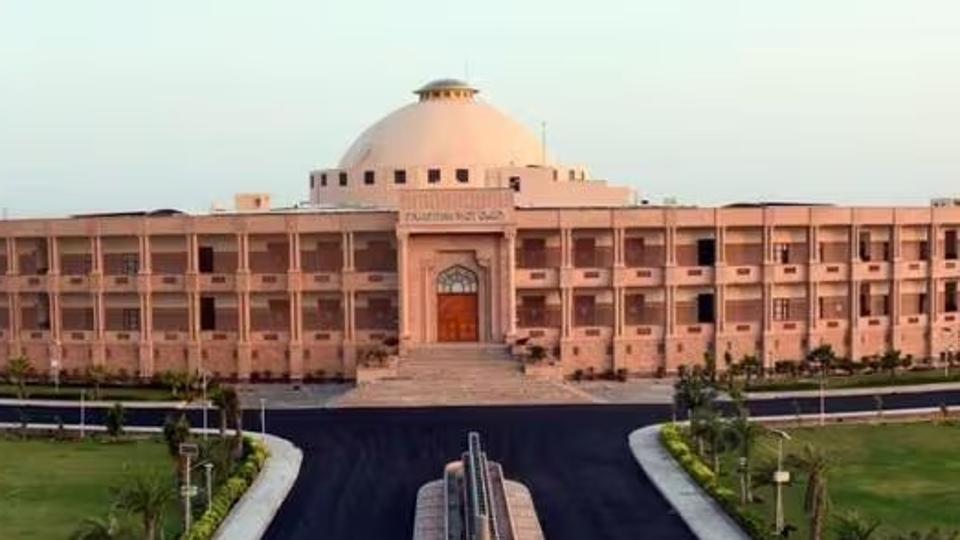
A single bench of Justice Sanjeet Purohit said that candidates belonging to reserved categories in other states may compete for the MBBS postgraduate course for the academic year 2025–2026 in Rajasthan under the unreserved category; however, they cannot be accorded the benefit of the reduced percentile prescribed for reserved categories.
The court dismissed a petition filed by the Federation of Private Medical and Dental Colleges of Rajasthan that challenged the February 18, 2026 decision that candidates belonging to reserved categories in other states were treated as general category candidates and were denied the benefit of lower percentile.
Also Read:Rajasthan HC issues directions to curb khap panchayats
The petition argued that as per the Central government notification, the declared eligibility percentages should apply uniformly to all counselling boards. It said that candidates belonging to reserved categories in other states should also be permitted to participate in the counselling process on the same basis.
“The statutory scheme of the Rajasthan Scheduled Castes, Scheduled Tribes, Backward Classes, Special Backward Classes & Economically Backward Classes (Reservation of Seats in Educational Institutions in the State and of Appointments & Posts in Services under the State) Act, 2008, as well as the provisions of the Postgraduate Medical Education Regulations, 2023, makes it evident that castes, races and tribes are classified as SCs, STs, BCs, SBCs or OBCs in relation to each individual state. Such classification and notification are based on the unique socio-economic and cultural realities of that specific region, and the corresponding policy decisions governing reservation are necessarily informed by these state-specific considerations,” said the bench.
The bench further said, “It cannot be assumed, nor is it capable of empirical determination, that backward classes across different states share identical or even comparable social realities. A necessary corollary of this position is that the benefits of reservation are confined to categories notified in relation to a particular state and cannot be extended to members who are recognised as belonging to a reserved category in another state.”
The court said that it “is also not persuaded to accept the contention advanced by counsel for the petitioner that the impugned decision results in a regime of 100% domicile-based reservation”.
Also Read:Rajasthan HC removes critical remarks on new transgender law from epilogue of its judgement
The court ordered that the February 18, 2026 decision does not create “an absolute bar based on domicile”, it noted that the “benefit of revised qualifying marks prescribed for reserved categories shall not be extended to candidates belonging to reserved categories of other states”.
“Effectively, the decision operates to withhold reservation benefits from out-of-state reserved category candidates and confines such benefits to reserved category candidates of the State of Rajasthan,” said the bench.
Justice Purohit said that such a classification is “legally permissible and does not offend the constitutional mandate”.
“It is further pertinent to note that candidates belonging to reserved categories of other states are not rendered ineligible to participate in the selection process. They continue to be entitled to compete for unreserved seats, subject to their fulfilling the qualifying criteria applicable to the general category, including the revised qualifying marks prescribed for the said category,” said the bench.


