E-Paper



Temperature at Bhitarkanika national park may rise by 2°C by 2050: Report
The report also said that in 2050, the total rainfall is likely to increase by 3.9 per cent at the Bhitarkanika national park in Odisha

 Prefer HTon Google


A vulnerability and risk assessment mapping of Bhitarkanika national park in Odisha has predicted that the average temperature there may rise between 1.9 degrees Celsius and 2.1 degrees Celsius by 2050 thus impacting the habitat of the saltwater crocodiles and Olive Ridley sea turtles, its two prominent fauna.
The report prepared by International Climate Initiative, GIZ with support from the Odisha government said the average temperature in Bhitarkanika, a designated Ramsar site, may rise between 1.9 degrees Celsius and 2.1 degrees Celsius. Taking 1960-1990 as the baseline period, the report says that the summer temperature there may go up from 33.5 degrees C to 35.6 degrees C in the year 2050. “Summer will be an extreme season with limited rainfall and high temperature, which will place stress on the forests and associated species,” the report said.
The report said in 2050, the total rainfall is likely to increase by 3.9 per cent. During the June-October period, the rainfall will rise by 48.3 mm, from 1,262.2 mm to 1,301 mm in 2050. This increase will be more pronounced in the upstream areas, almost by 11 per cent. However, during summer it may drop by 8.2 %.
It also said during monsoon season the temperature would rise from 31.6 degrees C to 33.5 degrees Celsius while winters would be warmer with the temperature going up from 27.6 degrees C to 29.6 degrees C.
Bhitarkanika in Odisha is the second largest mangrove ecosystem in India after the Sundarban National Park and is home to diverse flora and fauna including Olive Ridley sea turtles and saltwater crocodiles. The mangrove forest is also a good habitat for the king cobra, Indian python and water monitored lizard. In 2002, the Bhitarkanika mangroves spread over an area of 2,672 sq. km. was declared as a Ramsar site by Wetland International, South Asia. Gahirmatha, world’s largest mating and nestling place for the most endangered Olive ridley turtles is in Bhitarkanika.
The climate vulnerability assessment at the Bhitarkanika was conducted using the Climate Change Adaptation and Mitigation method to systematically identify climate change risks, their impacts and adaptation responses.
The report said the combined impact of rising temperature and drop in rainfall during two seasons may lead to drought thus directly affecting mangrove productivity, growth and survival by increasing salinity levels in the mangrove forested areas. It said climate change will induce frequent cyclones and storm surges with a possible storm surge up to 5 metre. It said by 2040, sea level is expected to rise by 0.5 metre along the mangrove system’s coastline.
The report said higher rainfall during monsoon may lead to erosion, waterlogging thus leaving little space for species such as deer, wild boars and reptiles. Species such as shrimps, crabs, frogs and fishes may face decline due to pollutants and sedimentation. Reduced rainfall in summer and winters would lead to loss of productivity of mangroves which can directly impact food availability for fish and saltwater crocodiles.
“Despite the conservation efforts, the current extent of dense mangroves will decrease by 10 pc. By 2050, patches of mangrove along south-west and northern coasts of Bhitarkanika Sanctuary are projected to decrease in gross primary production and are at a higher risk of disturbance,” the report said.
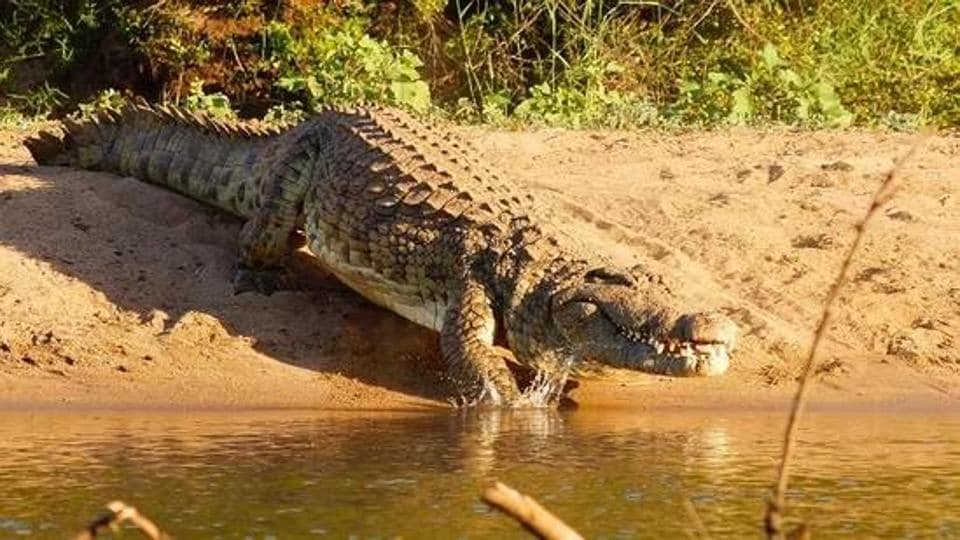
Higher rainfall and flooding will lead to reduced mud banks which is used for sunbasking by the saltwater crocodiles. Impact of climate change on crocodiles may leave lasting effect on nesting, hatching and survival of the juveniles. With rising temperature, the young crocodiles would spend less time diving into water and more outside to exposing them to predators. The increasing temperature during incubation between March to July may also lead to increase in number of males.
The vulnerability assessment said sea-level rise, increased storm surge and cyclone frequency would lead to erosion of the nesting grounds of Olive Ridley sea turtles forcing them to seek safer places.