Dehradun: Uttarakhand high court on Friday directed the state government to submit a detailed report on the success rate of trees replanted during the Sahastradhara road expansion project in Dehradun.
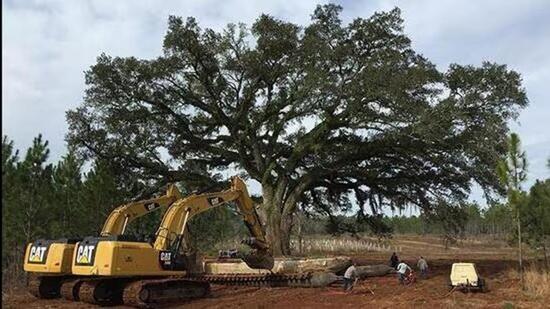
The court was hearing a public interest litigation (PIL) filed by Dehradun-based environmental activist Reenu Paul, challenging the proposed felling of more than 4,369 trees in the Shivalik Elephant Reserve for a new road-widening project between Bhaniyawala in Dehradun and Rishikesh.
The bench of chief justice G Narendar and justice Alok Mahra issued the direction after Abhijay Negi, counsel for the petitioner, argued that tree transplantation carried out on Sahastradhara Road has recorded poor survival rates.
Negi said the Forest Research Institute (FRI) informed the bench that it intends to transplant 700 trees out of the 4,369 trees affected by the Bhaniyawala–Rishikesh road-widening project.
Negi strongly opposed the move, citing past examples. “We showed photographs of the poor condition of transplanted trees on Sahastradhara Road. The court took note of this and directed the Public Works Department (PWD) secretary to appear in the next hearing with a comprehensive report on the survival and health of these transplanted trees,” Negi said.
The next hearing is scheduled for December 19.
{{/usCountry}}The next hearing is scheduled for December 19.
{{/usCountry}}The Shivalik Elephant Reserve forms a crucial corridor connecting the western and eastern parts of Rajaji Tiger Reserve across the Ganga and has been identified as a critical elephant habitat by the Wildlife Trust of India (WTI).
The PIL had sought directions to quash the proposal to cut more than 3,300 trees inside the Shivalik Elephant Reserve, which spans 5,405 sq km across eight districts.
The petitioner argued that widening the stretch between Bhaniyawala and Rishikesh would fragment the elephant corridor, increase human-elephant conflict, and irreversibly damage forest cover.
In March this year, the high court had directed the National Highways Authority of India (NHAI) and the state forest department to consult FRI and explore options to save the maximum number of trees by transplanting them to nearby forest areas. The court had asked authorities to adhere to FRI’s technical guidelines to ensure transplantation success.
Negi also referred to the HC’s 2022 observation on tree transplantation, in which the court had noted that although 972 transplanted trees along a separate project corridor had been heavily pruned before relocation, the government had claimed “nearly 100%” survival rate.
The bench had then remarked that photographs showed new branches emerging, indicating root establishment at relocation sites. However, the petitioner argued that the ground reality on Sahastradhara Road contradicts these claims.
The matter gains significance in light of Uttarakhand’s rising elephant numbers. According to the June 2023 elephant census, the state has 2,026 elephants, compared with 1,559 in 2012 and 1,839 in 2017 — an increase that underscores the ecological importance of the Shivalik landscape as prime elephant territory.