Bihar could be close to a herd immunity threshold against Covid-19 as 73% of the population has reported a prevalence of antibodies against the virus either from past infection or through vaccination, officials said. Herd immunity means enough people have gained immunity against a disease to block most transmission.
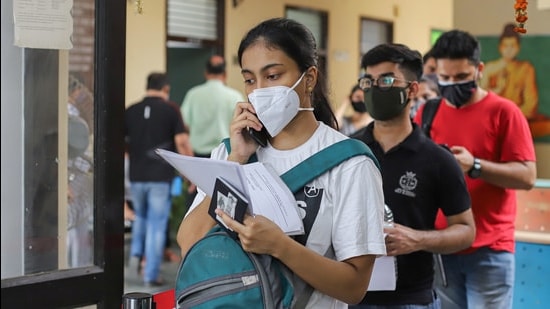
“A seropositivity of 73% is a good sign for Bihar. This means that only 27% people are now susceptible to contracting the virus of which some may become serious during the anticipated third wave of the pandemic,” said vice-president of the Indian Association of Public Health, Dr CM Singh, also professor and head, community and family medicine at AIIMS-Patna, and its medical superintendent.
“A seropositivity of over 70%-80% helps to develop herd immunity. However, since the virus is mutating very fast, there is a possibility of people getting re-infected and Covid-19 appropriate behaviour has to be followed. In case of re-infection, the symptoms will be mild in the 73% population, who have already developed antibody either by contracting the virus earlier or through vaccination,” added Dr Singh.
Buxar reported the highest seropositivity of 83.8%, followed by Madhubani 77.1%, Arwal 73.7%, Begusarai 72.7%, Muzaffarpur 65.3% and Purnia 65% in Bihar’s six districts sampled among 70 across 21 states in India by the Indian Council of Medical Research (ICMR) during the fourth serological survey between June 14 and July 6.
{{/usCountry}}Buxar reported the highest seropositivity of 83.8%, followed by Madhubani 77.1%, Arwal 73.7%, Begusarai 72.7%, Muzaffarpur 65.3% and Purnia 65% in Bihar’s six districts sampled among 70 across 21 states in India by the Indian Council of Medical Research (ICMR) during the fourth serological survey between June 14 and July 6.
{{/usCountry}}Bihar reported higher seropositivity as compared to the national average of 67.6%.
As many as 335 of the 400 general population sampled in 10 clusters of Buxar were found to have been infected from coronavirus at some stage.
Buxar shot into the limelight when 82 corpses, floating in river Ganga, were fished out in May, during the peak of the second wave of the pandemic. The National Human Rights Commission had taken cognizance of it and issued notice to the Centre and the governments of Bihar and Uttar Pradesh, seeking an action-taken report.
On May 17, the Patna high court (HC) flagged inconsistency in death figures related to Buxar mentioned in separate affidavits filed by the state’s chief secretary and the Patna divisional commissioner.
This forced the state government to undertake a verification of deaths which culminated in the state reporting a 73% spike in Covid-19 deaths as its death count went up by 3,951 post-verifications. The state’s cumulative Covid-19 toll jumped to 9,375 on June 8, as against 5,424 reported a day earlier. The state’s Covid-19 death toll was 9,635 on Friday.
Similarly, 327 of the 424 samples tested positive in Madhubani; 303 of the 411 samples were positive in Arwal, 303 of the 417 tested in Begusarai were positive; 264 of the 404 samples tested positive in Muzaffarpur while 265 of the 408 samples tested positive in Purnia.
Muzaffarpur reported 0% seroprevalence during the first serological survey in May last year. Buxar then reported 1.25%, followed by 1% each in Arwal and Madhubani, Purnia 0.75% and Begusarai 0.25%.
Arwal reported the highest seroprevalence of 26.20% during the third survey in December. Buxar was next with 26.07%, followed by Madhubani 24.5%, Muzaffarpur 21.70%, Purnia 21.01% and Begusarai 15.01%.
The state’s cumulative seropositivity was 0.7% during the first survey undertaken between May 17 and 20 last year. This meant that only 17 out of the 2,400 people surveyed developed antibodies (immunity) against SARS-CoV-2, said an epidemiologist.
The seropositivity rate in Bihar increased to 7% during the second survey between August 21 and 26 and went up to 22.41% against the national average of 24% during the third survey between December 20 and 25.
ICMR director-general and secretary to the government of India, Professor Balram Bhargava, shared the findings of the fourth serological survey with Bihar’s additional chief secretary, health, Pratyaya Amrit on Friday.
Around 3,000 blood samples were collected from the six districts and sent to the National Institute of Epidemiology, Chennai. The survey, conducted in the state between June 20 and 25, was to ascertain the prevalence of antibodies, called seroprevalence or seropositivity, against SARS-CoV-2.
State health officials, including those in the State Health Society, which looks after the integrated disease surveillance programme (IDSP) under the National Health Mission, chose not to respond to phone calls or text messages. Officials at the ICMR’s Rajendra Memorial Research Institute of Medical Sciences (RMRIMS), Patna, were also mum.
Stay updated Bihar Lok Sabha Result and with all the Breaking News and Latest News from Bengaluru. Click here for comprehensive coverage of top cities including Delhi, Mumbai, Hyderabad, and more across India . Stay informed on the latest happenings in World News.
Stay updated Bihar Lok Sabha Result and with all the Breaking News and Latest News from Bengaluru. Click here for comprehensive coverage of top cities including Delhi, Mumbai, Hyderabad, and more across India . Stay informed on the latest happenings in World News.