
 E-Paper



Chhath: The four-day spring in Bihar’s social desert
What makes Chhath unique is the sublime aura it bestows on a normally looked down upon state like Bihar. I say this as someone from the state.

 Prefer HTon Google


Today marks the completion of Chhath festival. To be sure, it is a biannual event in the Hindu calendar months of Chaitra and Kartik, but it is the latter which is far more popular than the former. If anyone maintained a dictionary of India’s politically powerful words, Chhath would have made a decisive entry almost a decade ago. It has gone up a few notches in the pecking order every year since then. This is directly related to the growing footprint of Bihari (and some eastern Uttar Pradesh) migrants across the country, and to some extent, even abroad.
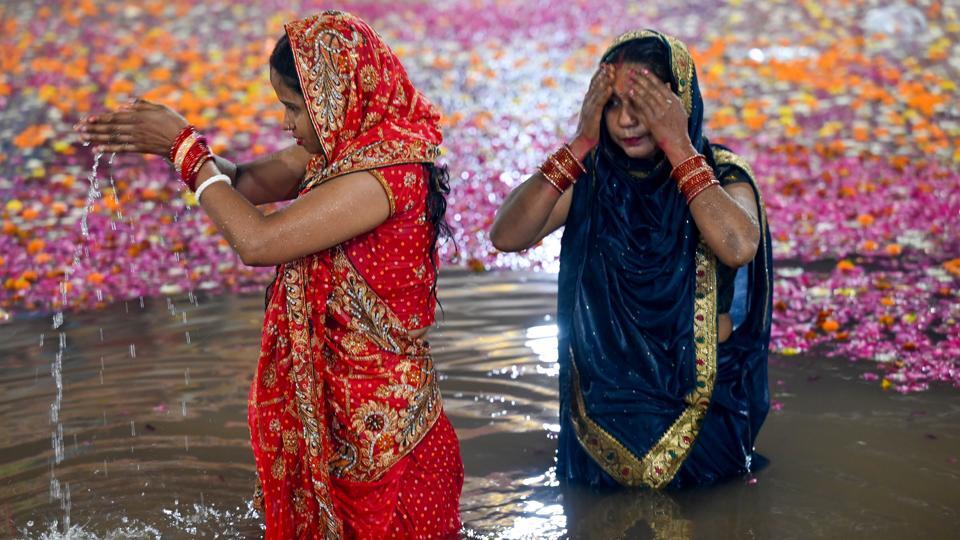
Every political party in the country wants to be seen as doing something to acknowledge/facilitate Chhath to keep the Bihari voter in good humour. Their votes are now crucial in many parts outside the state and perhaps even decisive in places such as Delhi. This is democracy at its best and ought to be celebrated. A healthy, more liberal democracy would offer similar privileges to festivals of other communities too, but that’s a cliché.
What makes Chhath unique is the sublime aura it bestows on a normally looked down upon state like Bihar. I say this as someone from the state. The short-lived exceptionalism isn’t entirely unwarranted.
Chhath is when the community, across caste and even religion, with or without the support of the state, gets together to create a pristine environment compared to otherwise; there is no other way to put it, filthy state of affairs in the state. That way, Chhath is the polar opposite of Holi in this part of the country, which is unfortunately a licence to create nuisance in the name of festivities. Chhath is also a festival which, even today, has not been taken over by vulgar consumerism and its nauseating display. Almost all of the necessary paraphernalia which accompanies this festival is class agnostic. It is also a ritual heavy festival, perhaps the only one, where despite a history of virtually no social reform in the state, there are no priests involved in the rituals. That way it is the closest a traditionally agrarian society returns to its directly ‘worshipping the nature’ roots after finishing the harvesting season. Of course, a lot of people who observe the festival today — it is a strict four-day long affair of fasting and abstinence rather than having fun or partying — are not necessarily tied to the agrarian way of life. They are only imitating/continuing the broader historical tradition. For the migrant Bihari, the festival has become a similar bond to connect with the society and family back home, either by travelling back or observing the festival where they are. This is the single biggest factor behind the growing charm of the entire affair. But there is also a deeper irony involved here.
Bihar is one of India’s few states which hasn’t really seen a period of economic dynamism. What has changed however is a transition from a system of entrenched feudal exploitation to large-scale migration of both the erstwhile oppressors and the oppressed. Their shared regional identities notwithstanding, these two groups inhabit very different worlds in the places (often the same) they migrate to. The conflicts of the past are still psychologically present. But they are not as germane to lived experiences of the present as they used to be back home.
As is often the case, both the blue-collar and white-collar migrants are facing the same material challenge first generation migrants face anywhere: relative economic precarity which results from disadvantages of being excluded from established networks of privileges and upward mobility. Eventually the migrants manage to tackle these impediments by collective action. This process has generated a material basis for some sort of solidarity among the holders of Bihari identity. The growing recognition for Chhath outside Bihar is something which both the patrician and plebeian Bihari have worked hard to achieve and rightfully take collective pride in.
The entire thing is ironic because, for most Biharis, the feudal exploitation which existed back home has been replaced by exploitation in the so-called free market to which migration has happened. The animosity is now diffused, even subdued, instead of being directed at a specific group as was the case in the bloody caste-conflict in the state.
An even bigger irony captured by Chhath is the imagery of the Bihari working class braving subhuman conditions in trains. The elite pay exorbitantly high airfares to go home during the festival. But neither of the groups are willing to undertake any meaningful struggle or pay the costs to revive the moribund scheme of affairs in their home state. Bihar’s macro numbers notwithstanding, the state’s political economy is controlled by vested interests which are only interested in usurping government contracts rather than promoting genuine entrepreneurship with help from kinship networks. This is the exact opposite of how the same society behaves during Chhath.
To say all this is not to trivialise Chhath’s emotional connection with Bihar or the virtuosity it generates in the Bihari subconscious. It is only to underline that societies are complicated beasts and often hold more than one character within themselves. In Bihar’s case, Chhath brings out the proverbial spring in what is otherwise a desert as far as social cohesion, collective action and even a basic value for dignity are concerned. To celebrate the former without acknowledging the latter is nothing but collective hypocrisy or self-amnesia. To just highlight the contradiction, more so as a Bihari, is perhaps an exercise in self-righteous criticism. To engage with this and try and correct it would be a revolutionary act. Unleashing that revolution would require a political commitment as steadfast as the devotee observing Chhath has to maintain. Bihar has plenty of people who can do the latter. It is yet to find one which can inspire the struggle for the former.


Stay updated Bihar Lok Sabha Result and with all the Breaking News and Latest News from Bengaluru. Click here for comprehensive coverage of top cities including Delhi, Mumbai, Hyderabad, and more across India . Stay informed on the latest happenings in World News.


