Pune -
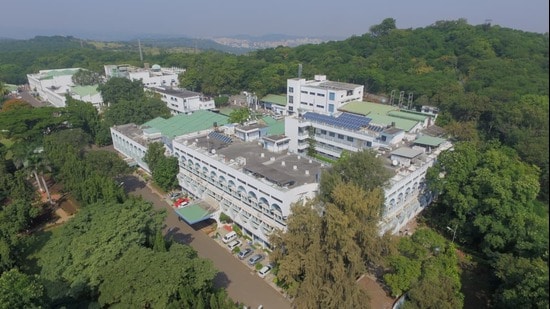
The Automotive Research Association of India (ARAI) has received ISO/IEC 17025:2017 accreditation from the National Accreditation Board for Testing and Calibration Laboratories (NABL) for its newly-established cylinder-testing facility at the mobility research centre (MRC), Takwe, strengthening Pune’s testing infrastructure for high-pressure alternative fuel systems.
The facility is now fully operational and is among the first in India to offer a comprehensive range of testing services for type 1 to type 4 gaseous cylinders from a single location. The cylinders are used across the automotive, industrial, marine, defence, Space and other specialised sectors. The facility will support manufacturers in product development, evaluation, certification, type approval, batch testing and other developmental activities in accordance with applicable national and international standards. It will also support research and certification of cylinders used for CNG, HCNG, hydrogen, oxygen, nitrogen, inert gases and other applications covered under the applicable Gas Cylinder Rules.
Dr Reji Mathai, director, ARAI, said, “The ISO:17025/NABL accreditation for cylinder-testing facility is a significant milestone that reflects the technical excellence, rigorous quality systems, and unwavering commitment of our engineering team. It strengthens India’s testing infrastructure by providing reliable, standards-compliant, and internationally benchmarked safety testing services for high-pressure gas cylinders. With advanced testing capabilities and stringent quality controls, the facility will play a vital role in ensuring the safety, performance, and regulatory compliance of high-pressure storage systems”.
The facility offers destructive and non-destructive testing to assess the safety, performance, reliability and durability of cylinders under demanding conditions. Its capabilities include material characterisation, hydrostatic and pressure cycling tests under climatic conditions, permeation testing, burst testing, bonfire testing, drop testing, and mechanical and environmental durability evaluations. The ARAI said that most established test facilities can evaluate hydrogen cylinders up to 700 bar, while a few specialised tests remain outside the current accreditation scope.
{{/usCountry}}The facility offers destructive and non-destructive testing to assess the safety, performance, reliability and durability of cylinders under demanding conditions. Its capabilities include material characterisation, hydrostatic and pressure cycling tests under climatic conditions, permeation testing, burst testing, bonfire testing, drop testing, and mechanical and environmental durability evaluations. The ARAI said that most established test facilities can evaluate hydrogen cylinders up to 700 bar, while a few specialised tests remain outside the current accreditation scope.
{{/usCountry}}The NABL-accredited facility is expected to help manufacturers reduce product development timelines and dependence on overseas testing facilities, while accelerating the commercialisation of alternative fuel technologies. It will also support industry stakeholders in meeting technical qualification and validation requirements linked to government initiatives, including the Automotive Production Linked Incentive (PLI) Scheme.
With the facility now available for industry testing and certification support, the ARAI said vehicle manufacturers, cylinder producers, technology developers and other stakeholders can use its capabilities for validation of high-pressure storage systems and emerging clean-fuel technologies.