
 E-Paper



Fish deaths at Pashan Lake due to multiple factors, not STP alone: Primove Consultancy
The findings follow a show-cause notice issued by Pune municipal commissioner Naval Kishore Ram to the consultancy regarding the functioning of the sewage treatment plant (STP) near the lake

 Prefer HTon Google


The recent fish deaths at Pashan Lake were caused by a combination of factors — including excess sewage inflow, limitations of a small-capacity treatment plant, and environmental conditions — according to a detailed report submitted by Primove Consultancy on Wednesday.
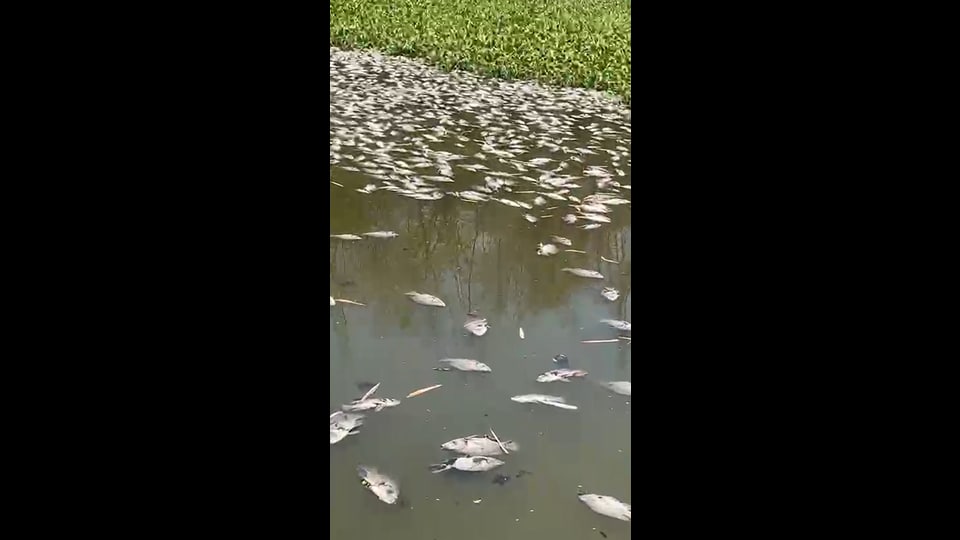
The findings follow a show-cause notice issued by Pune municipal commissioner Naval Kishore Ram to the consultancy regarding the functioning of the sewage treatment plant (STP) near the lake.
Existing infra not adequate
According to the report, the STP at Bavdhan, built using Integrated Fixed-Film Activated Sludge (IFAS) technology, was designed to treat only 1 million litres per day (MLD). However, nearly 10 MLD of untreated sewage from Bavdhan and Bhugaon is currently flowing into the lake, far exceeding the plant’s capacity and severely affecting water quality. The report notes that the existing infrastructure was never adequate to handle the total sewage load.
It also flagged major flaws in the sewer network. Newly developed sewer lines in Bavdhan were connected to a smaller 1 MLD pipeline instead of the main trunk line leading to the Baner STP, resulting in excessive load on the Pashan facility and reduced efficiency.
Technical flaws
While the plant was designed for a biological oxygen demand (BOD) of 250 mg/l and a chemical oxygen demand (COD) of 400 mg/l, actual samples showed COD levels as high as 722 mg/l. Such elevated chemical content — possibly due to industrial discharge or mixed waste — affected bacterial activity and reduced treatment efficiency.
The report further states that the plant was operational between August 2025 and January 2026 and underwent maintenance in February. Work included cleaning filter media, reinstalling units, and adding bacteria sourced from the Baner STP. During inspection, the plant was found to be in “recycle mode” and not completely shut, contrary to earlier perceptions.
No significant investigation done
The report questions the direct link between the STP and the fish deaths, noting that no scientific investigation or post-incident water quality analysis was conducted to establish the exact cause. Environmental factors such as the spread of water hyacinth and a consequent drop in dissolved oxygen levels could have played a significant role.
Citing similar incidents elsewhere in the country, the report states that fish mortality in water bodies is typically caused by multiple factors rather than a single failure. It also points out that while action was initiated against civic staff, the role of the environment department in managing aquatic vegetation and maintaining lake health was not adequately examined.
Amid allegations that High Energy Materials Research Laboratory (HEMRL) and Bharat Electronics Limited were discharging chemical waste into a drain leading to the lake, officials from the PMC and the Maharashtra Pollution Control Board carried out a joint inspection. No evidence of such discharge was found.
Kartikeya Langote, sub-regional officer, MPCB, said, “The inspection of both companies did not reveal any chemical discharge into the lake.”
Jagdish Khanore, head, PMC drainage department, said, “The Primove report has been submitted to the additional municipal commissioner, while the MPCB report is awaited.”
Form SOPs
The report concludes that the incident is multi-dimensional and recommends setting up an independent expert committee, immediate removal of water hyacinth, correction of sewer connections, and better coordination among departments. It also calls for a standard operating procedure (SOP) to prevent such incidents in the future.
Earlier, Ram, on April 10, suspended four civic staffers, including an executive engineer, a junior engineer, and two sanitary inspectors, after hundreds of dead fish were found floating in Pashan Lake, citing gross environmental negligence.


