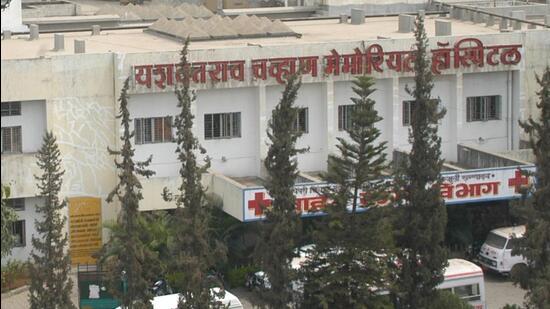
Between the burgeoning demand for affordable/free healthcare services and inadequate public healthcare facilities in Pune and Pimpri-Chinchwad, there is growing pressure on hospitals such as Pune’s Sassoon General Hospital (SGH) and Pimpri-Chinchwad’s Yashwantrao Chavan Memorial Hospital (YCMH) as a large number of patients continues to seek treatment at these already burdened facilities, officials said.
Under the Pune Municipal Corporation (PMC), there is only one hospital run by the state medical education department, namely SGH. Most of the other civic hospitals run by the PMC are dispensaries and maternity homes with only one general hospital; all these facilities lack advanced healthcare services.
The SGH outpatient department (OPD) caters to over 2,000 patients daily with over 500 major and minor surgeries performed every day. Most patients are from the outskirts of Pune city while a significant number is from districts such as Satara, Sangli, Kolhapur and Solapur among others, said Dr Yallapa Jadhav, medical superintendent of SGH.
According to Dr Jadhav, B J Medical College (BJMC) and SGH has a capacity of 1,293 beds which has now been expanded to 1,800 beds. The SGH has a total 140 intensive care unit (ICU) beds across departments however the number falls short given the large number of patients visiting the hospital for treatment.
“We can understand if patients are visiting the SGH for complex procedures and severe illnesses. However, patients are visiting the hospital even for minor treatments and illnesses like fever, flu etc. This leads to overcrowding and may result in compromising the quality of treatment provided to patients,” Dr Jadhav said.
{{/usCountry}}“We can understand if patients are visiting the SGH for complex procedures and severe illnesses. However, patients are visiting the hospital even for minor treatments and illnesses like fever, flu etc. This leads to overcrowding and may result in compromising the quality of treatment provided to patients,” Dr Jadhav said.
{{/usCountry}}With medical management services available at nominal charges/free-of-cost and surgeries conducted at minimal costs through government schemes, SGH attracts thousands of patients from both urban and rural areas of Pune- and the adjoining districts, many of which lack access to affordable healthcare.
Whereas Pimpri-Chinchwad has grown in leaps and bounds due to its industrial hubs like Bhosari, Chakan, Talegaon Maharashtra Industrial Development Corporation (MIDC), Hinjewadi Information Technology (IT) Park, and others. With workers and their families migrating to Pimpri-Chinchwad from across India in search of education-, job- and business- opportunities, the population of the twin city now exceeds 30 lakhs. As per World Health Organisation (WHO) norms, Pimpri-Chinchwad requires over 9,000 beds to cater to its rising population. Currently, Pimpri-Chinchwad Municipal Corporation (PCMC) hospitals have only 1,549 beds while private hospitals have 15,896 beds, totalling 17,445 beds across the twin city. While this seems sufficient on paper, public hospitals have to face the brunt of a burgeoning patient load due to their affordability as compared to private hospitals.
For the first time, the PCMC conducted an internal study between July 2024 and June 2025 using records of medical papers and registrations at the hospitals. As many as 17.87 lakh patients availed treatment at the OPDs of PCMC-run hospitals during this period, as per official data. Dr Laxman Gophane, chief health officer, PCMC, said, “An internal study of five key PCMC hospitals – YCMH, Akurdi, Bhosari, Jijamata, and Thergaon – showed that 70% of the patients are local while 30% are from outside the municipal limits. This clearly shows a growing dependency on PCMC hospitals.”
Healthcare experts warn that if this trend continues without any state-level intervention, hospitals such as PCMC’s YCMH and Pune’s SGH may face overwhelming pressure resulting in treatment delays and compromising the quality of care.
Sharad Shetty, health activist, said, “Access to affordable healthcare is a right, not a privilege. But when public health department systems collapse or remain underdeveloped, urban public hospitals like YCMH and SGH become crisis zones—forced to serve beyond their capacity, often at the cost of quality care. This is not sustainable, and it is certainly not fair. The public health department needs to strengthen its healthcare facilities.”