PUNE: A study conducted by Raigad-based Dr Babasaheb Ambedkar Technological University (DBATU) has concluded that equine activity on the current scale and spatial spread is environmentally unsustainable in the Matheran eco-sensitive zone (ESZ); recommending strict regulation, phased reduction in the number of horses, and relocation of stables outside the ESZ to curb pollution in the hill station. The findings are part of a report submitted to the National Green Tribunal (NGT) following a petition filed by Matheran resident Sunil Shinde, who alleged environmental degradation due to extensive horse movement for tourism in the vehicle-free hill station.
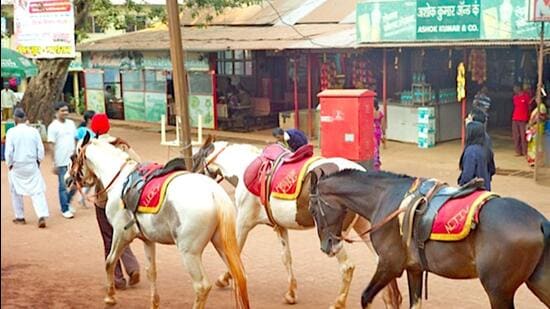
The DBATU report mentions that in recent years, a visible surge in equine movement—peaking at over 800 horses per day during the tourist season – puts a question mark on the capacity of natural and municipal systems to manage the resulting waste. Media reports and NGT-linked reporting indicate approximately 460 horses and 200 ponies while verbal information from local sources reveals more than 800 horses and ponies operate in the Matheran area. At a rough estimate of 15 kg dung and urine per horse per day, around 15 tonnes of dung are generated per day. Unmanaged dung can cause air, water and soil pollution.
The NGT in October 2024 had formed a three-member committee that comprised representatives from the Maharashtra Pollution Control Board (MPCB), which acted as the nodal agency; ministry of environment, forests and climate change (MoEFCC); and Matheran Municipal Council. In its report submitted on December 21, 2024, the committee identified Charlotte lake, Simpson park, main marketplace, major streets, bio-methanation plant, and solid waste dumping yard as pollution hotspots.
Based on the committee’s findings, the tribunal subsequently appointed the DBATU, Mangaon, Raigad, to carry out a comprehensive scientific assessment and recommend preventive measures. The university carried out field studies before, during and after the monsoon in 2025 and submitted its report to the NGT in the last week of January 2026.
{{/usCountry}}Based on the committee’s findings, the tribunal subsequently appointed the DBATU, Mangaon, Raigad, to carry out a comprehensive scientific assessment and recommend preventive measures. The university carried out field studies before, during and after the monsoon in 2025 and submitted its report to the NGT in the last week of January 2026.
{{/usCountry}}During the hearing held on January 31, the NGT considered the DBATU report. The order, issued on the same day and uploaded on February 2, noted that air quality assessments conducted across all three seasons revealed that PM₁₀ and PM₂.₅ levels consistently breached Central Pollution Control Board (CPCB) standards, with the primary sources identified as equine dung emissions and dust from unpaved roads.
“SO₂ and NO₂ levels remained within permissible limits, indicating that Matheran’s air pollution is not industrial in nature but stems from the unique challenge of a vehicle-free yet horse-dependent ecosystem,” the order stated.
About water quality, the tribunal noted that samples collected from five sites — WS1 to WS5 — showed E. coli contamination ranging from 5–10 CFU/100 mL at lake sites, 25 CFU at a stream site, and up to 100 CFU at the stagnant Simpson tank. These levels violate Bureau of Indian Standards (BIS) and World Health Organisation (WHO) norms, which mandate zero E. coli in drinking water. The presence of faecal bacteria, the report said, “almost certainly” originated from horse dung.