PUNE: Public expenditure on the 2026 Ashadhi Wari has come under scrutiny after members of the Solapur Zilla Parishad (ZP) questioned the procurement of medicines worth ₹10 crore and spectacles worth ₹50 lakh; demanding a complete audit of purchases, beneficiaries and the remaining stock.
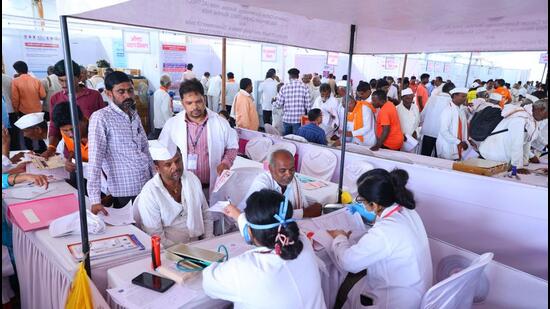
The Solapur ZP’s general body meeting on August 13 sparked controversy when members sought details of how the ₹61.5 crore sanctioned by the state government for Warkaris during their annual pilgrimage to Pandharpur had been spent; alleging a lack of transparency in several high-value procurements and questioning whether the expenditure is justified.
The biggest point of contention is the ₹10 crore allocation for medicines, medical equipment and consumables under the Punyashlok Ahilyadevi Holkar Rural Pilgrimage Development Scheme. Of the sanctioned amount, ₹6.74 crore was earmarked for Solapur, ₹1.91 crore for Pune, and ₹1.33 crore for Satara to provide medical and foot-care services to the Warkaris. “If around 32 lakh people attended the Wari, we need to know whether such a large quantity of medicines was actually required, whether these medicines were distributed to the Warkaris, and how much stock remains,” ZP member Dadasaheb Lawate said.
Members also questioned the procurement of spectacles worth ₹50 lakh, alleging that the purchase and distribution timeline appear unusually short.
{{/usCountry}}Members also questioned the procurement of spectacles worth ₹50 lakh, alleging that the purchase and distribution timeline appear unusually short.
{{/usCountry}}Lawate said that the tender was floated on July 22 and the spectacles were reportedly distributed by July 24. “How is it possible to identify beneficiaries, conduct eye examinations and distribute ₹50 lakh worth of spectacles in just two days? If the spectacles were distributed, the administration should provide the names of the beneficiaries, records of their eye tests, and their contact details,” he said. The issue will be raised again in the next general body meeting if satisfactory answers are not provided, he stressed.
With regard to funds spent on temporary infrastructure and amenities along the Palkhi routes, the ZP had allocated ₹3.5 crore for 58 waterproof tents; ₹2.28 crore for supplying drinking water at 159 locations along the pilgrimage route through 220 tankers; ₹1.42 crore for constructing 10,015 temporary bathing units for women, complete with water supply, electricity and women sanitation workers; ₹72 lakh for foot-care services including foot-massage machines installed at the Palkhi halting points; ₹4.43 crore for 103 welcome arches across district entry points, Palkhi camps and major junctions; and ₹1.09 crore for publicity and cultural programmes including 53 bhajan performances, tableaux, a documentary and a dedicated war room that produced daily digital content during the pilgrimage.
Lawate questioned whether the ₹8 crore spent on German hangars at major halting points is justified, arguing that there was very little rainfall during the Wari period despite these structures having been built to protect pilgrims from inclement weather.
He also criticised what he described as excessive spending on publicity and political branding during the centuries-old pilgrimage.
“Nearly ₹6.5 crore was spent on digital flex boards, banners and publicity-carrying messages from political leaders. The Wari has existed long before digital flex boards. When Solapur is facing severe water scarcity, such massive expenditure on publicity needs to be justified,” he said.
Responding to the allegations, CEO Kushal Jain clarified that the ₹10 crore medicine procurement was carried out through a single online tender process for Solapur, Pune and Satara districts with state government approval. “There was no offline procurement, even for a single rupee. The entire tendering process was carried out online, and agencies from across the country participated. All tender records are available for verification, and anyone can inspect the documents at the ZP,” he said.
Jain further said that the procurement of spectacles was carried out by the civil surgeon’s office and not the ZP. “I received a complaint regarding the spectacle procurement and have already constituted an inquiry committee under the district health officer. The committee is expected to submit its report within a week after which, appropriate action will be taken,” Jain said.
Members demanded that the administration place before the house all administrative and technical approvals, e-tender documents, work completion reports and bills paid to contractors. Lawate said that the issue is not about opposing facilities for Warkaris but about ensuring accountability for public money.
“If ₹61.5 crore has been spent in the name of Warkaris, the administration must explain where every rupee went, which agencies received the contracts and who authorised the expenditure. Public money must be accounted for transparently,” he said.
The 2026 Ashadhi Wari began with the Sant Tukaram Maharaj Palkhi leaving Dehu on July 7 and the Sant Dnyaneshwar Maharaj Palkhi departing from Alandi on July 8. Both processions reached Pandharpur ahead of Ashadhi Ekadashi on July 25, drawing an estimated 32 lakh devotees.