
 E-Paper



Pune district collector orders to roll out slot-booking system for tourists to tackle overcrowding
The new system will require tourists to reserve time slots in advance via a mobile application currently being developed by the Forest Department, which is serving as the nodal agency

 Prefer HTon Google


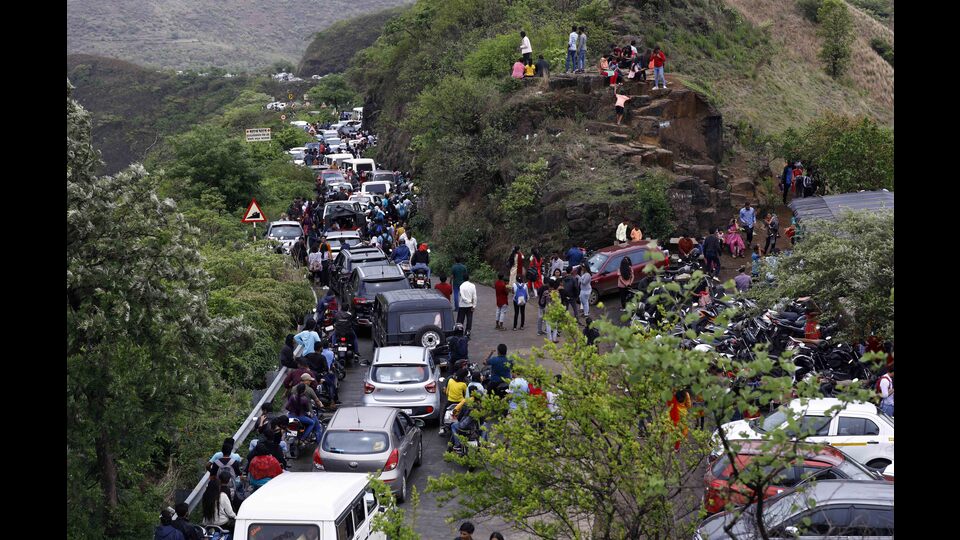
In response to mounting safety risks and environmental concerns caused by surging monsoon tourism, the Pune district administration will implement a slot-booking system at 25 popular tourist spots. District collector Jitendra Dudi announced that the initiative aims to curb overcrowding, reduce ecological damage, and prevent accidents, particularly during weekends and holidays.
The new system will require tourists to reserve time slots in advance via a mobile application currently being developed by the Forest Department, which is serving as the nodal agency. A budget of ₹50 crore, sanctioned by the district planning committee, has been allocated for the digital rollout and supporting infrastructure.
“We’ve identified 23 to 25 high-footfall locations that attract large crowds during the monsoon and festive seasons. Slot-booking will help regulate tourist entry, protect sensitive ecosystems, and support better tourism management for local communities,” said Dudi.
Scenic areas across Mulshi, Maval, Bhor, Rajgad, Khed, Junnar, and Ambegaon talukas have seen exponential visitor growth in recent years. Waterfalls, forest trails, and hilly treks attract thousands on weekends, often exceeding their carrying capacities.
For instance, on June 29, over 6,000 tourists flooded the Andharban forest trail in a single day, prompting officials to halt entry by noon due to safety concerns. Similar congestion has been reported at Sinhagad Fort, Rajgad, and Tamhini Ghat, leading to blocked paths, traffic snarls, and heightened landslide risks.
Environmentalists have also warned of biodiversity loss and increasing human-wildlife conflict, especially during sensitive breeding periods.
The decision to introduce regulated access follows a series of troubling incidents. On June 15, the Kund Mala bridge in Khed collapsed under the weight of an overcrowded tourist gathering, resulting in four fatalities and multiple injuries. A subsequent inquiry led to the dismantling of 63 unsafe bridges and called for crowd management strategies across tourism zones.
The probe committee recommended the use of digital tracking and visitor limits to prevent similar tragedies. Under the upcoming system, tourists will book time slots for specific sites through the mobile app. Each location will feature controlled entry points staffed by Forest Department personnel and local volunteers. Slot capacities will be set based on ecological sensitivity and safety norms.
“The system will allow real-time monitoring. If footfall exceeds safe thresholds, access will be paused temporarily. We aim to have all digital and physical infrastructure in place before the next monsoon,” Dudi said.
Alongside digital controls, physical infrastructure such as ticket counters, turnstiles, signage, and visitor information centres will be installed at key sites.
Officials also noted that a regulated system benefits local livelihoods. Unlike sudden closures, which disrupt income for vendors and transport operators, slot-booking ensures a steady but manageable tourist flow.
Operations will be jointly managed by the Forest Department and Gram Panchayats. Entry to highly vulnerable areas like Andharban and Kundalika Valley will remain closed until the system is fully operational. The administration has warned that violators attempting to access restricted sites will face legal consequences.
With this initiative, Pune becomes one of the first districts in Maharashtra to adopt a tech-enabled, preventive approach to monsoon tourism—balancing public safety, environmental preservation, and local economic stability.


