PUNE: Following a comprehensive survey, the Pune Regional Transport Office (RTO) has authorised 795 autorickshaw stands across the city, marking a significant reduction from the earlier tally of over 1,000 stands. The drop is largely due to the impact of ongoing metro rail and other public infrastructure projects that have altered road layouts and reduced available space for parking and halting.
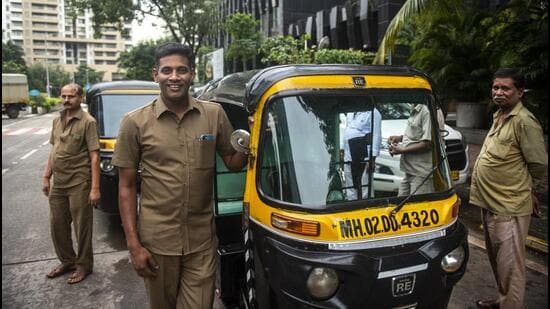
Based on the findings of the survey conducted last year, the Pune Municipal Corporation (PMC) is set to begin marking designated blocks for these auto stands in the coming weeks, with a view to better organising the city’s autorickshaw system, reducing roadside congestion, and improving last-mile connectivity for commuters.
Explaining the rationale behind the move, deputy regional transport officer Swapnil Bhosale said that the exercise is necessary to adapt to the city’s rapidly changing infrastructure. “Over the past few years, Pune has seen large-scale infrastructure development, especially with metro construction and road-widening works. This has directly affected several existing autorickshaw stands, many of which either had to be removed or relocated. The recent survey was conducted to reassess the ground reality and identify feasible locations where auto stands can function without obstructing traffic flow,” he said. The reduced number of stands does not indicate a shortage but rather a rationalisation based on current urban conditions. “The idea is to have well-planned, clearly marked stands instead of unregulated halting points. With the PMC now taking up the marking of designated blocks, commuters will find it easier to locate autos, and drivers will also benefit from a more structured system,” Bhosale noted.
Deputy commissioner of police (traffic) Himmat Jadhav said that strict monitoring mechanisms will be put in place once the demarcation begins. “We will be coordinating closely with the RTO and PMC to ensure that the authorised auto stands are used as intended. Our teams will monitor these locations to prevent illegal parking, encroachments, or autos lining up beyond the designated areas, which often leads to bottlenecks,” he said. Discipline among drivers will be key to the success of the initiative. “We are also planning awareness drives for auto drivers so that they understand the importance of adhering to the marked spaces. If implemented properly, this will significantly ease traffic movement and improve commuter convenience,” Jadhav said.
{{/usCountry}}Deputy commissioner of police (traffic) Himmat Jadhav said that strict monitoring mechanisms will be put in place once the demarcation begins. “We will be coordinating closely with the RTO and PMC to ensure that the authorised auto stands are used as intended. Our teams will monitor these locations to prevent illegal parking, encroachments, or autos lining up beyond the designated areas, which often leads to bottlenecks,” he said. Discipline among drivers will be key to the success of the initiative. “We are also planning awareness drives for auto drivers so that they understand the importance of adhering to the marked spaces. If implemented properly, this will significantly ease traffic movement and improve commuter convenience,” Jadhav said.
{{/usCountry}}Autorickshaw drivers have largely welcomed the move though concerns remain about the adequacy of space and location planning. Bappu Bhave, president of the Pune Autorickshaw Federation, said that while streamlining is necessary, the authorities must ensure that drivers are not inconvenienced. “We understand that infrastructure projects have reduced space in many parts of the city, and that a fresh survey was needed. However, it is important that the newly designated stands are practical and located at spots where there is genuine passenger demand. If stands are too few or are poorly placed, drivers will struggle to find passengers, which directly affects their livelihood,” he said. Bhave also stressed the need for consultation with auto drivers’ unions. “We hope the authorities will continue to take our feedback into account during implementation. A balanced approach can benefit both commuters and drivers,” he said.