
 E-Paper



Pune’s air quality has improved in 2019 as compared to 2018, says global report
Study undertaken by Swiss company IQ Air shows reduction in PM levels to 35.7 mg per cubic metre in 2019, as compared to 46.3 in 2018


Pune’s air quality index in 2019 has improved as compared to 2018, according to a global report.
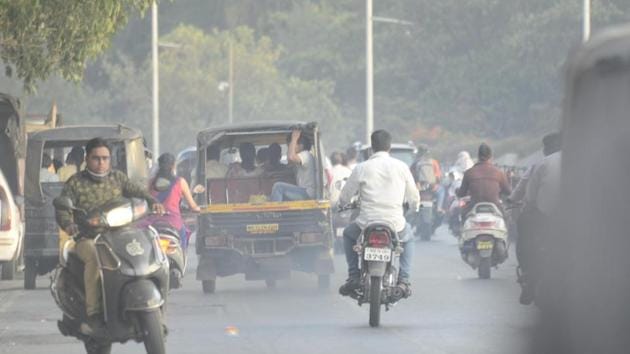
A study undertaken by Swiss company IQ Air shows city’s PM 2.5 (particulate matter) less than 2.5 µg/m³ (microgrammes per cubic metre) is 35.7 µg/m³ in 2019 as compared to 46.3 µg/m³ in 2018.
Across the globe, Pune has been ranked 299th on the air pollution index and is eight most polluted in the state and 74th across the country, according to the study.
The months of January and December were the most polluted in the city, while July was the least polluted according to the study.
Mangesh Dighe, head of the environment department, PMC, said, “Pollution levels have stabilised due to various measures taken by the civic body including strict norms for new vehicles which have less carbon emission.”
“Other measures which have been undertaken include not allowing the burning of garbage, building cycle tracks and footpaths which reduces dust emission, more than 50 per cent of the buses are now electric, encouraging the use of compressed natural gas (CNG) vehicles on the roads and pollution control devices at crematoriums,” said Dighe.
The report includes data aggregated from a range of ground-based PM2.5 monitoring stations, real-time, hourly data from governmental monitoring stations, as well as validated PM2.5 monitors operated by private individuals and organisations. All measurements have been collected at a monitoring station level, and are then grouped into cities.
This report focuses on PM2.5 concentrations, as this is the pollutant widely regarded as most harmful to human health. PM2.5 is defined as ambient airborne particles measuring up to 2.5 microns in size. Due to its microscopic size, the harmful particles can enter the bloodstream via the respiratory system and travel through the body. This can have far-reaching health implications including asthma, lung cancer and heart disease.
The study shows that January 2019 the air quality Index with respect to 2.5 PM measured 68.4 µg/m³ in December 2019, this stood at 64.5 µg/m³ which falls in the category of unhealthy for sensitive groups. The least polluted month was of July when the air quality measured at 16.6 µg/m³.
Vehicles contribute largely to increased pollution levels in the city. A fall in the number of vehicle registrations can also be one of the reasons for better air quality in the city, said Dighe.
The Environment Status Report (ESR) for the year 2018-19 released by the Pune Municipal Corporation (PMC) in August 2019 showed a drop in the number of two- and four-wheeler vehicles for the first time in at least 20 years. As per RTO data referred to in the ESR report, a total of 2.61 lakh vehicles have been registered in 2018-19, as compared to 2.89 lakh vehicles registered in 2017-18.
Pune breathes better
January and December Most polluted months
July least polluted month
*Unhealthy for sensitive groups including those suffering for respiratory disease, senior citizens and infants
In Maharashtra
Pune 8th most polluted city
Pimpri-Chinchwad 7th most polluted city
Across the country, Pune ranked 74th
Across the globe, Pune ranked 299th
Average air quality index with respect to 2.5 PM: year-wise
2019 average: 35.7 µg/m3
2018 average: 46.3 µg/m3
2017 average: 37 µg/m3
Air quality Index with respect to 2.5 PM: month-wise
January: 68.4 µg/m3
February: 47.9 µg/m3
March: 39.9 µg/m3
April: 34.9 µg/m3
May: 33 µg/m3
June: 22.7 µg/m3
July: 16.6 µg/m3
August: 18.8 µg/m3
September: 18.2 µg/m3
October: 26.3 µg/m3
November: 53.5 µg/m3
December: 64.5 µg/m3
Method of study
The report includes data aggregated from a range of ground-based PM2.5 monitoring stations, real-time, hourly data from governmental monitoring stations, as well as validated PM2.5 monitors operated by private individuals and organizations. All measurements have been collected at a monitoring station level, and are then grouped into cities.
One of the reasons for better air quality
-Vehicles contribute largely to increased pollution levels in the city. A fall in the number of vehicle registrations can also be one of the reasons for better air quality in the city.
-The Environment Status Report (ESR) for the year 2018-19 released by the Pune Municipal Corporation (PMC) in August 2019 showed a drop in the number of two- and four-wheeler vehicles for the first time in at least 20 years. As per RTO data referred to in the ESR report, a total of 2.61 lakh vehicles have been registered in 2018-19, as compared to 2.89 lakh vehicles registered in 2017-18.


