
 E-Paper



SC acquits J’khand constable after 12 yrs in jail citing ‘weak’ evidence
The Supreme Court overturned Jay Prakash Yadav's life sentence for murder, citing prosecution lapses, and ordered his release after nearly 12 years in prison.

 Prefer HTon Google


In a significant judgment, the Supreme Court set aside the conviction of Jay Prakash Yadav, a former constable of the Indian Reserve Battalion (IRB), who had been sentenced to life imprisonment for the alleged murder of his superior in 2014.
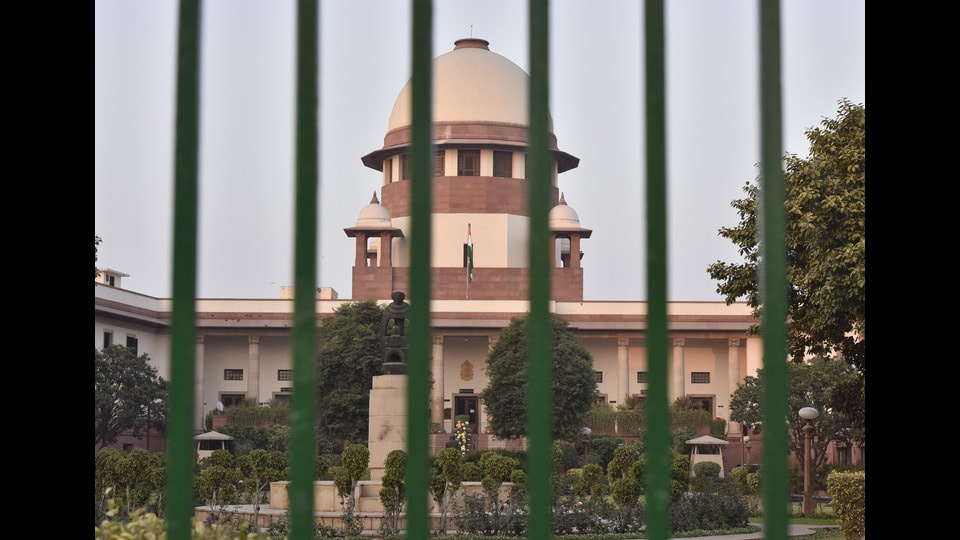
The court on Monday ordered his immediate release after he spent nearly 12 years behind bars, highlighting critical lapses in the prosecution’s case.
The incident dates back to May 18, 2014, at the IRBP Piparwar Camp in Jharkhand. The prosecution alleged that Yadav gunned down SI Sunil Soren after his request for leave was denied. The trial court in Chatra convicted Yadav in 2016 under Section 302 of the IPC and the Arms Act, a decision later upheld by Jharkhand HC in 2024.
A bench comprising Justice Dipankar Datta and Justice Satish Chandra Sharma noted that the prosecution’s case rested entirely on circumstantial evidence, as there were no eyewitnesses. The primary witness, a hawaldar, initially claimed to have seen Yadav holding the weapon of offence. However, during cross-examination, he admitted that due to total darkness at 7:30 PM, he could not clearly see the shooter’s face and identified Yadav only by his voice.
The apex court observed that this admission “materially undermines” the reliability of the testimony and expressed regret that the HC had “missed the woods for the tree. The court also questioned the theory that Yadav’s rifle had been “inadvertently exchanged” with another jawan’s weapon ten days prior to the crime.
The bench remarked that it was “difficult to accept” that in a disciplined force, such an exchange would go unnoticed for so long . Furthermore, the absence of the duty register for the actual day of the incident was deemed a fatal flaw .
Granting Yadav the “benefit of doubt,” the SC ruled that the evidence fell short of the standard required to exclude every hypothesis of innocence.
While ordering his release, the court granted Yadav liberty to seek reinstatement into service with consequential benefits, provided he remains physically and mentally fit. If unfit, the court directed the authorities to provide adequate financial compensation.


