That’s a tough question to answer because Indian cities were congested even before Uber and Ola (ANI Technologies Pvt. Ltd) launched their services. It is also the question many city planners and administrators around the world are wrestling with; and there’s no clear answer. A recent report by Schaller Consulting suggests that cab aggregation services such as Uber might be responsible for an increase in congestion in New York City although the companies have disputed this.
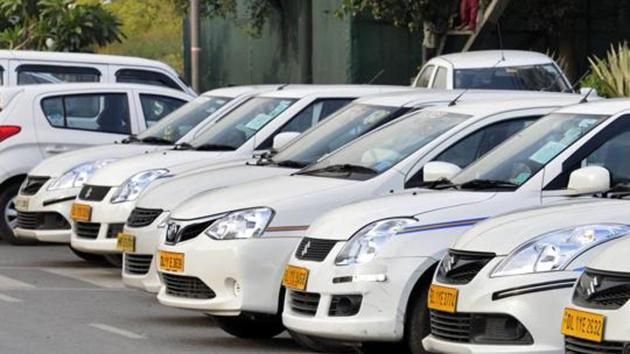
Still, it is a fact that the onset of cab aggregation services has resulted in an increase in the number of cabs. For instance, New York had less than 14,000 yellow taxis in January 2017 and over 45,000 app-based taxis, according to a report in the The New York Times. Closer home, the National Capital Region (Delhi and its environs), has over 125,000 app-based taxis (and less than 10,000 black-and-yellow ones). That’s 125,000 more taxis on the road than there were a few years ago.
The NCR has around 2.5 to 3 million cars. Not all of these are on the road everyday (indeed, a small proportion may never be driven), but there is no data on the number of cars on the roads of the NCR on a typical day. Still, 125,000 is a lot and based purely on the anecdotal evidence of how easy it was to negotiate the commute to office in mid-February when cab-based taxis went off the roads, they do seem to have contributed to the NCR’s traffic woes.
With no real regulation on the number of taxis on the roads, their numbers have swelled. It hasn’t helped the cause of the taxi drivers, though. The reason app-based taxis went off the roads in February was to protest, demanding an increase in rates. When Uber and Ola started their services, they attracted drivers by offering them extraordinarily generous incentives and facilitating loans for cars. Attracted by the charm of owning their taxis, and blinded by the incentives, many of the drivers did not question the sustainability of the tariffs they were made to offer. Nor did they question the longevity of the incentives. Over time, with enough taxis on their apps, the companies have withdrawn most incentives. Tariffs, though, remain low (although they have risen a bit).
{{/usCountry}}With no real regulation on the number of taxis on the roads, their numbers have swelled. It hasn’t helped the cause of the taxi drivers, though. The reason app-based taxis went off the roads in February was to protest, demanding an increase in rates. When Uber and Ola started their services, they attracted drivers by offering them extraordinarily generous incentives and facilitating loans for cars. Attracted by the charm of owning their taxis, and blinded by the incentives, many of the drivers did not question the sustainability of the tariffs they were made to offer. Nor did they question the longevity of the incentives. Over time, with enough taxis on their apps, the companies have withdrawn most incentives. Tariffs, though, remain low (although they have risen a bit).
{{/usCountry}}Given the sheer numbers – does the NCR need 125,000 app-based taxis? -- some of the drivers will eventually have to stop plying their taxis, dashing their entrepreneurial dreams. Already, some have started defaulting on their loans, prompting some lenders to stop new loans to drivers wanting to buy cars and join the app-based taxi revolution.
With the companies themselves making losses – then, they are funded by venture capital and expected to make losses, it would seem – the only people to have benefited from this are passengers. Sure, drivers who got in early have benefited too, having almost paid off their loans (the early incentives were really generous).
The companies have other problems as well. At the heart of the February protest by their drivers is a problem that has dogged them (and continues to) in every market in which they operate: should their drivers be recognised as employees or contractors. The companies see them as contractors. The drivers want to be considered employees. This is true in India too; so much for the whole entrepreneurship thing. In the UK, a court has ruled that Uber should recognise its drivers as employees. There are cases on in other parts of the world as well.
Recognising drivers as employees would dent the much vaunted asset-light model of these companies. As will experiments to buy cars and lease them out to drivers in an attempt to buy loyalty (many drivers use multiple apps).
Stretching things a bit (like all arguments are meant to), this raises questions about the very viability of asset-light business models in India.
The other company with a much-hyped asset-light model, Oyo Rooms (Oravel Stays Pvt. Ltd), described by India’s Prime Minister as the country’s largest hotel company that doesn’t own a single hotel, has started leasing entire hotels, following the model of many of the large hotel chains. It was forced to do so because it found it difficult to offer a standardised and high-quality experience to customers otherwise.
R Sukumar is editor, Mint