This past Tuesday, Haryana celebrated its golden jubilee with much fanfare and a mega event in Gurgaon that was blessed by Prime Minister Narendra Modi. In many areas, Haryana has excelled Punjab from whom it split in 1966 after a violent statehood campaign by its Hindi-speaking people. Haryana’s state domestic product was then about half of Punjab. Fifty years on, Haryana’s SDP, at 4 trillion rupees, is 20% more than Punjab, even though the latter is bigger in size and more populous. Its per capita income is now one and half times that of Punjab. With 81% of its income sourced from industry and services, Haryana’s is a more modern economy than its parent state. For India, Haryana makes more cars and wins more medals in sport than any other state. It ranks among the top five states on life expectancy and has an expansive health infrastructure.
Read: Haryana, take a bow: On 50th anniversary, why state has lot to celebrate
Yet, the northern state — home to some 28 million people — is far from being a role model of development that others could emulate. Because there are limits to Haryana’s success owing to outdated social values and regressive politics, which are mutually reinforcing. Despite the rapid economic progress, the state counts among the worst in female infanticide with a ratio of 889 females to 1,000 males at birth; tops the chart on honour killings; and has one of the highest incidences of rapes going unreported. A strong culture of patriarchy, perpetuated through institutions such as the khap panchayats, has kept its people from embracing cosmopolitanism even though it boasts of a city like Gurgaon and has emerged as a top destination for foreign investment in India. Corruption, rampant at every level of governance, has rarely influenced electoral outcomes in the state that is notorious for political horse-trading.
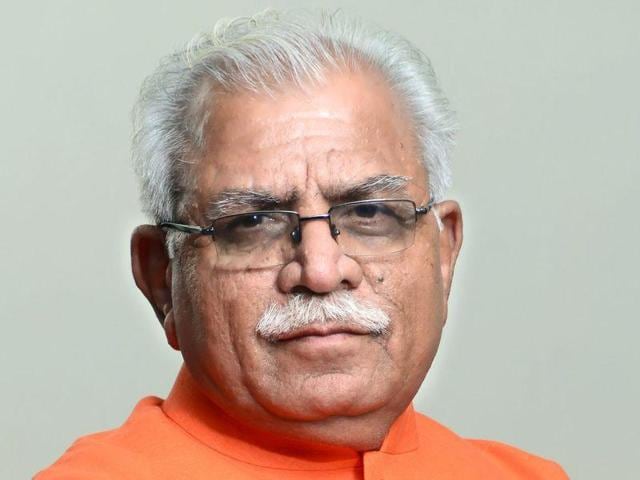
The golden jubilee could have been an occasion to reflect on what has held Haryana back. It could have been an opportunity to embrace a more inclusive agenda of development and progress. But that isn’t a course that the BJP-led government of chief minister Manohar Lal Khattar would want to chart. Instead, since coming to power two years ago, it has unleashed a saffronisation experiment on a scale that is unprecedented. He has appointed members of the RSS in droves to key policy-making positions in the government and government-run institutions, set aside large sums for projects such as cow protection and the revival of the mythological river Saraswati and even invited a Jain monk to address the Haryana assembly on the political dharma that legislators must adhere to. Controversial yoga guru Baba Ramdev was chosen as the state’s brand ambassador with the perks and rank of cabinet minister.
{{/usCountry}}The golden jubilee could have been an occasion to reflect on what has held Haryana back. It could have been an opportunity to embrace a more inclusive agenda of development and progress. But that isn’t a course that the BJP-led government of chief minister Manohar Lal Khattar would want to chart. Instead, since coming to power two years ago, it has unleashed a saffronisation experiment on a scale that is unprecedented. He has appointed members of the RSS in droves to key policy-making positions in the government and government-run institutions, set aside large sums for projects such as cow protection and the revival of the mythological river Saraswati and even invited a Jain monk to address the Haryana assembly on the political dharma that legislators must adhere to. Controversial yoga guru Baba Ramdev was chosen as the state’s brand ambassador with the perks and rank of cabinet minister.
{{/usCountry}}To be fair, Khattar has had some success with fighting corruption, especially in award of government contracts and recruitment to governments. He has also improved accountability and performances of agencies responsible for provision of public goods and services. But these achievements are dwarfed by growing social disharmony in the state and communalisation of its polity.
The push for a Hindutva agenda has meant Khattar pays more attention to cow protection than women safety. Ahead of Eid this year, Biryani sales were banned in Muslim-dominated Mewat district, which borders Delhi, on unfounded complaints that beef was being served with the food. Cow vigilantes have a free run, routinely taking law into their hands and rarely booked by authorities for the excesses they commit. Earlier this year, when a 20-year-old woman and her 14-year-old cousin sister were gangraped on suspicion of eating beef, Khattar described it as “small issues” that could have happened anywhere in the country. The 62-year-old politician defends action against same-gotra marriage, wants girls to “dress decently so not to lure boys” and believes Ayurveda has the cure for every disease.
Read: 2 years of BJP rule in Haryana: RSS agenda overshadowed govt initiatives
Under Khattar’s rule, the caste divide in the state has deepened – manifest in the violent Jat agitation that wreaked havoc across the state and left 30 people dead. The Jat community’s demand for reservation in government jobs underscored how farming was no longer a vocation that the state’s youth was looking to, and how industry and services in the state are not creating enough opportunities to fulfill their economic aspirations. Instead of addressing these core issues, Khattar responded by threatening to use force to rein in the protesters. The RSS pracharak-turned-politician’s obsession with the Hindutva agenda – rooted in a medieval mindset – also reflects in his administration’s handling of the urban mess in Gurgaon, Haryana’s much-touted millennium city that routinely makes news for increasing incidence of crime, traffic chaos and poor civic amenities. The ruling BJP’s singular achievement with respect to Gurgaon in the past two years has been its renaming – Gurugram.
In the past 50 years, Haryana has made impressive strides, but Khattar’s culturally regressive agenda and failure to push for an equitable social order pose serious risks to the state’s future.
The author is Chief Content Officer, Hindustan Times.