
 E-Paper



The State must address the trust deficit with the Opposition and citizens
India has overcome social turmoil in the past. It is time for the government to display leadership again


On the last night of 2019, as the clock struck midnight, a song arose from Jamia Nagar in New Delhi. This was when people elsewhere were bursting crackers, greeting each other and raising toasts. But the people at Jamia Nagar were singing the national anthem. Who were they? For the last three weeks, these protesters have been sitting on dharna against the Citizenship Amendment Act (CAA) in the biting cold.
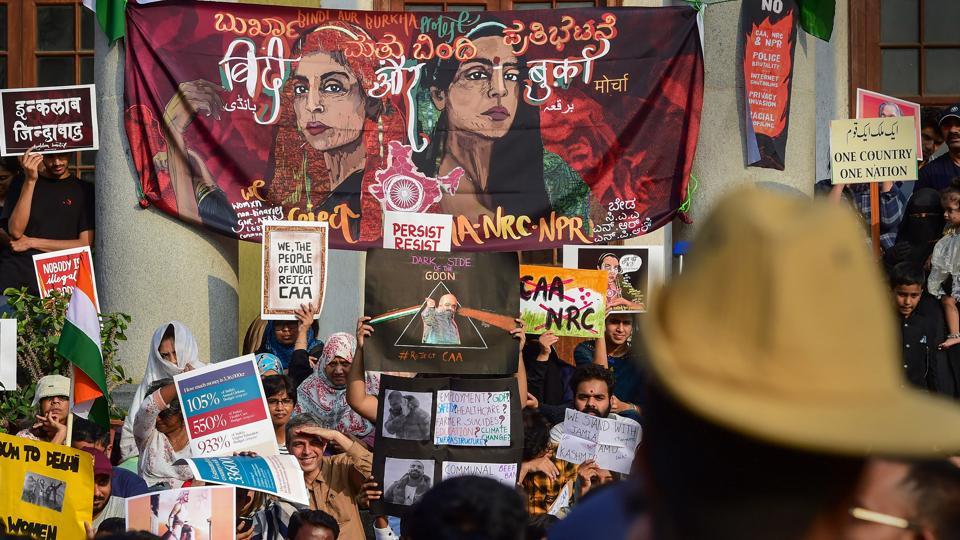
By singing the national anthem, these agitators wanted to prove that they had deep faith in India’s Constitution and sovereignty. They, perhaps, wanted to convey that their movement was completely non-violent. Many of them told the media that they had created squads to see that no anti-social element intruded into this agitation and engaged in any form of violence. Their apprehensions were justified.
About 20-21 people lost their lives in the violence that took place last month around the CAA protests. It also caused huge financial losses. The Karnataka and Uttar Pradesh (UP) police claim that the workers of the Popular Front of India (PFI) played a major role in inciting this violence. Arrests were also made. The UP government used another method of dealing with “rioters”. Not only was legal action taken against them, but a fine was also imposed for damaging public property. Such legal provisions have existed since the British raj. Wherever rioting took place in those days, the British imposed a financial fine on the people of the affected area. But this is the first instance of its implementation after Independence. In order to ensure that the rage of the police was not directed at them, people in many areas collected money among themselves and gave it to the administration.
Don’t you see a thread of similarity between these people and the agitators of Shaheen Bagh? On one hand, the demonstrators have tried their best to respect the law by singing the national anthem. On the other, despite protests being held on every Friday in UP, every effort is being made by society to avoid violence and the wrath of the government. It could be called the Gandhian way of protest.
Violence has many phases. But resistance can last much longer when it is committed to peaceful means. This is what has been happening in many parts of the country, including Delhi. India has witnessed social turmoil but this round is particularly dangerous because of the political subtext.
Let us look at past incidents. In the initial days of the Mandal agitation, in the presence of the police in Delhi, a young student named Rajiv Goswami immolated himself. It generated deep resentment in many places. Pessimists at that time said that the situation was worse than in the days of Partition; that the British had used religion to divide people, and now people were being pitted against each other on the basis of caste. This, it was felt, would adversely affect coexistence in villages.But this did not happen. Thanks to our innate harmony, and efforts by the government, people accepted the new realities.
Later, when the demolition of the Babri Masjid took place in Ayodhya, riots broke out across the country. It felt as if we had gone back to the period immediately after Independence. But today, no one wants to return to that era of riots and violence. So much so that the day the Supreme Court announced its verdict on the Ram Janmabhoomi dispute, nothing happened anywhere; nobody said anything.
Therefore, should we assume that the uproar against the citizenship law will also dissipate over time? This will happen, but only when our political leaders handle this matter with greater seriousness.
Law minister Ravi Shankar Prasad has assured the people that all political parties will be consulted before implementing the law. Prime Minister Narendra Modi and home minister Amit Shah have said the same thing, repeatedly offering assurances that this Act will not affect any Indian citizen. But the movements born out of distrust continue.
As a result, the Kerala legislative assembly passed a resolution against the CAA on December 31, demanding its repeal. The only Bharatiya Janata Party (BJP) Member of the Legislative Assembly protested. But if the arithmetic carried the day in both the Houses of Parliament, then this was bound to happen in the Thiruvananthapuram assembly too. The BJP spokespersons called it a constitutional issue.
Politics is unpredictable and no one is quite sure when our leaders will change their positions. The Biju Janata Dal and the Janata Dal (United) voted in support of the CAA in Parliament, but today, Nitish Kumar and Naveen Patnaik are among the chief ministers who are opposing the National Register of Citizens.
Clearly, the government will have to work hard to bridge the trust deficit on this issue. The government must tackle the emerging discontent and reach a meaningful agreement with the Opposition.
Shashi Shekhar is the editor-in-chief, Hindustan
The views expressed are personal


