Set to face Australia in a full-fledged T20 series for the first time since 2012, the record books of West Indies have not made for grimmer reading in a long while. Since lifting the 2016 World T20 title at Eden Gardens on April 3, West Indies have won 20 out of 58 matches, losing rubbers to Pakistan, New Zealand, Bangladesh, India, England, Afghanistan and recently, South Africa. With a win/loss ratio of 0.588 that is better than only Sri Lanka (0.411) and Bangladesh (0.48), West Indies now have 10 matches (they will host Pakistan in five T20Is after this) to set their house in order before leaving for the UAE to defend their World Cup. The odds are dismal but if there is any team that can turn it around from here, it has to be West Indies.
In fact, West Indies cricket were more strife-torn during the 2016 World Twenty20. The relationship between the board and players over contracts had depreciated to the extent that players had considered pulling out. Sanity prevailed and the Daren Sammy-led team reached India without any team jerseys and woefully short of T20 practice (they had played only two T20Is in 2015, the lowest among all participating sides). Dubbed “short of brains” by former English cricketer Mark Nicholas (he apologised to Sammy later), West Indies went on to defeat England in the final to become the first team to lift the cup twice.
Also read | After batting coach, SL’s data analyst tests positive for Covid-19
Five years is a long time in the context of a world cricket cycle but one thing about West Indies remains unchanged---they continue to lead the way in terms of producing some of the finest finishers in franchise league cricket, both with bat and ball. And most of them prefer to be freelancers, meaning West Indies only get their services when an ICC tournament is around. Take the cases of Chris Gayle, Andre Russell, Dwayne Bravo, Sunil Narine and current captain Kieron Pollard---the core of the Caribbean T20 resurgence in the past decade. Of the 58 T20Is featuring West Indies since the 2016 final, Gayle has played 15, Bravo 18, Russell 13, Narine 17 and Pollard 39.
{{/usCountry}}Five years is a long time in the context of a world cricket cycle but one thing about West Indies remains unchanged---they continue to lead the way in terms of producing some of the finest finishers in franchise league cricket, both with bat and ball. And most of them prefer to be freelancers, meaning West Indies only get their services when an ICC tournament is around. Take the cases of Chris Gayle, Andre Russell, Dwayne Bravo, Sunil Narine and current captain Kieron Pollard---the core of the Caribbean T20 resurgence in the past decade. Of the 58 T20Is featuring West Indies since the 2016 final, Gayle has played 15, Bravo 18, Russell 13, Narine 17 and Pollard 39.
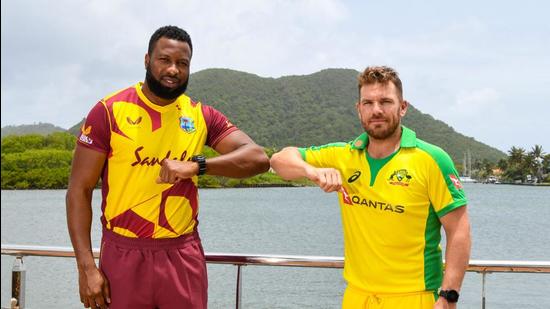
{{/usCountry}}From an administrative perspective, West Indies have often failed their younger generations by falling for last-minute negotiations with their freelancers before big-ticket tournaments. There has also been a lack of continuity at some of the key positions within the team. When Pollard---the correct choice according to many former cricketers---replaced Jason Holder as West Indies ODI and T20I captain in September, 2019, he hadn’t played an ODI since 2016. Bravo, possibly their best death-overs bowler, resumed duties after being absent from the T20I scene for more than three years since 2016. Narine, who hasn’t played for West Indies since August, 2019, continues to confound selectors by making himself unavailable for selection. Russell, plagued by injuries, was called back only before the series against South Africa. But no one has kept the board more on edge than Gayle. He had declared the 2019 World Cup in England to be his last in his ODI career, only to reverse the decision during the tournament. He has only begun playing this year, communicating his desire to take one more crack at a World Cup. The process is both complicated and deeply flawed. Somehow it has worked for West Indies.
Also read | Manjrekar weighs in on Suryakumar Yadav’s possible role for India in ICC T20 WC
With the key players coming together, Pollard now needs to focus on getting the combinations right in the next 10 matches. Topping the list are the uninspiring strike rates of Shimron Hetmyer (107.54) and Nicholas Pooran (104.41) during the South Africa series. Pollard, however, wants to persist with them. “As a team we are willing to work with these youngsters because we know in the future what they can do. Sometimes the easiest suggestion is to put them on the sidelines but is that going to help? Has it worked before? We are going to stick with these guys because we know deep down inside that these guys are talented and have what it takes to take West Indies cricket forward.”
Also read | ‘Dravid shouldn’t push to become full-time India head coach’
West Indies tend to back themselves more as a batting unit. And even though West Indies hit 53 sixes compared to South Africa’s 23 last series, their dot balls conceded (233 as opposed to South Africa’s 175) may have triggered some concern. Pollard has assured he will address it. “Before the series we might get open nets, we got some in Grenada which was fantastic, not something we’ve had over a period of time so we were able to work on our manoeuvring game, rotating the strike, in a couple of sessions. No boundaries, just looking to rotate the ball.” Overall though, six-hitting is an area West Indies have continued to do well in the last five years--averaging 7.72 sixes per match compared to say, India’s 6.4 (of the three teams to have hit more than 400 sixes during this span, only New Zealand have been a shade better than West Indies at 7.82 sixes per match). So even though Pollard has promised more application from his batsmen, expect West Indies to stick to the flair that got them two T20 World Cups.