Axar Patel has been added to the Indian squad for the second Test against Sri Lanka starting in Bengaluru on Saturday. The BCCI media release said he has been cleared to play after an injury rehab. India will play only their third pink-ball Test at home and hence this addition seems perfectly timed.
The last time Patel played in a day-night Test, he scythed through England’s batting with 11 scalps in a 10-wicket win. And when you take 36 wickets
Axar Patel has been added to the Indian squad for the second Test against Sri Lanka starting in Bengaluru on Saturday. The BCCI media release said he has been cleared to play after an injury rehab. India will play only their third pink-ball Test at home and hence this addition seems perfectly timed.
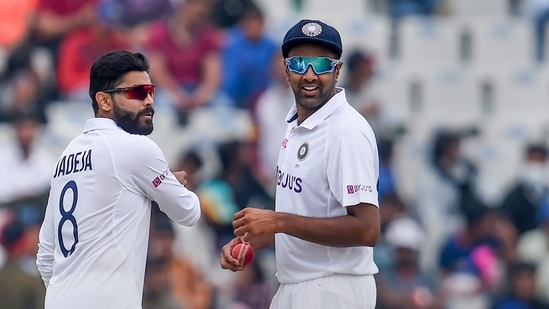
The last time Patel played in a day-night Test, he scythed through England’s batting with 11 scalps in a 10-wicket win. And when you take 36 wickets in 10 innings—all at home by the way—and then have to wait for the next chance, you don’t want to waste it. This looks like that opportunity. Off-spinner Jayant Yadav went wicketless in the Mohali Test and so pending final assessment, Patel should be good to join Ravichandran Ashwin and Ravindra Jadeja in the eleven.
Now, this has happened only once before—in Kanpur last November when these three accounted for 17 of the 19 New Zealand wickets to fall. Against Sri Lanka—a team in disrepair—under lights and with a heavily lacquered pink ball, expect Ashwin, Jadeja and Patel to wreak coordinated havoc. Many three-pronged spin attacks have operated in the past, but few have yielded the results. Two spinners are often more alike and one is almost always underbowled. But in these three, India can assimilate some of the most nuanced skills to dismiss batters of every pedigree even on the most uncooperative pitches.
Take Ashwin, now India’s second highest Test wicket-taker. He broadly has four deliveries in Tests. The orthodox off-break that becomes more vicious if it lands in the rough created by fast bowlers; the quicker arm ball that goes straight; the delivery with overspin where extra bounce is produced, and the carom ball that spins away a bit from the right-hander.
All these variations at different seam axes, angles and release points with an unparalleled degree of control make Ashwin a fascinating, and frankly, an unfair bowler to face in India. You find empirical proof of his efficiency in a home strike rate of 47.5, the best among all spinners to have taken 200 wickets at home—Muttiah Muralitharan (50.8), Rangana Herath (51.3), Anil Kumble (59.4), Shane Warne (60.8), Harbhajan Singh (64.1) and Nathan Lyon (66.6).
And there’s more when Jadeja and Patel weigh in. Left-arm slow bowling may not be as finessed as leg-spin, or even off-spin, but Jadeja and Patel are making it work with their stump-to-stump line. So much of Jadeja’s appraisal is presumed to be about his batting that it tends to overshadow his phenomenal control over the ball. Mohali was responsive, but even on dead tracks where spinners are essentially fodder if they don’t get their lengths right, Jadeja has often tormented batters. Only last year, on a flat Oval pitch, Jadeja wheeled away, bowling 30 overs—the most among India’s bowlers that innings—at 1.66 runs per over and prising out Haseeb Hameed and Moeen Ali.
Relentlessly hitting that one length, Jadeja is the workhorse who keeps changing angles and uses the width of the popping crease to the optimum. Patel does everything Jadeja does while using a 10cm height advantage as well. Having opened the bowling in IPL many times, accuracy is hardwired into him. Keeping his approach simple—coming in straighter and generally adhering to a flatter trajectory, Patel looks to exploit the cracks on the pitch once he settles down on the lines to bowl. On featherbeds, Patel is assured of delivering stifling lines. On tricky pitches, he can take batters for a ride.
Here is the thing though. Of all the deliveries spinners conjure up to confound batters, none is harder to play on a turning pitch than the one that doesn’t turn. And Ashwin, Jadeja and Patel have a straighter one that is different from each other. Nine out of Patel’s 11 wickets in the day-night Test in Ahmedabad against England last year were either leg-before or bowled; at least five were off deliveries that went straight on pitching. Patel’s straighter ball probably is more difficult to negate than Jadeja’s because it comes off a grip and release barely different from his other deliveries. And when you are on the lookout for the ball that lands on the leather than on the seam and turns, it can get disconcerting when the grip doesn’t warn you that fraction of a second earlier.
Ashwin does a mean business of it as well, especially against left-handed batters—using the natural angle to lob in a seam-up delivery that pitches and straightens. Now, take in all these variations and multiply several times the risk caused purely because of the extra layers of lacquer used to keep the pink ball shiny. Just after sunset, when the lights and dew take effect together, the pink ball tends to develop a mind of its own. And if it’s in the hands of Ashwin, Jadeja or Patel, India could run away with the game.
One Subscription.
Get 360° coverage—from daily headlines
to 100 year archives.
Archives
HT App & Website