Kolkata: A maiden, unbeaten hundred from Devdutt Padikkal gave India early control of the first Test against Sri Lanka in Galle, the visitors ending a rain-hit first day on 288/2.
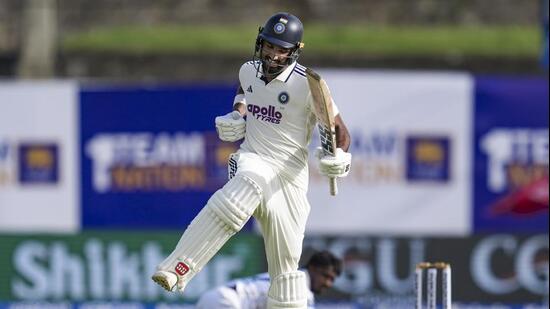
Padikkal, batting on 131, reached three figures from 134 balls in an innings built less on brute force and more on a clear understanding of where Sri Lanka could be hurt. KL Rahul gave him steady company before retiring on 77 after tea because of cramp, after Yashasvi Jaiswal had looked fluent in his 37-ball 32 until his run out.
At stumps, Rishabh Pant was at the other end on 27.
It had been 19 Tests since an India No.3 scored a hundred, with 11 different batters tried in the crucial position. Padikkal’s innings may have finally given India a candidate capable of holding it for a while, after he was handed the spot due to Sai Sudharsan’s injury.
Not only because he scored a hundred, but how the left-handed batsman achieved that. Maximising his stand, height and long lever like arms, Padikkal repeatedly went deep in the crease against spin, attacked off the back foot and used the sweep and reverse-sweep to disrupt Sri Lanka’s rhythm, left-arm spinner Prabath Jayasuriya being the chief among those at the receiving end.
Also Read: Devdutt Padikkal scripts rare history with maiden Test century, ends India's long drought at No.3
{{/usCountry}}Also Read: Devdutt Padikkal scripts rare history with maiden Test century, ends India's long drought at No.3
{{/usCountry}}Shubhman Gill won the toss and elected to bat, and the decision looked increasingly sound as the day progressed. Sri Lanka’s new-ball attack lacked discipline, offering too many deliveries on the pads, and too much width. India’s openers settled down without having to fight through a prolonged examination.
Jaiswal looked typically positive before India suffered a setback in bizarre fashion. He was run out after a collision with bowler Keshara Nuwantha, who had dived towards the non-striker’s end trying to stop Rahul’s drive to mid-on. Despite being brought down, neither Jaiswal nor India protested. That was the only wicket of the opening session, India reaching 101/1 from 27 overs.
Rahul then settled into the sort of innings that has become his trademark — patient, watchful and largely unmoved by the lure to set the tone of the game. He reached fifty from 127 balls, negotiating a surface that was generally good to bat on but gave the occasional reminder that Galle would not be entirely benign. During one passage, Jayasuriya got one to turn appreciably to fox Rahul as he played for the straight delivery.
There was aggression too. Rahul came down the pitch to lift Jayasuriya over his head for six before adding a four down the ground. Later, a cover drive off the left-arm spinner was followed by another boundary through short third. A 150-run partnership with Padikkal was completed when Rahul drilled off-spinner Kesara Nuwantha down the ground.
By tea, the Karnataka pair had transformed India’s position. Padikkal’s confidence was particularly striking. His back-foot game allowed him to attack spin without having to charge at every delivery, while his ability to sweep and use his feet ensured Sri Lanka could not settle into defensive lengths.
Padikkal’s recent first-class form suggest that this was not an isolated burst of form. In his last seven first-class outings before this Test, he had repeatedly converted substantial scores into hundreds: 120 not out against Punjab, 232 against Uttarakhand and now an unbeaten 131 against Sri Lanka. He also made 142 not out in India’s practice match against Sri Lanka Cricket XI in Colombo.
His progress in Galle has followed a similar pattern. Against Sri Lanka A on a previous tour, he made 67 and 94 in successive innings. This time, when the opportunity arrived at No.3 and he took it.
India scored 96 without losing a wicket in the second session, moving to 197/1. For 53 overs, Sri Lanka’s bowlers couldn’t find another breakthrough. There were moments when they came close — an lbw appeal against Padikkal, a bat-pad from Rahul that fell wide of short leg and an edge from Padikkal that didn’t carry to slip. Other than that India batted with conspicuous comfort.
Cramp however forced Rahul to leave the field at 77 from 162 balls. He had braved a forearm cramp before tea and then returned after the interval but was unable to grip the bat and retired, bringing Gill to the crease. His stay was brief and unusually adventurous, possibly prompted by Jayasuriya’s return. India’s approach against Jayasuriya appeared deliberate — take the spinner out of his comfort zone by advancing down the pitch.
Gill tried to loft him, but the ball turned just enough after he failed to get to the pitch and he miscued to be caught. Gill made 16, leaving India at 236/2. The dismissal did little to alter the broader narrative. The final session was India’s most productive in terms of scoring rate, with 91 coming from only 20 overs. Padikkal’s hundred was the defining contribution, but the wider significance was India’s ability to control the tempo from the moment Sri Lanka quicks failed to exploit the new ball.
The good start notwithstanding, the most encouraging development for India may have been the emergence of a possible answer to their No.3 problem. Padikkal didn’t merely survive, he made the position his own. The next question is whether one hundred can turn into a longer run at the top of the order. On current evidence, India may have finally found a contender.