


 Live Score
 Cricket Teams
 Cricket Players
India vs England: Chennai Test leaves SG ball bursting at the seam
The seam came off during the first Test leaving Virat Kohli unhappy, though makers of the match ball blame the abrasive MA Chidambaram Stadium pitch.


Smarting from a humbling defeat in the opening Test against England, India has pointed fingers at the MA Chidambaram Stadium pitch as well as the quality of the SG match ball.
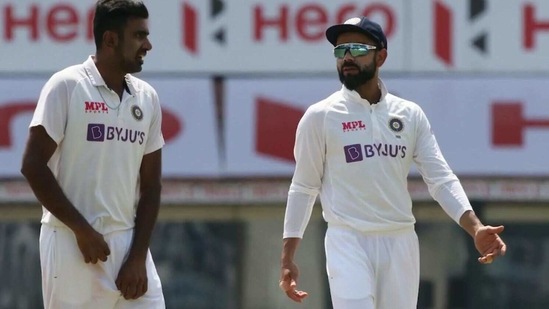
Although captain Virat Kohli’s choice of words were thought through, taking equal blame for the team’s poor showing, the pitch and the ball will be in focus again from Saturday as India look to bounce back in the next Test, also at Chennai.
When off-spinner Dom Bess dismissed Kohli on Day 3, the spotlight was on the bowler’s jubilation at getting a top batsman through a classical off-spinner’s dismissal, caught at short leg. But watching a slow-motion replay of that delivery in flight in the 25th over, one could see the ball already scuffed up. As good an over as James Anderson’s was, the 27th of the innings on Day 5 when the ball reverse swung past Shubman Gill and Ajinkya Rahane’s defence, the loosened seam piercing the air showed up.
“The quality of the ball was not something we were very pleased to see. That has been an issue in the past as well,” Kohli said in his post-match press interaction. “Just for the ball’s seam to be completely destroyed in 60 overs is not something you experience as a Test side and can be prepared for.”
ASLO READ | Axar Patel fit, Shahbaz Nadeem set to be dropped for second England Test in Chennai - Report
Improved quality
How did the improved, darker red, SG ball, with a harder core and more prominent seam, fail to last?
“We made the modifications based on the feedback we got from the team in 2018 after the West Indies series,” said Paras Anand, marketing director, SG. “We did some lab testing of our own on a flat surface during this Test too. It played out well. The point about the Chennai wicket being abrasive was made by James Anderson and touched upon by Ravichandran Ashwin. We also have to consider that despite the way the wicket was, the ball was not changed. The second new ball was used for 104 overs. However, if BCCI gives us the feedback after speaking with the players, we will be happy to work on it.”
Anand didn’t agree there could be any manufacturing defect, saying the players were happy using the same ball in the last domestic (played) season.
Anderson pointed to the pitch when he spoke with the broadcasters before play began on Day 5. “The ball is in good condition,” he said. “The wicket is so abrasive that our second new ball in India’s first innings reversed after four overs.”
A point seconded by former England quick Darren Gough in commentary. “The surface seemed to have ripped the seam to bits,” he said on talkSport. “They tried to make it more competitive by having a harder ball, to try to make it last till 60 overs. But it’s not happened.” Cricket pundit Mark Nicholas added, “…in fact the damaged ball may have aided reverse swing”.
Anderson explained the England game plan for the final day after the match. “When Jofra (Archer) started (over 15), he got it to reverse a little bit. Then we got some overs off-spinners to rough up the ball a bit more and when I came on, we knew it would reverse.” Anderson took two wickets in his first over by getting the ball to reverse.
India cannot deny that the visitors made better use of the ball, perhaps even maintained it better in the absence of saliva use (it is banned due to the pandemic). But the result brought to the fore the oft-repeated Indian complaint of the SG ball going soft and losing its seam too early.
ASLO READ | India vs England: Second Test pitch in Chennai might offer more turn - Report
Past complaint
After India’s win against West Indies in 2018, Kohli had complained that the SG ball got scuffed up in five overs and became soft in 10-12 overs. A ball is changed after 80 overs in a Test. “…(for) the spinners as well, if the ball is hard you can get that extra pace, but if it goes so soft in 10-12 overs, then your effort comes down by 20%.”
When the ball loses its hardness early on dry Indian pitches, the team losing the toss and chasing the leather is generally at the receiving end. In Chennai, it was 190 overs (England’s first innings lasted 190.1 overs) and over two days of grind for the Indian bowlers, accentuated by India’s below-par first innings batting.
Ashwin complained of the SG ball getting “torn off” but added that it could have something to do with the pitch. When Ashwin takes centerstage again, the hand-stitched SG ball will again be the focal point. So also the pitch, which Kohli found “too flat” and Ishant Sharma called “a road” for the first two days.


