


 Live Score
 Cricket Teams
 Cricket Players
Not indifferent to BCCI but it is indifferent to everything other than money
It got richer but like the old times, ‘honoraries’ stay in charge


When the two new franchises of the IPL were announced, their numbers were numbing. Lucknow seven thousand something crores, Ahmedabad five thousand someting crores, Sourav Ganguly saying it “reiterates the cricketing and financial strength of our cricket ecosystem” which would, “bring more domestic cricketers from our country to the global stage.”
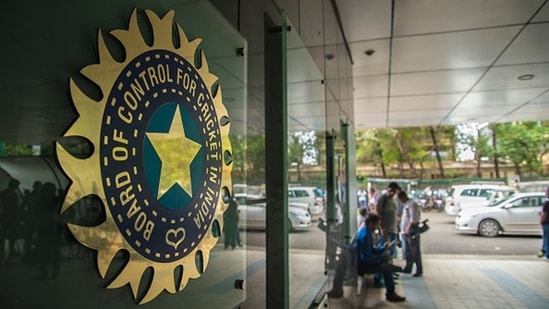
Crazy rich BCCI just got crazy richer. How exactly the notoriously tightfisted board will use this money to develop the domestic game is the question. In other words, keep following that money.
Are you thinking here what a mood hoover? Why can’t you just be happy? Or as was most recently said to me, “We know you hate the BCCI…”
What? Me? This is not the first time I’d been described as being in constant confrontation with the ruling body of Indian cricket.
In a j’accuse mode, I’ve been told, “you always attack/ are always negative about” (alongside “it is so easy to go after …”) after which either BCCI or IPL could be fitted.
Just to make it clear, whatever else I think of the BCCI, I do not hate it. It is possible for different people to be baffled, annoyed, fed up with, even envious and/or resentful of organisations, like those that they may work for, for example. Sporting organisations like football clubs may invoke fury and even loathing because, as football fans demonstrate, there is considerable emotional investment in their community clubs and sporting franchises.
But what emotional investment could there be in BCCI? It’s not a community club. The words professional management don’t really apply and the operating noun/ verb even in their name is “control”. Like pest control, air traffic control or the police control room. Or the Control key on a computer, the leader of the three-finger salute Ctrl+Alt+Del.
Experts could argue that the presence of that word itself plays itself out in an organisation’s management policy, but that’s way beyond my qualifications, so I’m not going there.
To try and understand my reactions to the BCCI, the institution—not individual people in its various posts at various points in time—let’s reconsider the behemoth.
Remember the local storekeeper you lived next to as a kid? The kind who was sort of all over the place, but ended up offering reasonable goods. They also banded the neighbourhood together to stand its ground in fights against big brand stores from elsewhere trying to push them around. That’s what the BCCI used to be.
At one point, they began to diversify their goods and services. Their shop windows kept getting bigger, brighter, busier, with greater footfalls to the point that the heavies fell in line. They would kowtow to the new order, but to those of us hanging about to see what was going on, the older heavies complained about arm-twisting and monopolies. Yeah, right.
With the passage of time, the Storekeeper & Sons became bigger than anything anyone could imagine. They outgrew the neighbourhood. The old storefront’s progress was so meteoric, so dazzling, it was easy to ignore its operational problems. Unlike other businesses, Storekeeper & Sons plant their vault and its cast iron safety door right where everyone can see it. Every few years, there’s an announcement that more gold’s going in and the street celebrates. Storekeeper & Sons now want to masquerade as leaders of industry and business but are not doing a very good job of it.
At this point, you’re not going to hate, right? Most likely, you’ll just give them eye-rolls. You’ll cringe, you’ll point fingers and say, gents, you’ve become the heavies, now, at least act your age.
But enough of the metaphors.
The earliest BCCI office I remember was housed up a staircase in the Brabourne Stadium office complex between Gaylord’s restaurant and the K Rustoms Ice Cream parlour in Mumbai. If you didn’t know it was there, you could walk past without noticing its signboard. The office had grey filing cabinets, a staff of three plus a peon and right at the start, secretary Polly Umrigar’s office (RIP Pollykaka). Before the flood of cash, Indian cricket was trundling along as a small operation with volunteers and ‘honorary’ posts, the only paid staff were the office workers.
Its transition through the 1990s from amateurish to professional-ish was conducted by what sports management studies call kitchen table governance. Outsiders joked that Jagmohan Dalmiya ran Indian—and world cricket—with a typist and a fax machine.
This is not meant to romanticise a fictional golden age, it is just a statement of fact. It is possible that under this model, contracts given out for any one of the hundreds of things needed to conduct matches may have involved commissions to the less honourable of the honorary officials. It happens across sport, across countries.
But what also happens with the professionalisation of sport is that that its governance model follows a path from kitchen table to boardroom. The BCCI did try. It set up its sleek Cricket Centre inside the Wankhede Stadium premises and now has more than 75 paid employees who run the enormous machinery that comprises Indian cricket.
There is a nice board room. But rather than abandon the kitchen table and hand over day-to-day operations to professionals, the Honoraries have instead retreated from their kitchen table into the vault.
Hate and love, we’re told, are not opposite of each other. The opposite of both is indifference. And I’m not indifferent to the BCCI, so that case should be closed. The BCCI however is indifferent to everything other than money.


