In less than 12 months, India will host the ODI World Cup. Realistically it’s their best opportunity to win a World Cup, not only because they are playing at home but also because this seems to be the format their natural playing style is most suited to. But such has been the structure of World Cup cycles that one-dayers have been kept on the backburners since 2019. The format-specific experience has thus been pretty sparse—only Shikhar Dhawan has played more
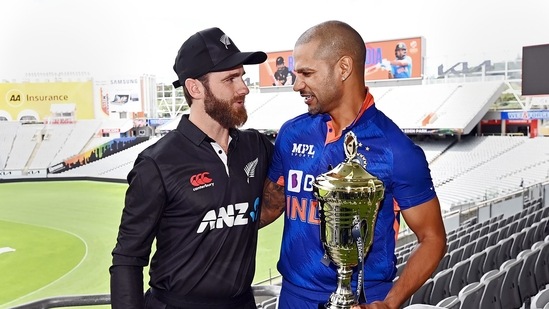
In less than 12 months, India will host the ODI World Cup. Realistically it’s their best opportunity to win a World Cup, not only because they are playing at home but also because this seems to be the format their natural playing style is most suited to. But such has been the structure of World Cup cycles that one-dayers have been kept on the backburners since 2019. The format-specific experience has thus been pretty sparse—only Shikhar Dhawan has played more than 30 (31) of the 39 matches since the 2019 World Cup, Shreyas Iyer (27 matches), Virat Kohli (26) and KL Rahul (22) being the other three to have featured in more than 20 matches in this time.
Since India are the hosts, they automatically qualify for the World Cup and don’t have to think about the Super League points table which they are currently leading. So the focus will clearly be on sorting out the final 15. And that’s going to be a headache because India again look top-heavy with Dhawan, Iyer and Rishabh Pant set to ask questions of the top-three comprising Rohit Sharma, Kohli and Rahul. Who will open and who will be the backup opener? Who will be the allrounders and how will Jasprit Bumrah and Ravindra Jadeja be eased into this bunch as they recover from their injuries? These and more questions need to be addressed as India get down to playing the first three of the 21 ODIs they are scheduled to play till the World Cup next year.
Top-order puzzle
The World Cup will be held on grounds where the boundaries won’t be big, pitches will be slow and the outfields will be quick. The current series will be played in almost contrasting conditions without Sharma, Kohli and Rahul but in Dhawan and Shubman Gill, India have a formidable opening pair that has three-century stands in eight matches.
Gill is a curious case of a phenomenal talent pigeonholed in just ODIs (apart from Tests) from the outset. Whatever chance he has got though, Gill has made full use of that. In 10 matches since the 2019 World Cup, Gill has scored 563 runs at an average of 70.37 and a strike rate of 105.82. Few more similar innings and it would be difficult to overlook him in the long run. Equally interesting will be the way Dhawan’s case is treated since he wasn’t part of the 2019 World Cup squad. He has a healthy average (45.84) but has been considerably slower (SR of 82.83) since the 2019 World Cup. Kohli (91.12), Rahul (95.62) and Sharma (96.11) have better strike rates but this format can still sustain at least one anchor if the other top-order batters can accelerate with time. If the new selectors aim to strike a balance by picking Dhawan for the World Cup, a top-order conundrum is inevitable.
Who are the allrounders?
This will automatically decide the middle-order. And given the mess India had created by persisting with Vijay Shankar for the 2019 World Cup, they will be well-advised to go through as many options as possible. Hardik Pandya and Ravindra Jadeja will be trusted to share at least 10 overs between themselves if two specialist fast bowlers (Bumrah and Shami/Arshdeep?) and two specialist spinners (Yuzvendra Chahal and Ravichandran Ashwin/Axar Patel?) are picked. Deepak Hooda deserves to be looked at as another sixth bowling option, as do Washington Sundar, Deepak Chahar and Shardul Thakur—all named in the squad for this series. So the management has their work cut out here as well.
Six bowling options including two allrounders; five specialist batters, three out of which are top-order, should make up the eleven at an ODI World Cup at home. That basically leaves two middle-order bats, one of them being Yadav. Logic says Pant, who is vice-captain for this New Zealand series, should be the other person since he is the wicket-keeper, bats left-handed and is generally a more reliable option in 50-overs cricket since he gets more time to settle down and go ballistic the way only he can. That means neither Iyer, nor Sanju Samson or Hooda are likely to get a realistic chance of a game in the World Cup. This series, thus, is a good chance to increase their visibility in every way possible.
One Subscription.
Get 360° coverage—from daily headlines
to 100 year archives.
Archives
HT App & Website