Geoffrey Boycott has launched a fierce attack on Ben Duckett after the England opener’s miserable series against Pakistan, questioning both his shot selection and his refusal to adapt when his aggressive method stops producing runs. Duckett endured a difficult three-Test series despite England completing a 3-0 sweep, returning scores of 15, 17, 1, 11 and 0 across five innings. More than the lack of runs, however, it was the manner of his dismissals that appeared to frustrate Boycott, who believes the left-hander has become too stubborn in trying to impose the attacking style that has defined England’s batting in recent years.
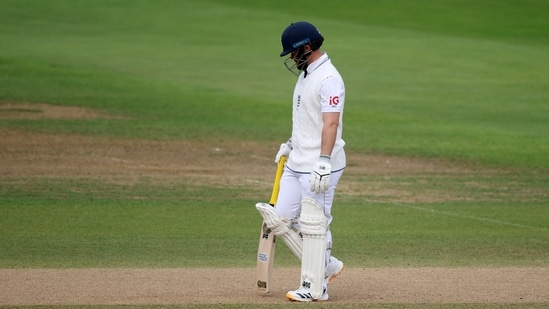
Writing in his column for The Telegraph, Boycott pointed to Duckett’s dismissals at Lord’s and Edgbaston as examples of a batter continuing to force the issue even when the approach was clearly not working. “The dismissal at Lord’s when he smacked it to mid-off was a shocker,” Boycott wrote. “This match he thrashed at a wide sucker ball with his front foot a long way from the line of the ball. He cannot keep getting out with irresponsible shots and stay in the team.”
Duckett has been one of the most recognisable faces of England’s ultra-positive batting philosophy, but Boycott argued that there has to be a point where adaptability matters more than sticking rigidly to a particular method. “Ben seems determined to prove he can carry on batting in Bazball mode and runs will flow. My motto was ‘if it ain’t working, I need to change’. Not changing is not smart,” he added.
Boycott questions Duckett’s place
Boycott’s criticism went beyond technique and shot selection. He suggested England should be prepared to make a selection call if Duckett continues playing in the same manner without producing runs, arguing that an opener also carries the responsibility of surviving the new ball and giving the rest of the batting order a platform. “If Ben is so pig-headed and determined to carry on batting that way then England would be wise to drop him. Make the point that playing for England comes with responsibility. As a batsman your currency is runs and he is not getting any and he is not staying in long enough to help the lower-order stroke players by seeing the shine off the new ball,” Boycott wrote.
{{/usCountry}}Boycott’s criticism went beyond technique and shot selection. He suggested England should be prepared to make a selection call if Duckett continues playing in the same manner without producing runs, arguing that an opener also carries the responsibility of surviving the new ball and giving the rest of the batting order a platform. “If Ben is so pig-headed and determined to carry on batting that way then England would be wise to drop him. Make the point that playing for England comes with responsibility. As a batsman your currency is runs and he is not getting any and he is not staying in long enough to help the lower-order stroke players by seeing the shine off the new ball,” Boycott wrote.
{{/usCountry}}Duckett’s struggles also stood out because of the contrasting method employed by opening partner Emilio Gay. Gay was far more prepared to leave deliveries, defend patiently and spend time at the crease rather than forcing the scoring rate from the outset. That approach produced a couple of starts before he made 60 in the final Test at Edgbaston, and Boycott was particularly impressed with his willingness to absorb pressure. He argued that England still need an opener capable of doing the “old-fashioned” work of blunting the new ball before the more attacking batters further down the order take over.
England’s dominance against Pakistan meant Duckett’s lack of runs never became a decisive problem in the series, but Boycott’s criticism has put the focus firmly on whether the opener can continue receiving the same freedom if the returns remain this poor. For Boycott, the issue is less about abandoning aggression altogether and more about recognising when it is failing. His warning to Duckett is clear: England’s batting philosophy may encourage freedom, but a place in the Test side still has to be backed up by runs.