


 Live Score
 Cricket Teams
 Cricket Players
Rishabh Pant back in leadership role; adios Mohammed Shami: Takeaways from India’s squad for South Africa Tests
India's Test squad for the series against South Africa showcases a fresh, youthful core led by Shubman Gill and Rishabh Pant.


India’s 15-member squad for the two-match Test series against South Africa is more than just a routine announcement. It is a clear snapshot of where the selection committee wants red-ball cricket to go over the next World Test Championship cycle.
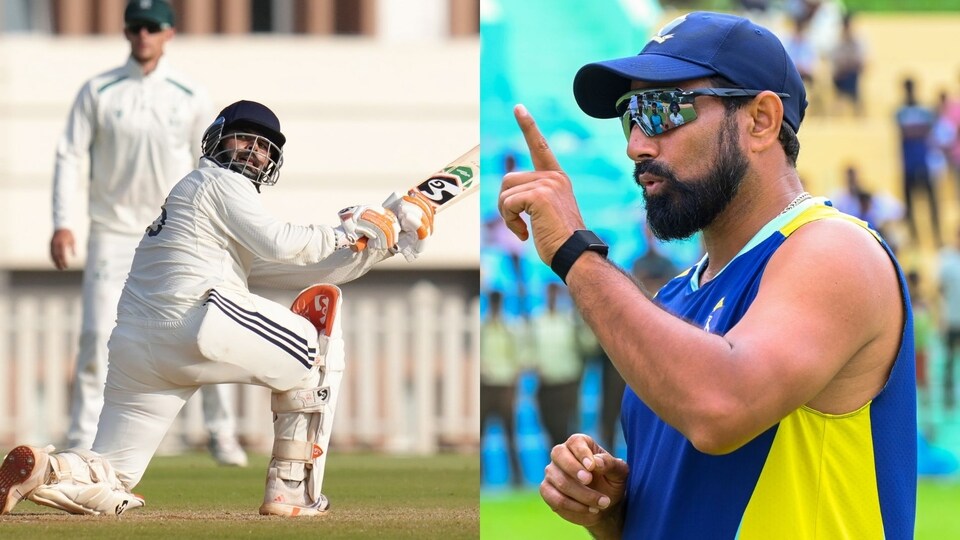
With Shubman Gill at the helm, Rishabh Pant as his deputy, and a young, flexible core around them, the message is unmistakable: a fresh team with an eye for the WTC final.
India’s Test Squad: Shubman Gill (c), Rishabh Pant (wk) (vc), Yashasvi Jaiswal, KL Rahul, Sai Sudharsan, Devdutt Padikkal, Dhruv Jurel, Ravindra Jadeja, Washington Sundar, Jasprit Bumrah, Axar Patel, Nitish Kumar Reddy, Mohammed Siraj, Kuldeep Yadav, Akash Deep.
1. Pace hierarchy reset: End of road for Mohammed Shami?
The biggest talking point is the name not on the list: Mohammed Shami. For a bowler who has been one of India’s most prolific Test pacers over the last decade, his continued absence from the squad is no longer just a matter of workload management. It now feels like a structural shift in the pace pecking order.
With Jasprit Bumrah and Mohammed Siraj locked in as the first-choice quicks and Akash Deep groomed as the next in line, the selectors appear to be future-proofing the attack rather than leaning on an ageing great.
Shami’s omission also underlines how ruthless the transition phase is. Performances and fitness windows at the highest level are being weighed against a long-term roadmap. In that roadmap, India seem determined to build a pace unit that can be preserved across multiple WTC cycles, even if it means phasing out a proven match-winner earlier than expected.
2. Rishabh Pant’s return
If Shami’s absence is the headline omission, Rishabh Pant’s return is the most reassuring inclusion.
Pant’s return to the team adds more than just runs and charisma. It restores India’s preferred Test template where they like to slot in an aggressive middle-order batter who can change the tempo of an innings in a single session, while also being vocal and proactive behind the stumps.
Also Read: Mohammed Shami ignored by Agarkar despite picking 15 wickets in 3 games, Rishabh Pant back in India squad for SA Tests
Crucially, the leadership axis of Gill and Pant promises to take the team ahead in times beyond the current WTC cycle. Both are young enough to shape the next era of India’s Test cricket, yet experienced enough to have lived through high-pressure series, home and away. The selectors are betting that this stability in the leadership core translates into consistency in how India approaches big moments in Tests.
3. Trusting left-handed batting core along with an all-round heavy system
This squad is also a strong statement about the type of batting and balance the Indian team wants going ahead.
At the top, Yashasvi Jaiswal, KL Rahul, Sai Sudharsan, and Shubman Gill created a distinctly youthful and left-right combined batting core. It gives India variety against different attacks.
Lower down the order, there is an almost luxurious all-rounder squeeze. Ravindra Jadeja, Washington Sundar, Axar Patel, and Nitish Kumar Reddy all bring dual skills. Jadeja remains undroppable in home conditions. Axar is an impact option on turning tracks. Sundar allows India to lengthen their batting without sacrificing a front-line spin option. Nitish Reddy, as a seam-bowling all-rounder, gives the team the option of playing four specialist bowlers plus a genuine fifth.


