


 Live Score
 Teams
Teams Players
Shubman Gill on track to leave Kohli, Dhoni, Tendulkar behind: How India captain is building a legacy for himself
Captaincy does not always lead to performance decline; Gill shows promise as India's new captain, maintaining high averages.

 Prefer HTon Google


When a player is handed over the captaincy, two things can happen: the bat gets heavier for him, or it starts singing. India’s Test and ODI captain, Shubman Gill, is currently in full chorus when it comes to the purest format of the game.
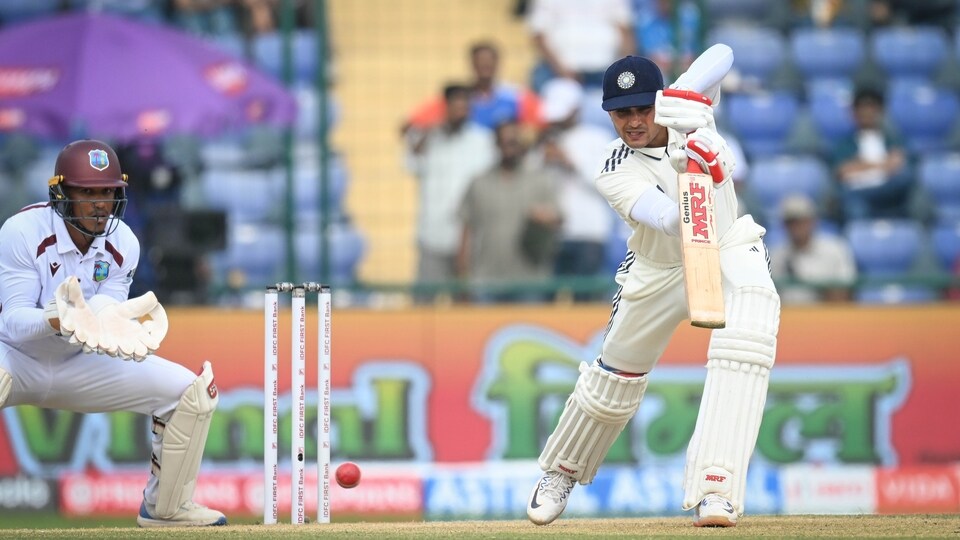
On Day 2 in Delhi, he crafted an unbeaten 129 as India declared at 518/5, his fifth Test ton in 2025 and another entry into a scorching captaincy run. After that innings, Gill now has 933 runs under his belt as a Test captain in 12 innings at an average of 84.81.

The sample size to compare him with the greats of the game is small, but if we consider the early signs, he is set to be in an elite list.

Record of some Indian captains
Player | Before Avg | During Avg | Δ (During–Before) | After Avg |
| Sachin Tendulkar | 52.15 | 51.35 | -0.8 | 54.17 |
| Rahul Dravid | 54.37 | 44.51 | -9.86 | 44.13 |
| Sourav Ganguly | 47 | 37.66 | -9.34 | 45.82 |
| MS Dhoni | 33.06 | 40.63 | +7.57 | — |
| Virat Kohli | 39.46 | 54.8 | +15.34 | 32.51 |
| Rohit Sharma | 46.87 | 30.58 | -16.29 | — |
What it means:
- Virat Kohli is the outlier engine - he has the biggest positive captaincy delta, and his batting average of 54.80 is elite to say the least.
- MS Dhoni also shows great improvement with responsibility on his shoulders. He has a positive delta of more than 7.
- Sachin Tendulkar shows steadiness with or without the armband.
- Rahul Dravid and Sourav Ganguly seemingly eat a batting tax while leading the team, but rebound once the responsibility is off their shoulders.
- Rohit Sharma shows the biggest decline in Test average while being the captain.

Where Shubman Gill sits on this map
Player | Phase | Tests | Inns | Runs | Avg | 100s | 50s |
| Shubman Gill | Before captaincy | 32 | 59 | 1,893 | 35.05 | 5 | 7 |
| Shubman Gill | During captaincy | 7 | 12 | 933 | 84.81 | 5 | 1 |
What it means: Gill’s delta is a massive positive so far. From a mid-30 average, he has jumped to over 80 as a captain. In ‘effect size’, he currently profiles closest to Kohli’s uplift. The sample is still young, but five centuries in 12 Test innings as captain is not something you can ignore easily.

Conclusion
The prime conclusion that we reach is that captaincy does not always necessitate a decline in performance. While Sachin shows great steadiness before and during captaincy, Dhoni and Kohli show improvement in their performance.
Now, talking about Shubman Gill, his average as captain will take a dent, at least the law of averages says so. However, with the way he has performed in England and is continuing that momentum ahead, there is a chance that India’s new captain can surpass the elite standards that have been set by Virat Kohli.


