


 Live Score
 Cricket Teams
 Cricket Players
The missing INR 5.77 crore weapon of CSK: Jamie Overton's absence haunts Ruturaj Gaikwad against Lucknow Super Giants
Chennai Super Kings lost to Lucknow Super Giants due to Jamie Overton's absence, impacting their middle-over bowling.

 Prefer HTon Google


Chennai Super Kings did not lose to Lucknow Super Giants only because Jamie Overton was missing. That would be too easy, too lazy, and too convenient.
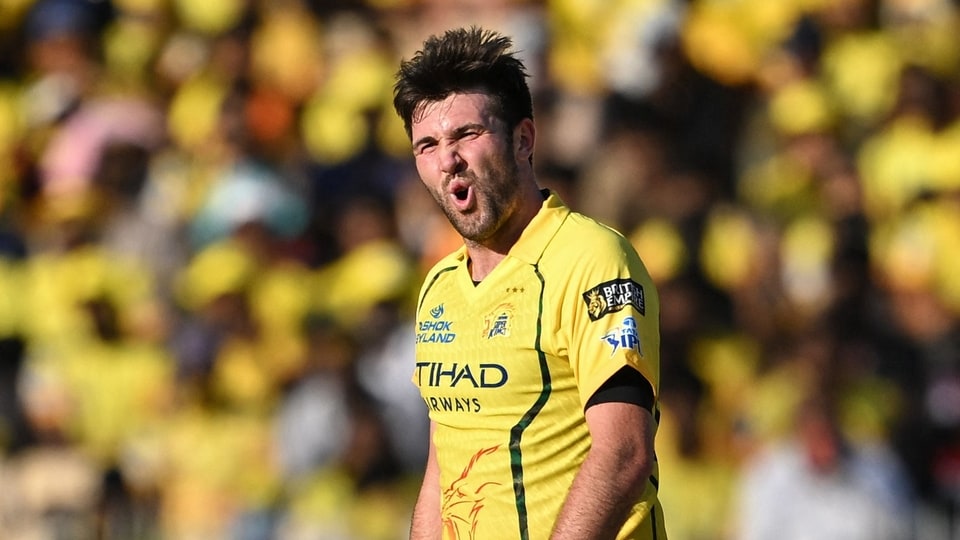
They lost because 187 became a soft target, LSG reached 67/0 in the powerplay, and because Mitchell Marsh blew the chase open with his destructive 90 off 38 balls.
But Overton’s absence still sat inside the match like a missing bolt in a pressure machine. CSK had runs on the board. CSK even found a brief middle-overs opening. What they did not have was the bowler who had used that phase to turn games for CSK throughout the season.
The ₹5.77 crore gap in CSK’s middle overs
Overton’s right thigh injury forced him to return to the UK for further assessment and management. CSK later brought in Dian Forrester as his replacement, but against LSG, the immediate damage was clearer than the squad paperwork.
Overton had already generated ₹5.77 crore in cost-adjusted middle-overs profit for CSK this season. His middle-over spells had produced 10 wickets in 18 overs, at an economy of 7.61, with a boundary percentage of only 14.81.
That is a rare value for a fast bowler in overs 7-16. It is even rarer for a CSK attack that has often needed someone to disturb set batters after the powerplay.
Against LSG, the chase reached 67/0 after six overs. CSK needed a break. They needed a spell that did more than slow the game. They needed a spell that cracked it.
The middle overs did give them hope. LSG were 135/0 when Josh Inglis fell at 11.4 overs. Mitchell Marsh was run out one ball later. Abdul Samad was bowled at 13.2 overs. Three wickets had arrived in the space of ten balls.
That was the match’s narrow doorway.
CSK could see it. LSG had suddenly moved from cruising to slightly exposed. The equation still favoured Lucknow, but one more wicket could have changed the mood, the dressing room noise, and the next batter’s first five balls.
That is exactly where Overton’s season had lived.
Also Read: How can CSK still qualify for IPL 2026 playoffs after loss against LSG? Full scenario explained
From Overton’s 3/19 to CSK’s empty pressure spell
The direct comparison deepens the wound. Earlier this season against LSG, Overton’s middle-over spell had read 3-0-19-3. In monetary terms, that spell was worth ₹1.85 crore, with ₹1.77 crore in cost-adjusted profit.
In this match, CSK’s comparable middle-over seam spell from Gurjapneet Singh read 3-0-34-0. So, one can say, CSK went from a ₹1.77 crore LSG-specific middle-over spell to three wicketless overs, leaking 34.
Noor Ahmad did his job. He bowled four overs for 21 in the middle overs. Mukesh Choudhary found two wickets. Spencer Johnson removed Inglis. CSK were not completely lifeless through the middle.
But the attack lacked the violence Overton displayed in that phase. It lacked the heavy-ball wicket threat that had made his season so valuable. It lacked the ability to turn 135/2 into 145/4.
Once LSG escaped that pocket, Pooran gave CSK no second invitation. He finished unbeaten on 32. LSG reached 188/3 in 16.4 overs, with 20 balls unused.
A loss that exposes the shape of Overton’s value
Jamie Overton’s worth to CSK was never only about his total wickets. His value came from timing. Powerplay wickets carry noise. Death wickets carry drama. Middle-over wickets carry structural damage. They break a chase before the final calculation begins.
Overton had become that middle-overs breaker. His average middle-over spell was worth ₹71.8 lakh, with an average profit of ₹64.1 lakh. Across the season, that built into a phase-specific surplus of ₹5.77 crore.
CSK missed that surplus in Lucknow. They missed it when Marsh and Inglis were flowing. They missed it when three wickets briefly opened the match. They missed it when Pooran walked in with enough cushion to attack without panic.
The defeat will sit in the table as LSG beat CSK by seven wickets. The scorecard will remember Marsh’s 90 and Pooran’s finish.
The deeper read is harsher for Chennai.
A team fighting to stay alive in the playoff race lost the exact phase in which its injured overseas all-rounder had been delivering crores of hidden value. CSK did not simply miss Jamie Overton’s name on the team sheet. They missed the ₹5.77 crore middle-over weapon that could have turned LSG’s chase into a proper fight.
Method note
The monetary values used in this article come from the IPL 2026 impact-and-value model designed exclusively by the author. Jamie Overton’s middle-overs worth was calculated by isolating his bowling spells between overs 7 and 16, then assigning impact points based on wickets, economy control, dot-ball pressure, boundary prevention and match context.
The ₹5.77 crore figure refers to his season-long cost-adjusted profit from middle-overs bowling, not the value of one individual match. His gross middle-overs worth stands at ₹6.46 crore, while the ₹5.77 crore number is the surplus after allocating his bowling cost to those overs.
For the LSG comparison, Overton’s earlier 3-0-19-3 middle-over spell against Lucknow was valued at ₹1.85 crore in gross worth and ₹1.77 crore in cost-adjusted profit. The figures are model-based estimates designed to measure match swing and phase value, not official IPL financial data.


