


 Live Score
 Teams
Teams Players
Vaibhav Sooryavanshi redefining how cricket is played: U19 WC final knock in league of Rohit's 264, Sachin's 200
Vaibhav Suryavanshi, 14, scored 175 runs in the U19 World Cup final, redefining youth cricket by showcasing fearlessness and control.

 Prefer HTon Google


Vaibhav Sooryavanshi is 14, and he just played a U19 World Cup final innings that felt less like youth cricket and more like a glimpse of cricket’s future.
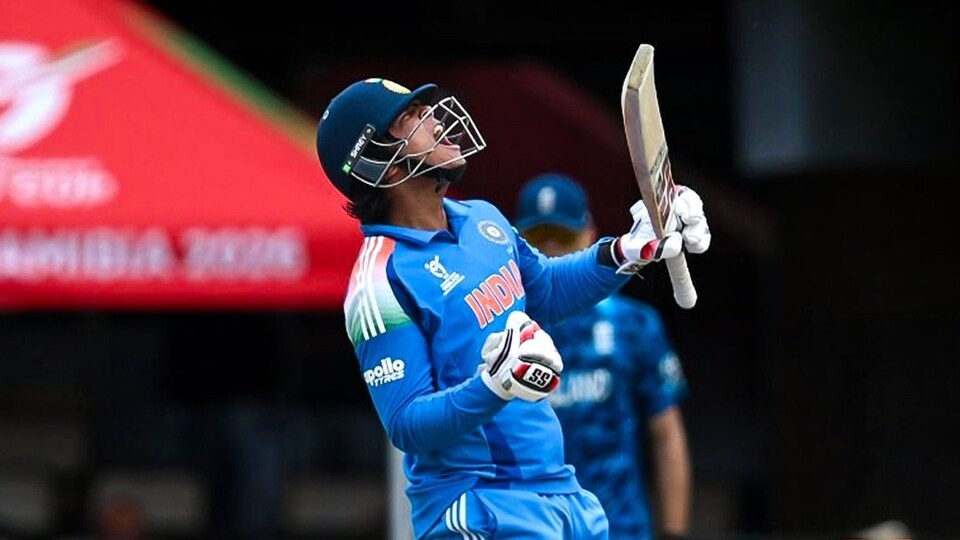
In Harare, the teenager blasted 175 off 80 balls against England, powering India to 411/9 — a total that didn’t just win a final, it made the game look temporarily out of scale.
We overuse the word “prodigy”. But every once in a while, an innings forces comparison not because the kid needs hype, but because the knock itself speaks the language of the sport’s great outliers — the ones that changed what batters believed they were allowed to do.
Sooryavanshi’s 175 is that kind of innings. It didn’t feel like a score; it felt like a takeover. And to explain why, it helps to place it beside three greatest ODI knocks that expanded batting’s imagination in their own way.
SachinTendulkar’s first ODI double ton
Sachin Tendulkar’s unbeaten 200 in Gwalior in 2010 wasn’t only about a round number. It was a public snapping of a psychological ceiling. Until then, 200 was a myth people flirted with and rarely touched. Sachin made it a target you could plan for, not pray for.
That is the first link to Sooryavanshi: the idea of permission. A record isn’t only a statistic — it’s a signal to everyone else that the sport can be played differently. Once Sachin crossed 200, batting ambitions didn’t merely rise; they recalibrated. Scores previously treated as “ridiculous” suddenly became “possible”.
Sooryavanshi’s 175 works similarly, but on a different axis. It tells every young batter watching that a final isn’t a place to just get through overs, that fear can be the bowler’s problem, not the batter’s.
Rohit Sharma’s 264
Rohit Sharma’s 264 at Eden Gardens in 2014 remains the gold standard for “how big can a score get if you never let go?” It wasn’t just big; it was relentless. Rohit showed that dominance doesn’t have to arrive in bursts — it can stretch across an entire innings, and the last 15 overs can be as savage as the first 15.
That’s the second link: tempo and stamina, not just power. When we talk about “impact”, we often mean boundaries. But the deeper skill is controlling the match’s heartbeat — deciding when the game speeds up and when it slows down.
Sooryavanshi’s innings, despite being shorter in balls, had that same sense of inevitability. The tempo never felt borrowed. It felt owned. Partners could bat “normally” and still look fluent, because the match’s pace was being dictated from one end. Bowlers could deliver a decent over and still feel like they were losing, because the overall rhythm belonged to the batter.
Glenn Maxwell’s 201*
Glenn Maxwell’s 201 not out against Afghanistan at the 2023 ODI World Cup wasn’t just a chase. It was a rewrite of what context means. Australia were 91/7 chasing 292, and Maxwell, barely moving as cramps hit, dragged them home anyway.
That innings redefined “impossible” not through elegance but through defiance. It argued that collapses don’t have to be fatal if one batter can compress risk into power and keep finding boundary options under pressure.
The link to Sooryavanshi isn’t the situation — Sooryavanshi didn’t play a rescue act. The link is the mental muscle: the ability to make pressure feel irrelevant. A final is a different kind of stress to a World Cup chase, but it’s still stress. It’s still a spotlight that makes hands heavy, makes timing fragile, makes batters second-guess their shots.
Sooryavanshi did the opposite. His approach suggested a rare idea: that the biggest stage is actually where you can play your freest cricket.
What a 14-year-old is actually redefining
Put those three innings beside Vaibhav Sooryavanshi’s 175, and the common thread becomes obvious. Each innings doesn’t only win a game — it expands the sport’s mental map.
So what does a 14-year-old expand?
First, he expands permission. Youth cricket is supposed to be where nerves show. Where batters “build”, where coaches talk about “percentage cricket”, where a careful 70 gets framed as maturity. Sooryavanshi didn’t reject maturity — he rewrote it. His “percentage” was simply this: back yourself so hard that the bowler becomes the one playing scared, aiming at safe lengths and hoping the mishit goes to hand.
That’s why the knock feels bigger than the number. A 175 can be an accumulation. This was a declaration: the final is not a place to survive; it’s a place to attack.
Second, he expands tempo control. Modern cricket has blurred formats, but tempo remains an elite separator. Great batters don’t just score quickly — they decide how quickly everyone else is forced to think. When one player sets a pace this extreme, the entire fielding side starts reacting instead of planning. Captains stop building overs and start chasing moments. Bowlers stop setting batters up and start hoping for mistakes.
Third, he expands the timeline of greatness. The romantic idea is that mastery arrives slowly, through years of domestic grind. But the current generation grows up watching double hundreds, 200-plus chases, and batting that treats “par” as a warm-up. They don’t carry the old fear of “getting too ahead of the game”. They assume the game will follow them — and they train their range to make that assumption real.
Yes, Sooryavanshi will face harder bowling, sharper planning, and the brutal reality of international analysis. Everyone does. There will be slumps. There will be technical tweaks. There will be days where the same shots don’t fly.
But the takeaway from this final isn’t to crown him. It’s to recognise what he has already done under a title-deciding spotlight: he has made people reconsider cricket’s boundaries.
At 14, he isn’t just chasing records. He’s normalising fearlessness — the kind that used to belong only to the rarest adults — and that’s how cricket gets redefined.


