


 Live Score
 Cricket Teams
 Cricket Players
When shaky Pakistan floored a humming Sri Lanka
In the 2009 World T20, Pakistan clinched their second ICC title, led by Shahid Afridi, amidst the evolving landscape of T20 cricket.

 Prefer HTon Google


New Delhi: Compared to how rapidly Twenty20 cricket has evolved, the shortest format was still taking baby steps when the second edition of the World Cup came around in England in 2009.
T20 cricket was an idea that took off in 2007 and fired the imagination in 2008 with the launch of the Indian Premier League (IPL), but it had only begun to take a concrete shape and form by the time June 2009 arrived with the World T20, as it was still being called.
If 2007 was all about Yuvraj Singh stamping his authority with six sixes in one Stuart Broad over and 2008 saw slam bang cricket catapulting itself into popular psyche thanks to a Brendon McCullum-supercharged inaugural IPL, 2009 was still a time when teams would approach the shortest format with some amount of reluctance.
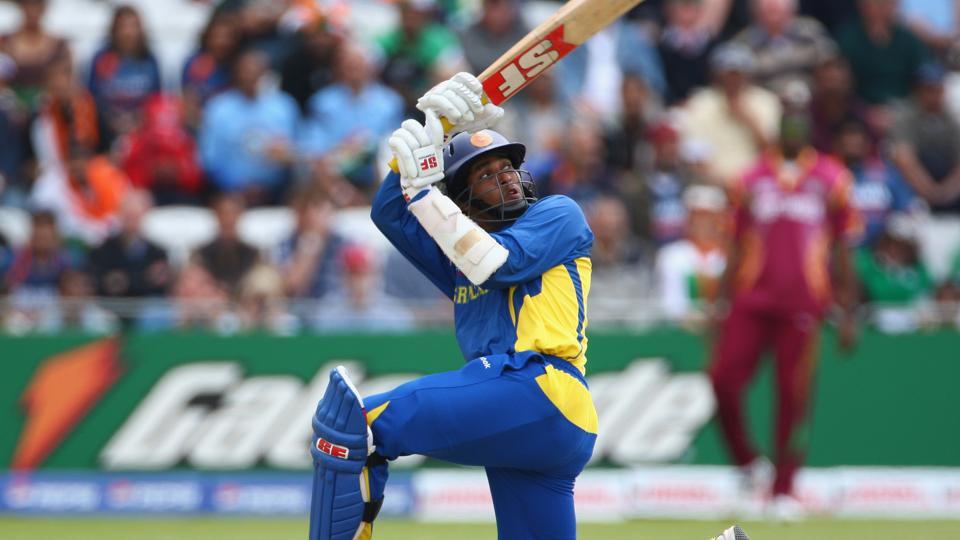
Played across two cities and three venues, the edition was still a little muted in its expression and straitjacketed in its thought despite IPL opening up the cricketing world to a never-seen-before endorsement of ambition and commerce. Held just six months after the terror attack on Sri Lankan team bus in Lahore, it was weirdly and poetically fitting that they met Pakistan in the final at the iconic Lord’s.
A look at the Sri Lankan line-up is enough to send one into a time warp. ODI greats Sanath Jayasuriya, Mahela Jayawardene and Muttiah Muralitharan were still active in T20Is while the legend of Lasith Malinga was in its infancy. For Pakistan, debutant left-arm quick Mohammad Amir, still a year from his career’s greatest transgression, was seen as an ebullient torchbearer of their fast-bowling legacy. For defending champions India, none of its top-10 wicket takers in T20Is had made their international debut yet and Virat Kohli was still a year from playing his first T20I.
With the proverbial T20 code yet to be cracked, teams approached the games with a safety-first approach. That meant no middle-overs enforcer, no match-ups, and precious little mystery in the spin. Death bowling was still about nailing the yorkers and ‘hard’ lengths were still hard to hit.
What it did reinforce was the undeniable worth of allrounders in white-ball cricket and the old wisdom of bowlers winning tournaments still holding true. That explained a talismanic Shahid Afridi doing the star turn for Pakistan in the semi-final and final, a laser-sharp Umar Gul coming to life in the death, and a wily Saeed Ajmal getting enough purchase on English wickets to fox the best. Little wonder then that Pakistan, who came agonisingly close to winning the title in 2007, went the distance this time.
The Afridi show
Unlike Sri Lanka who had maintained an all-win record leading up to the final, Pakistan, led by Test great Younis Khan, had a typically rocky start. They were on the brink of elimination at the group stage but were given a lifeline by an 82-run hammering of Netherlands. They lost to England and Sri Lanka but defeated New Zealand and Ireland to make it to the last four where they were up against an unbeaten South Africa.
That’s when Afridi rose to the challenge. Arguably the hardest hitter of his generation, T20s was the format that suited him the best. Afridi’s fast and accurate leg-spin, electrifying fielding, and the sheer ability to step up made him the prototype of a perfect T20 specimen –too bad his vast potential remained frustratingly unrealised. For two nights in England though, Afridi’s talent remained delightfully incandescent.
His Player-of-the-Match effort – 51 off 34 and 2/16 – meant Pakistan defended a middling 149/4 by seven runs against a batting order that had Herschelle Gibbs and AB de Villiers. Both the big-hitting batters were incidentally done in by Afridi’s brand of spin.
In the final, Sri Lanka were jolted on the fifth ball itself when Amir got the in-form Tillakaratne Dilshan for a duck. Kumar Sangakkara’s side could never really recover, restricted for a below-par 138/6. Pakistan achieved the target with eight balls and eight wickets intact, and it was only fitting that the winning run came off Afridi, in fact his leg as it was ruled a leg bye. He took off his helmet and held his arms afloat in what remains his signature celebration.
It was the second of Pakistan’s three ICC titles, coming 17 years after Imran Khan rallied them to an inspirational ODI World Cup win under the Melbourne Cricket Ground floodlights. Their next ICC win would take another eight years, and it would take them a decade more to host a Test at home.
Pakistan still made the semi-finals of the 2010 and 2012 editions, but the wait for another World Cup title continues to the day. With the cricketing world order having undergone a sea change in the years that followed, the 2009 World T20 remains a wistful throwback to simpler times.


