
 E-Paper



10 mobile testing vans, double ICUs to add serious Covid fighting muscle to Delhi
Experts have emphasised that anyone with symptoms of Covid-19 should get themselves tested.

 Prefer HTon Google


To curb the spread of coronavirus disease (Covid-19), the government will double the number of tests done with a focus on increasing reverse transcription polymerase chain reaction (RT-PCR) tests, which gives more accurate results than rapid antigen tests that account for a bulk of Covid-19 testing in Delhi.
Ten mobile vans will be deployed and labs under ICMR and other scientific institutions will be roped in to increase testing, said NITI Aayog member Dr VK Paul in a press briefing on Tuesday.
“It has been decided that the number of tests will be doubled in Delhi between 1 lakh and 1.2 lakh. And, a strategy for the same has been devised. However, we need to ensure that the ratio between rapid antigen tests and the RT PCR is right; it should not become lopsided in the favour of rapid antigen tests,” said Union health secretary Rajesh Bhushan at the briefing.
On average, the gold standard RT-PCR tests accounted for almost 36% of the total tests done in Delhi over the last seven days, an increase from around 28% the week before. It is necessary to ensure high numbers of RT-PCR tests as the alternate rapid antigen test is known to throw up many false negatives for people who might have the infection. The ratio has been skewed in favour of rapid antigen tests in Delhi since its introduction in mid-June as it is cheap, easy to deploy in dispensaries, and gives results in fifteen minutes.
To increase testing in the city quickly, Dr Paul said the entire capacity of laboratories in Delhi will be utilised. “Currently, the city does about 57 thousand tests a day, of which nearly 20,000 are done using RT-PCR tests. Delhi has a capacity of 27 thousand RT-PCR tests. This existing capacity will be utilised,” he said. Other than that, laboratories under the Indian Council of Medical Research and the health ministry will add 10,000 tests to the city’s total. Another 1,000 will be added by scientific institutions in the city.
The health ministry will also deploy 10 mobile laboratories for testing as well. “Five of these mobile laboratories will be operationalized in the next four to five days and the others will be added in a week,” said Dr Paul.
Also Read: Covid-19 showed our cities are vulnerable, says PM Modi at Bloomberg New Economy Forum
In the briefing, both Dr Paul and Bhushan emphasised that anyone who had symptoms of Covid-19 should get themselves tested. They said it was another Covid Appropriate Behaviour in addition to wearing masks, maintaining social distancing and not going to crowded places, and washing hands frequently.
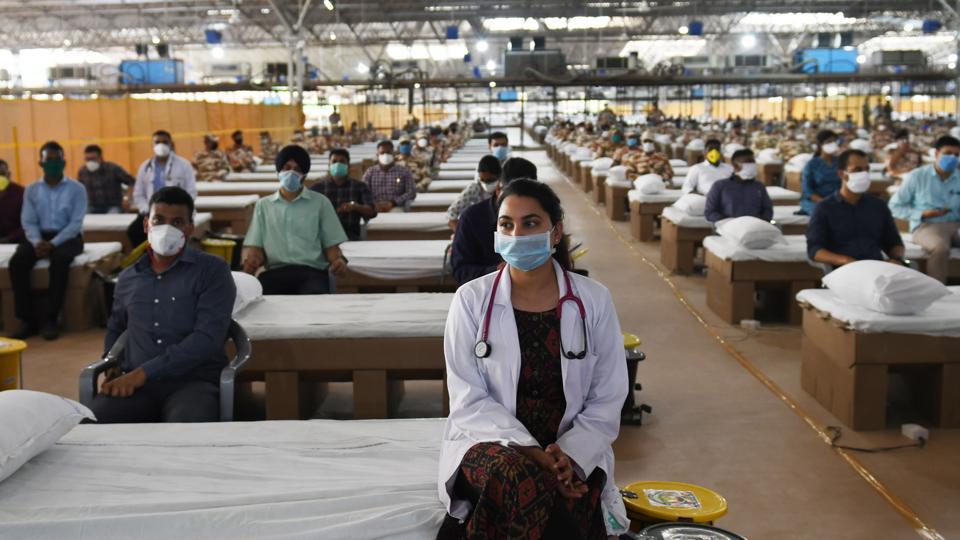
With increase in the number of hospitalisations and the intensive care unit beds almost running full, Dr Paul said that the current 3,500 ICU beds will be increased to 6,000 in the next few days with the help of Delhi government, army and central government. The army-run hospital in Dhaula Kuan will add 537 ICU beds, the central government hospitals 45, and 2,680 beds will be added by the Delhi government, mostly through the order reserving 80% ICU beds in 33 big private hospitals.
Also Read: PM Modi seeks funding to build smarter Indian cities post Covid-19 pandemic
To staff the hospitals, 75 doctors and 250 paramedics from central forces are being flown in. “More than half of them have already arrived and the other will also arrive in the next couple of days. Manpower will also be drawn from central government and Municipal Corporation run hospitals,” said Dr Paul.
With the number of active cases on the rise in the city, the government has also decided to augment the support system needed for home care to facilitate home isolation of up to 35 to 40 thousand people. “The support system needed for patients in home isolation – telemedicine support, pulse oximeter etc – will be ramped up, as the number of active cases might go up in the future,” said Dr Paul. The number of active cases has touched a peak of almost 44,500 in the city so far, of whom nearly 80% people remain in home isolation as per data shared by the Delhi government.
To increase isolation facilities for mild cases not eligible for home isolation, the union government has decided to operationalize 5,000 beds at the Radha Soami Satsang Beas centre in Chattarpur and 800 beds in railway coaches.


