Nearly half of the operational Sewage Treatment Plants (STPs) in Delhi do not meet permissible water quality standards, a report prepared by the Central Pollution Control Board (CPCB) has revealed.
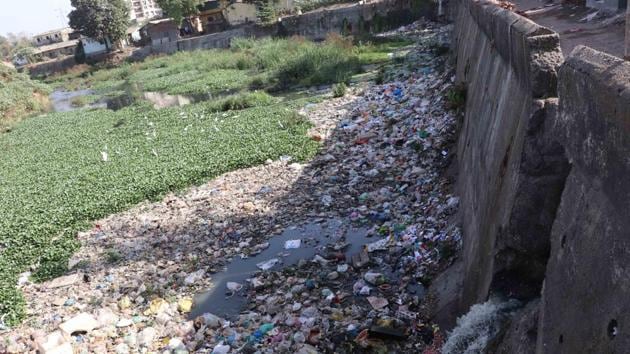
The report, prepared with data from December 16, 2018-January 28, 2019, from 33 STPs run by the Delhi Jal Board, was submitted to the two-member Yamuna pollution monitoring panel set up by the National Green Tribunal in February.
“The CPCB has informed that of the 33 STPs, 13 are not following discharge standards with respect to biological oxygen demand; one with respect to chemical oxygen demand; six with respect to total suspended solids; and four with respect to NH3-N,” read the committee’s letter sent to CPCB and DJB.
At least two STPs were found to be offline and not generating any data. Delhi has 41 STPs, of which 33 are operational. At present, the cost of setting up a STP — which meets the latest water quality standard — is at least R8crore-R10crore.
The panel has informed the DJB that at least 16 of the 33 STPs are not meeting standards and have asked them to submit a report on corrective measures taken or proposed, including a timeline to set things right. The committee, however, is yet to get a response from DJB.
{{/usCountry}}The panel has informed the DJB that at least 16 of the 33 STPs are not meeting standards and have asked them to submit a report on corrective measures taken or proposed, including a timeline to set things right. The committee, however, is yet to get a response from DJB.
{{/usCountry}}“We would have to look into the report as well as data generated by our system. Only then can we respond,” said Dinesh Mohaniya, vice-chairman, DJB.
STPs form the backbone of the city’s sanitation system and are expected to treat sewage water, not just to bring down pollution load in the Yamuna but also provide treated water for use so that dependency on groundwater could be reduced.
“In 2017, a panel set up by Delhi govt found only 11 of the 41 STPs were meeting standards.That the STPs are not meeting standards shows there is no planning on DJB’s part. The STPs should be upgraded before their life expectancy ends,” said Manoj Misra, convener of Yamuna Jiye Abhiyan, who was on the four-member panel.
Stay updated with all top Cities including, Bengaluru, Delhi, Mumbai and more across India. Stay informed on the latest happenings in World News along with Delhi Election 2025 and Delhi Election Result 2025 Live, New Delhi Election Result Live, Kalkaji Election Result Live at Hindustan Times.
Stay updated with all top Cities including, Bengaluru, Delhi, Mumbai and more across India. Stay informed on the latest happenings in World News along with Delhi Election 2025 and Delhi Election Result 2025 Live, New Delhi Election Result Live, Kalkaji Election Result Live at Hindustan Times.